
Table of Contents
IGBT Explained: Working Principle and Applications
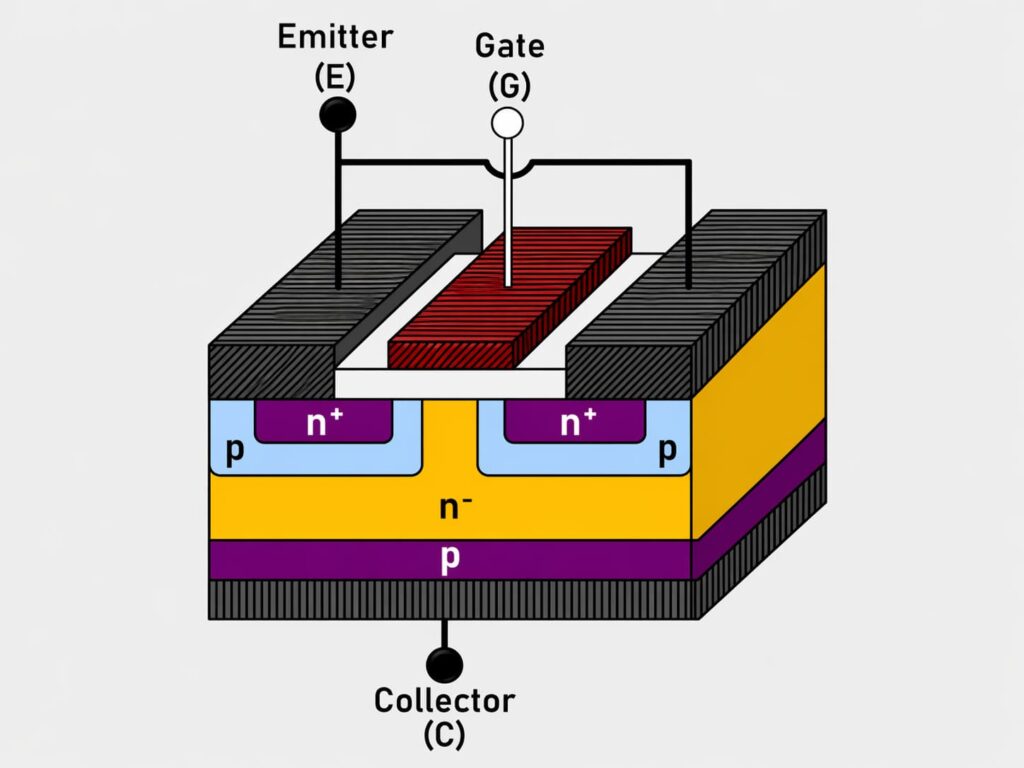
1.Introduction: What Is an IGBT?
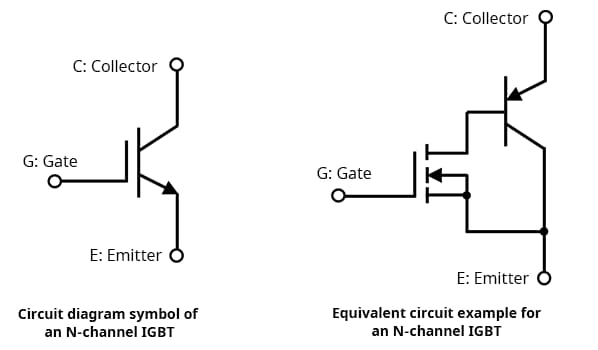
An Insulated Gate Bipolar Transistor (IGBT) is a type of power semiconductor device used as an electronic switch. It combines the advantages of two well-known devices: the MOSFET and the bipolar transistor.
An IGBT has three terminals:
Gate (G) – controls the device
Collector (C) – input side of current
Emitter (E) – output side of current
In simple terms, an IGBT acts like a smart switch that can turn electrical power on and off very quickly. It can switch thousands of times per second and handle high voltages, typically from 600V to over 1000V.
Because of this, IGBTs are widely used in systems where large amounts of energy must be controlled efficiently.
2.Where Are IGBTs Used?
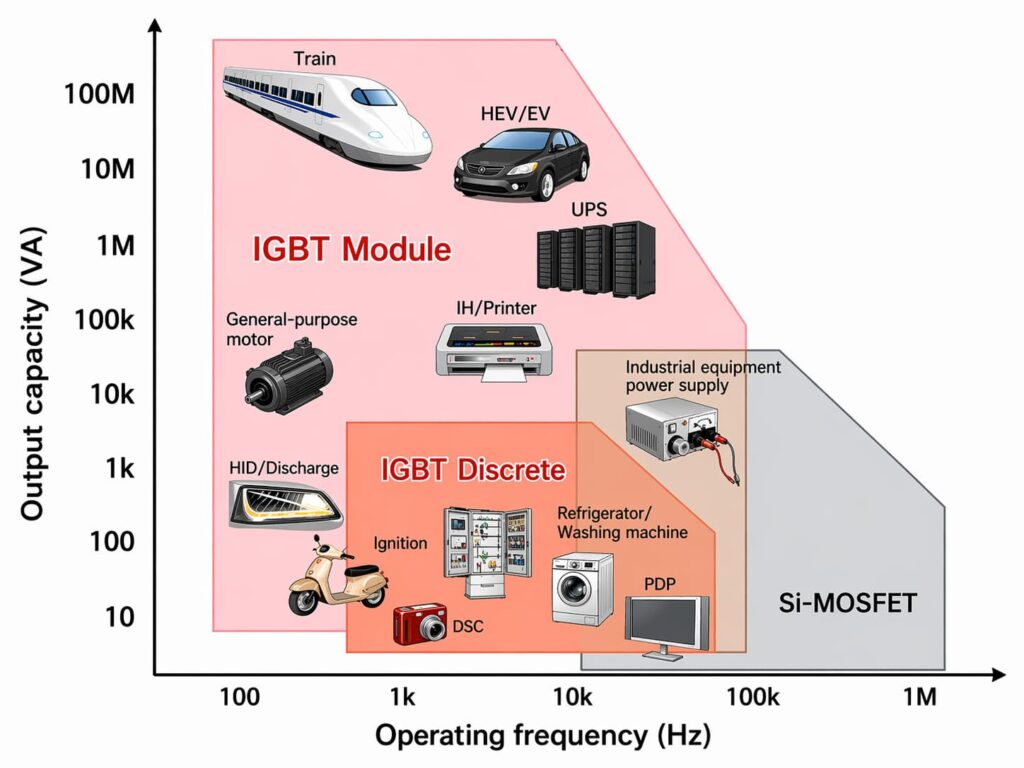
IGBTs are essential in many modern technologies, especially in high-power energy conversion systems..
I. Electric Vehicles (EVs)
In electric cars, IGBTs are used inside the inverter system. They convert DC power from the battery into AC power to drive the motor.
Without IGBTs, efficient motor control would not be possible.
II. Renewable Energy Systems
Wind turbines and solar inverters rely on IGBTs to manage and convert electrical energy. They help ensure stable power output.
III. Transportation Systems
High-speed trains and electric aircraft use IGBTs for traction control and power conversion.
IV. Industrial Equipment
IGBTs are widely used in:
Motor drives
Welding machines
Power supplies
Because of their importance, IGBTs are often called the “crown jewel of industrial semiconductors.”
3.Why IGBTs Are So Popular
IGBTs are widely used because they offer a strong balance between performance and efficiency.
Key Advantages
| Feature | Explanation |
|---|---|
| High input impedance | Requires very little control current |
| Low conduction loss | Less energy wasted as heat |
| Fast switching | Can turn on/off quickly |
| Low drive power | Easy to control with simple circuits |
Compared with traditional bipolar transistors, IGBTs are easier to drive. Compared with MOSFETs, they perform better in high-voltage applications.
4.Inside the IGBT: Structure Explained
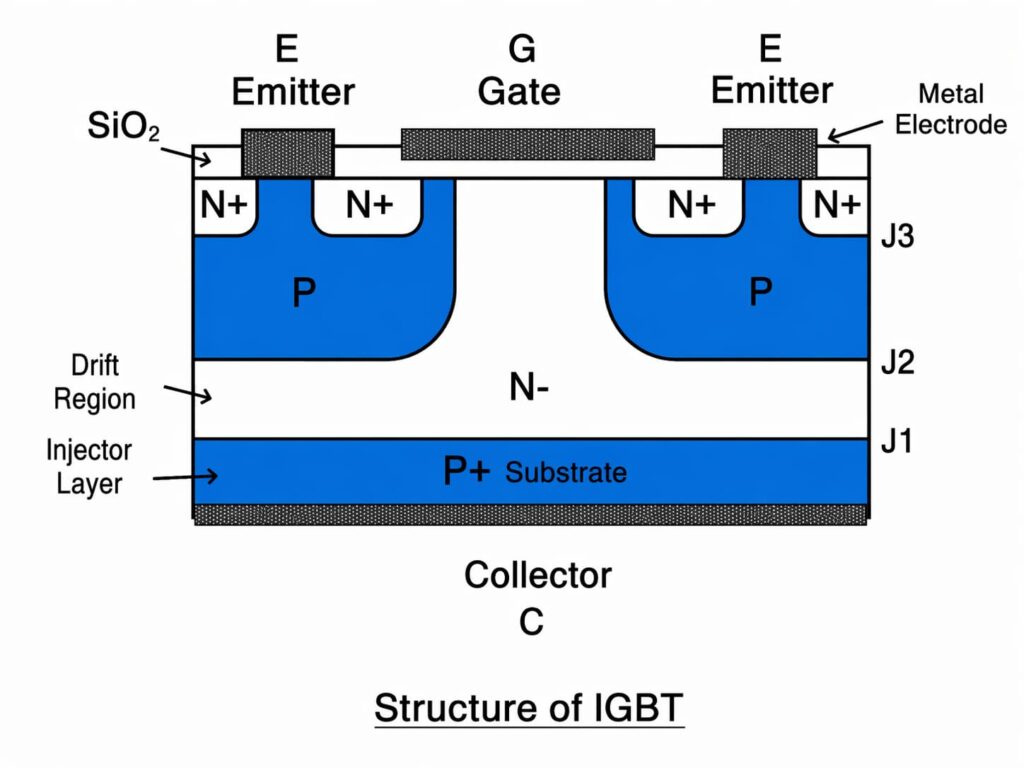
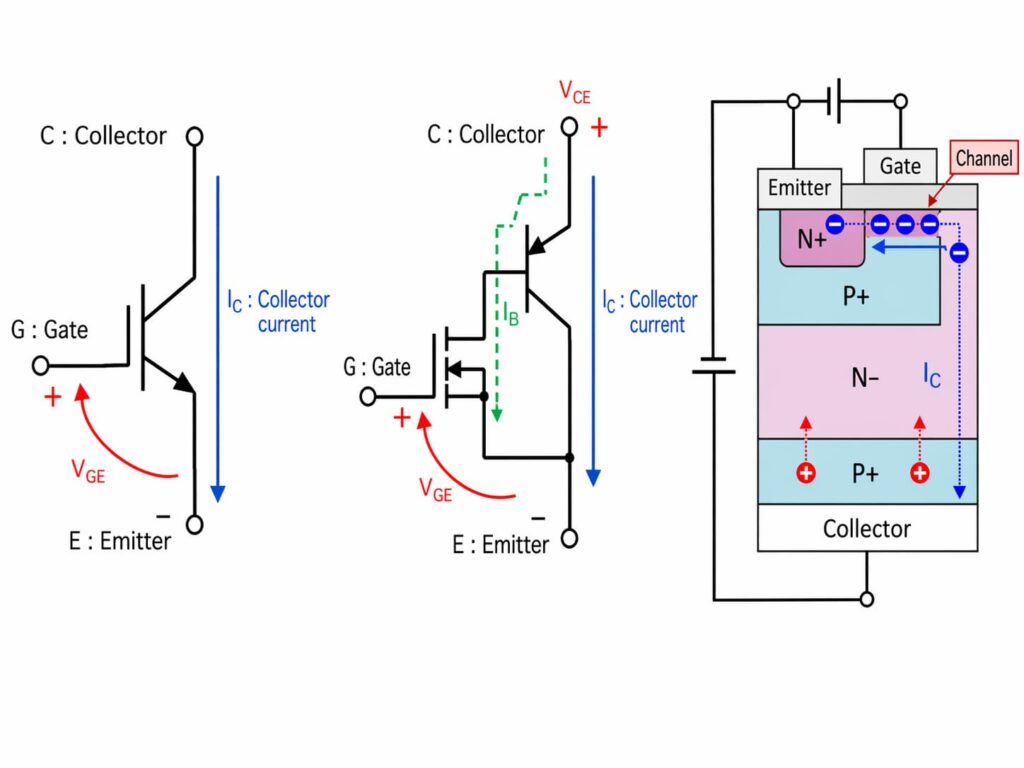
An IGBT has a four-layer semiconductor structure, often described as a combination of:
A MOSFET (Metal-Oxide-Semiconductor Field-Effect Transistor)
A Bipolar Junction Transistor (BJT)
Basic Structure
The internal structure includes:
P-type substrate
N-type drift region
P-type body
N+ emitter region
Oxide layer (SiO₂) between gate and semiconductor
This structure allows the IGBT to use voltage control (like a MOSFET) while also benefiting from strong current capability (like a BJT).
5.How Does an IGBT Work?
1. Turn-On Process
When a positive voltage is applied between the Gate and Emitter:
– An N-channel forms inside the device
– Current starts flowing from Collector to Emitter
– The device enters the ON state
2. Turn-Off Process
When the Gate voltage is removed:
– The channel disappears
– Current flow stops
– The device returns to the OFF state
This switching process happens very fast, making IGBTs ideal for power electronics applications.
6.IGBT vs MOSFET: What’s the Difference?
| Feature | IGBT | MOSFET |
|---|---|---|
| Voltage range | High (600V+) | Low to medium |
| Switching speed | Medium | Very fast |
| Conduction loss | Lower at high voltage | Higher at high voltage |
| Control method | Voltage | Voltage |
In general:
– Use MOSFET for low-voltage, high-speed applications
– Use IGBTs for high-voltage, high-power systems
7.Why IGBTs Matter in Modern Industry
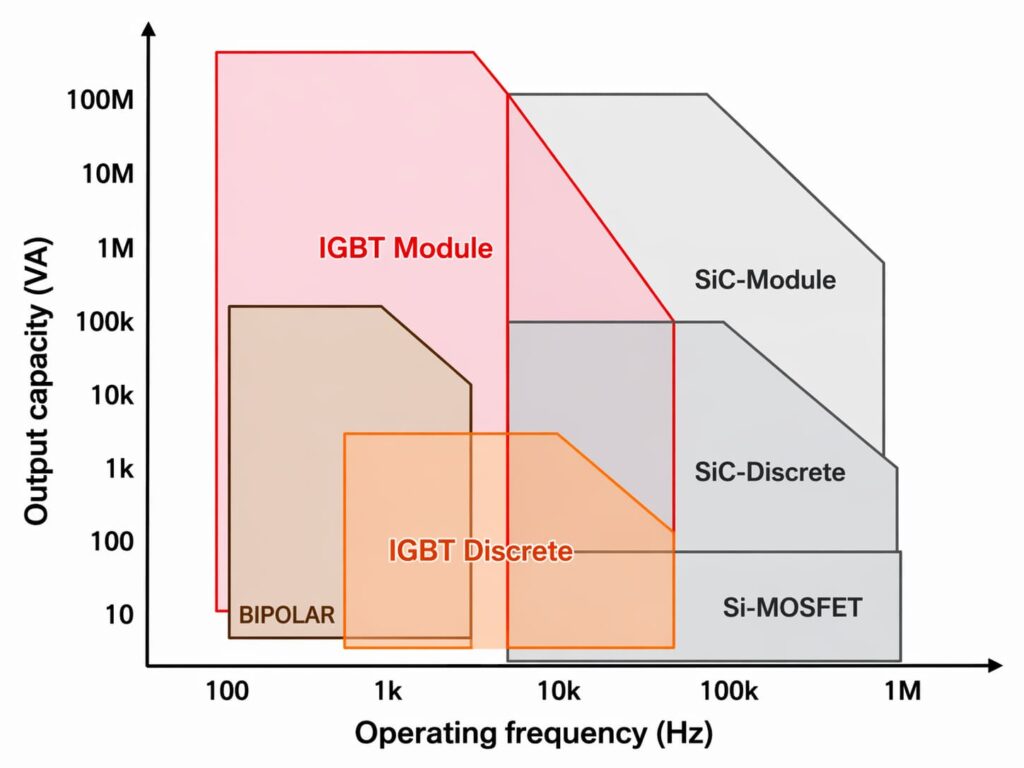
IGBTs are critical for improving energy efficiency.
They help:
Reduce power loss
Improve system reliability
Enable clean energy systems
For example, in electric vehicles, efficient power conversion directly improves battery range.
In renewable energy, IGBTs help convert unstable natural energy into stable usable electricity.
8.Learning Path: How to Understand IGBTs Better
To fully understand IGBTs, it is helpful to learn these topics step by step:
Basics of semiconductors (P-type and N-type materials)
How a bipolar transistor works
How a MOSFET works
Power electronics fundamentals
Once you understand these, the IGBT becomes much easier to learn.
9.Conclusion
IGBTs are one of the most important devices in modern power electronics. They combine the strengths of MOSFETs and bipolar transistors to provide efficient, high-voltage switching.
From electric vehicles to renewable energy systems, IGBTs play a key role in shaping a more efficient and sustainable world.
Understanding how they work not only improves your technical knowledge but also helps you see how modern technology controls and transforms energy.
If you are working on power electronics, EV systems, or industrial control projects, choosing the right components is critical to performance and reliability.
At Guangdong apex component we support engineers and buyers with:
- 100% original and traceable IGBT modules
- Stable supply for small to medium batch production
- Technical support for component selection and alternatives
- Fast delivery to keep your project on schedule
Whether you are designing a new system or optimizing an existing one, having the right supply partner reduces risk and improves efficiency.
👉 Contact us today to discuss your requirements and get a tailored solution for your project.