
Compare Digital-to-Analog Converter ICs
A digital-to-analog converter (DAC) IC turns digital codes into an analog voltage or current. Compare product pages by resolution, channel count, interface, output type, reference, package and application, then submit exact MPNs and quantities for RFQ review.
DAC Selection Guide
Use these parameters to narrow the product listings before checking the exact manufacturer part number.
Resolution & Precision
Determines the granularity of the analog output. Higher bit depth yields smaller voltage steps.
Speed Class
From precision kSPS parts to multi-GSPS high-speed DACs for RF and video.
Channel Density
Single, dual, quad, or octal outputs per IC package.
Digital Interface (SPI/I2C)
I2C suits low pin-count and slower control loops; SPI offers higher throughput; parallel and LVDS handle ultra-high-speed streams.
DAC Architecture Comparison
| Architecture | Key Advantages | Typical Resolution | Procurement Fit Notes |
|---|---|---|---|
| R-2R Ladder | Excellent linearity, low noise, fast settling time. | 12-bit to 20-bit | High precision industrial control. Can be sensitive to thermal drift. |
| String DAC | Guaranteed monotonic, low glitch energy. | 8-bit to 16-bit | Cost-effective for general purpose trimming and portable devices. |
| Sigma-Delta (Σ-Δ) | Ultra-high resolution, excellent dynamic performance (audio). | 16-bit to 32-bit | Dominant in audio and precision measurement. Slower update rates. |
| Current-Steering | Extremely high speed, high update rates. | 8-bit to 16-bit | Required for RF, video, and communication systems (GSPS speeds). |
DAC Parameter Guide
Use these explanations to match DAC specifications with the accuracy, speed, interface, and output behavior your circuit needs.
Resolution
- 8-bit to 10-bit: Basic voltage trimming, low-cost control, and simple bias generation.
- 12-bit: General embedded control where step size and cost need to stay balanced.
- 16-bit to 20-bit: Precision control, calibration, instrumentation, and low-noise signal generation.
Interface
- I2C: Best when pin count is limited and update speed is not the main constraint.
- SPI: Common choice for faster updates, cleaner timing control, and simple MCU integration.
- Parallel / LVDS: Used where high throughput, synchronized channels, or RF/video-class data rates matter.
Output Type
- Voltage buffered: Easier to use directly with high-impedance analog inputs.
- Voltage unbuffered: Useful when an external amplifier defines drive strength, offset, or filtering.
- Current output: Often selected for high-speed signal paths and designs with external transimpedance stages.
Featured DAC Series on Apex
Current product links are based on DAC product pages found on ApexComponent.com, with Texas Instruments precision and multichannel DAC models represented in this section.
DAC80501 Series
16-bit single-channel precision DACs
DAC60501 Series
12-bit single-channel DACs for compact control outputs
DAC8568 / DAC7568
Octal SPI DAC options for multichannel outputs
DAC70508 / DAC80508
8-channel SPI DAC families for dense analog output designs
DAC Product Series
Common DAC IC models sourced from ApexComponent.com product pages. Review listed specifications and package data, then confirm MOQ, availability, pricing and lead time for the exact MPN during RFQ review.
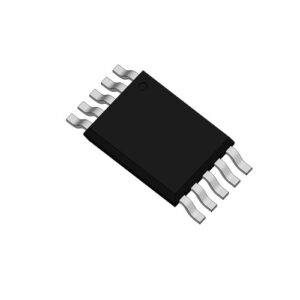
DAC80501MDGSR VSSOP-10 Digital-to-Analog Converter (DAC)
- Resolution
- 16-bit
- Interface
- I2C / SPI
- Package
- VSSOP-10
- MOQ / Lead Time
- RFQ / RFQ
DAC80501ZDGSR VSSOP-10 Digital-to-Analog Converter (DAC)
- Resolution
- 16-bit
- Interface
- I2C / SPI
- Package
- VSSOP-10
- MOQ / Lead Time
- RFQ / RFQ
DAC80501MDGST VSSOP-10 Digital-to-Analog Converter (DAC)
- Resolution
- 16-bit
- Interface
- I2C / SPI
- Package
- VSSOP-10
- MOQ / Lead Time
- RFQ / RFQ
DAC80501ZDGST VSSOP-10 Digital-to-Analog Converter (DAC)
- Resolution
- 16-bit
- Interface
- I2C / SPI
- Package
- VSSOP-10
- MOQ / Lead Time
- RFQ / RFQ
DAC7568ICPWR TSSOP-16 Digital-to-Analog Converter (DAC)
- Resolution
- 12-bit
- Interface
- SPI
- Package
- TSSOP-16
- MOQ / Lead Time
- RFQ / RFQ
DAC8568ICPW TSSOP-16 Digital-to-Analog Converter (DAC)
- Resolution
- 16-bit
- Interface
- SPI
- Package
- TSSOP-16
- MOQ / Lead Time
- RFQ / RFQ
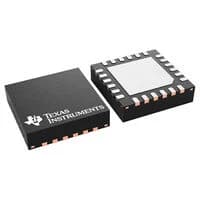
DAC8568ICPWR TSSOP-16 Digital-to-Analog Converter (DAC)
- Resolution
- 16-bit
- Interface
- SPI
- Package
- TSSOP-16
- MOQ / Lead Time
- RFQ / RFQ
DAC8568IAPW TSSOP-16 Digital-to-Analog Converter (DAC)
- Resolution
- 16-bit
- Interface
- SPI
- Package
- TSSOP-16
- MOQ / Lead Time
- RFQ / RFQ
DAC8568IBPW TSSOP-16 Digital-to-Analog Converter (DAC)
- Resolution
- 16-bit
- Interface
- SPI
- Package
- TSSOP-16
- MOQ / Lead Time
- RFQ / RFQ
DAC8568IAPWR TSSOP-16 Digital-to-Analog Converter (DAC)
- Resolution
- 16-bit
- Interface
- SPI
- Package
- TSSOP-16
- MOQ / Lead Time
- RFQ / RFQ
DAC8568IDPW TSSOP-16 Digital-to-Analog Converter (DAC)
- Resolution
- 16-bit
- Interface
- SPI
- Package
- TSSOP-16
- MOQ / Lead Time
- RFQ / RFQ
DAC7578SRGER VQFN-24 Digital-to-Analog Converter (DAC)
- Resolution
- 12-bit
- Interface
- I2C
- Package
- VQFN-24
- MOQ / Lead Time
- RFQ / RFQ
DAC60501MDQFT WSON-8 Digital-to-Analog Converter (DAC)
- Resolution
- 12-bit
- Interface
- I2C / SPI
- Package
- WSON-8
- MOQ / Lead Time
- RFQ / RFQ
DAC60501ZDQFT WSON-8 Digital-to-Analog Converter (DAC)
- Resolution
- 12-bit
- Interface
- I2C / SPI
- Package
- WSON-8
- MOQ / Lead Time
- RFQ / RFQ
DAC60501MDGSR VSSOP-10 Digital-to-Analog Converter (DAC)
- Resolution
- 12-bit
- Interface
- I2C / SPI
- Package
- VSSOP-10
- MOQ / Lead Time
- RFQ / RFQ
DAC60501ZDGSR VSSOP-10 Digital-to-Analog Converter (DAC)
- Resolution
- 12-bit
- Interface
- I2C / SPI
- Package
- VSSOP-10
- MOQ / Lead Time
- RFQ / RFQ
DAC60501MDGST VSSOP-10 Digital-to-Analog Converter (DAC)
- Resolution
- 12-bit
- Interface
- I2C / SPI
- Package
- VSSOP-10
- MOQ / Lead Time
- RFQ / RFQ
DAC60501ZDGST VSSOP-10 Digital-to-Analog Converter (DAC)
- Resolution
- 12-bit
- Interface
- I2C / SPI
- Package
- VSSOP-10
- MOQ / Lead Time
- RFQ / RFQ
DAC80501ZDQFT WSON-8 Digital-to-Analog Converter (DAC)
- Resolution
- 16-bit
- Interface
- I2C / SPI
- Package
- WSON-8
- MOQ / Lead Time
- RFQ / RFQ
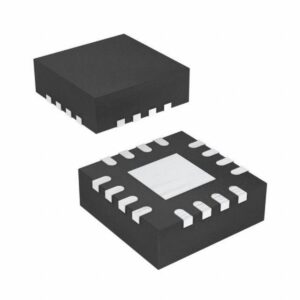
DAC80501MDQFT WSON-8 Digital-to-Analog Converter (DAC)
- Resolution
- 16-bit
- Interface
- I2C / SPI
- Package
- WSON-8
- MOQ / Lead Time
- RFQ / RFQ
DAC70508ZRTET WQFN-16 Digital-to-Analog Converter (DAC)
- Resolution
- 14-bit
- Interface
- SPI
- Package
- WQFN-16
- MOQ / Lead Time
- RFQ / RFQ
DAC70508ZYZFT DSBGA-16 Digital-to-Analog Converter (DAC)
- Resolution
- 14-bit
- Interface
- SPI
- Package
- DSBGA-16
- MOQ / Lead Time
- RFQ / RFQ
DAC70508MRTET WQFN-16 Digital-to-Analog Converter (DAC)
- Resolution
- 14-bit
- Interface
- SPI
- Package
- WQFN-16
- MOQ / Lead Time
- RFQ / RFQ
DAC80508MCYZFT DSBGA-16 Digital-to-Analog Converter (DAC)
- Resolution
- 16-bit
- Interface
- SPI
- Package
- DSBGA-16
- MOQ / Lead Time
- RFQ / RFQ
DAC vs. ADC: Completing the Signal Chain
While DACs convert digital signals into analog outputs (essential for audio playback, motor control, and signal generation), Analog-to-Digital Converters (ADCs) perform the inverse operation. Most complex systems require both to interface digital processors with the analog real world.
Explore ADC Components →Applications of DAC ICs
Discover how high-precision DACs empower industrial, audio, and communication systems through precise signal conversion.
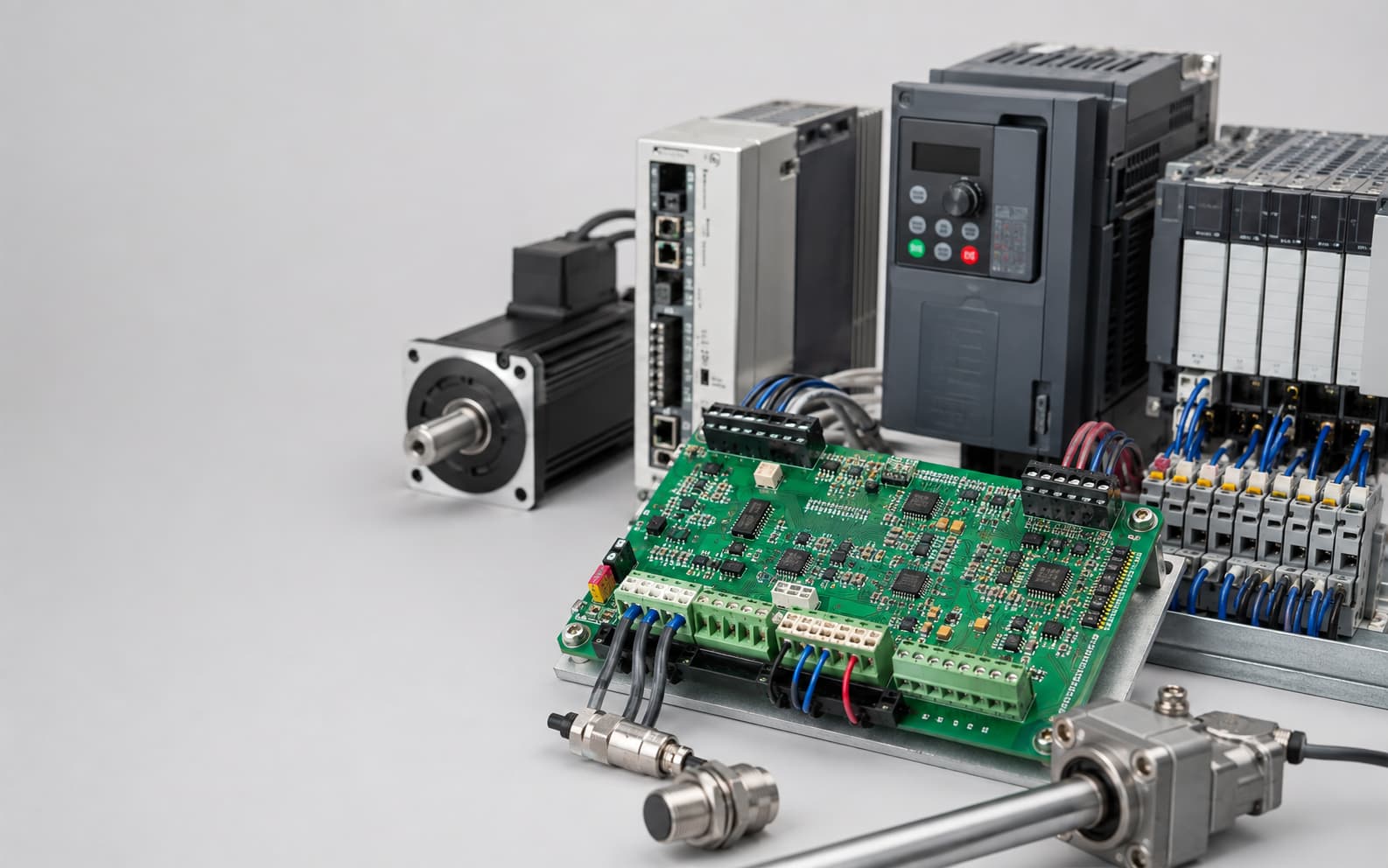
Industrial Process Control
Used in PLC systems to control actuators, valves, and motor speeds with high repeatability.
- 16-bit Precision
- 4-20mA Loop Support
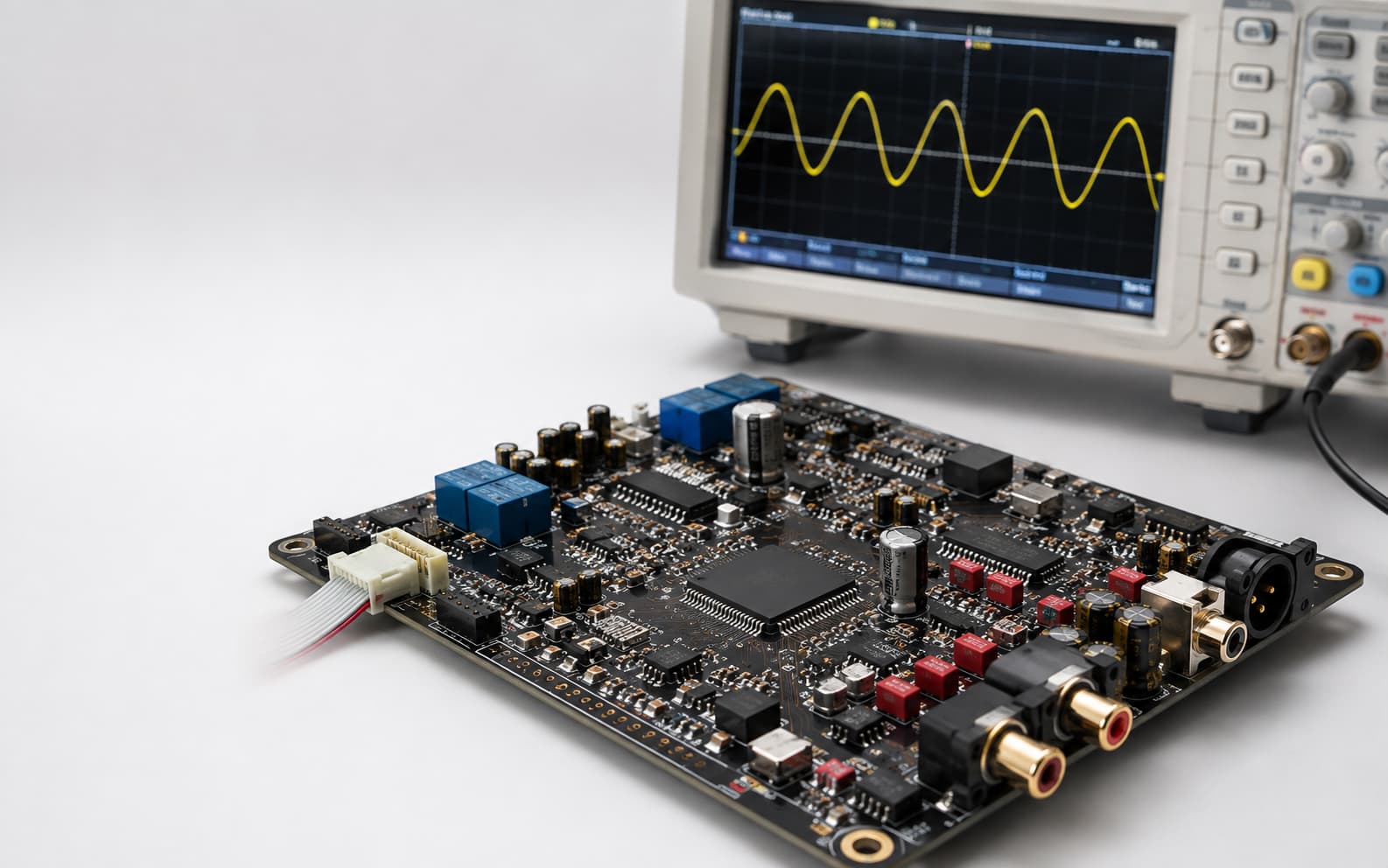
Audio & Waveform Synthesis
High-fidelity audio playback and function generators requiring low total harmonic distortion.
- 16-bit to 20-bit Resolution
- SPI / Parallel Interface
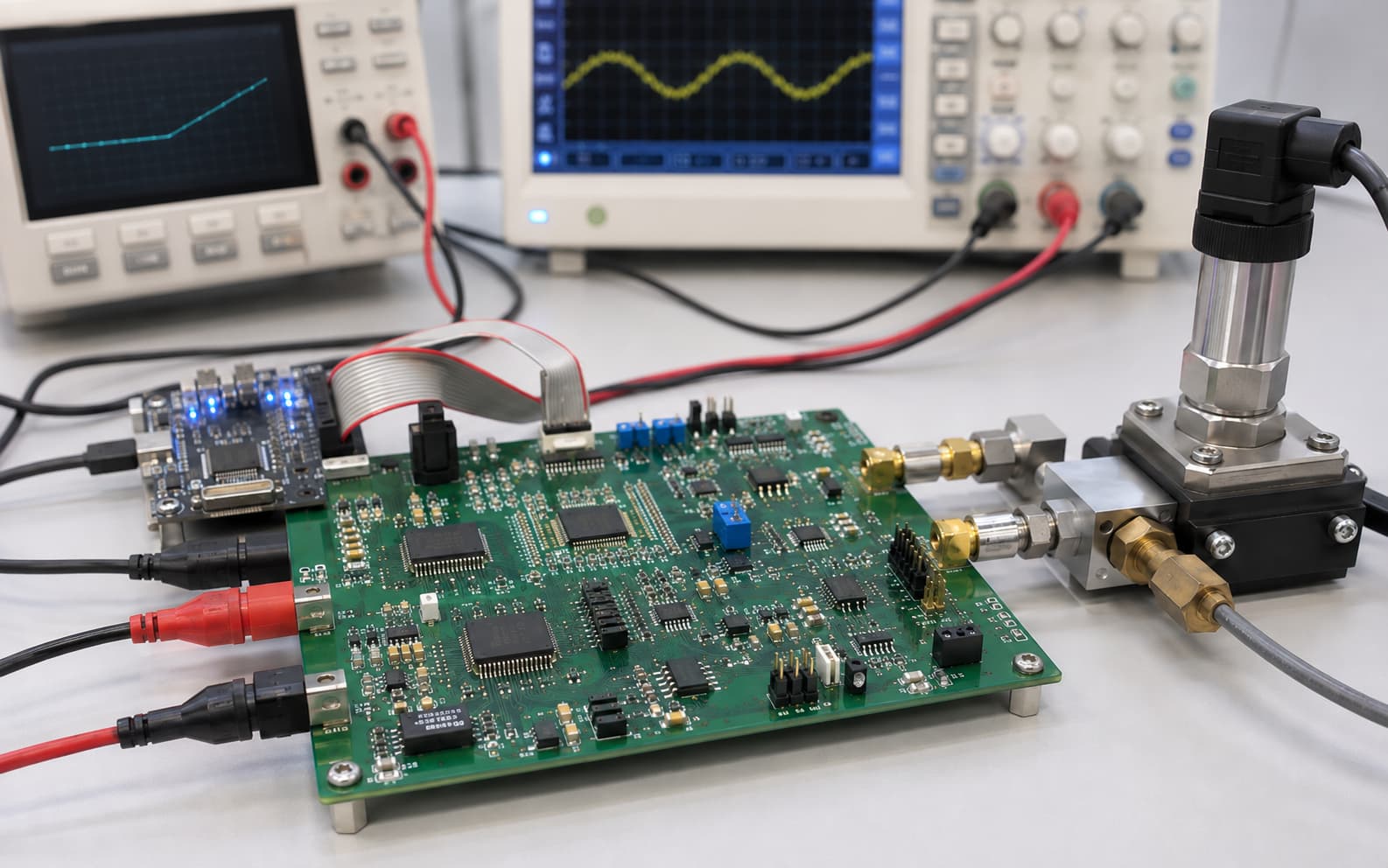
Sensor Calibration
Providing precise reference voltages for automated test equipment and sensor offset nulling.
- Ultra-low Drift
- High-speed SPI
Latest Technical Resources
Understanding the trade-offs between speed, accuracy, and power consumption across different DAC architectures.
TVS Diodes vs ESD Protection Diodes: Selection and Application Guide
Compare TVS and ESD protection diodes by transient type, voltage...
Read MoreSTM32C5 Microcontroller: Selection and Sourcing Guide
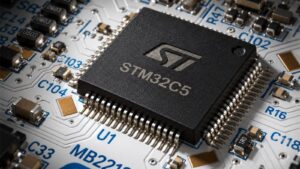
STM32C5 is a 144 MHz Cortex-M33 MCU family with 128...
Read MoreObsolete Electronic Components Distributor: A Sourcing Guide for BOM Buyers

Learn how to source obsolete electronic components, verify risk, compare...
Read MoreGate Driver IC Selection: MOSFET, IGBT, Bootstrap & Protection
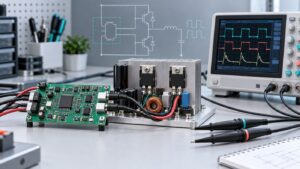
Select a gate driver IC by switch type, gate charge,...
Read MoreFrequently Asked Questions
What is the difference between a voltage-output and current-output DAC?⌄
Voltage-output DACs provide a direct analog voltage proportional to the digital code, usually easier to interface with high-impedance loads. Current-output DACs provide a current output that typically requires an external transimpedance amplifier to convert to voltage, but they often offer faster settling times and higher bandwidth.
How do I choose between an I2C and SPI DAC?⌄
Choose I2C when pin count is limited and update speed is not the main constraint, such as slow control loops or configuration outputs. Choose SPI when the design needs faster updates, lower latency, deterministic timing, or multiple DACs on the same controller bus.
What does 'monotonicity' mean in a DAC?⌄
A DAC is monotonic if its analog output always increases or remains constant as the digital input code increases. This matters in control loops because non-monotonic behavior can cause instability, unexpected actuator movement, or calibration errors.
How many DAC bits do I need for my design?⌄
Use 8-bit to 12-bit DACs for basic trimming and set-point control, 14-bit to 16-bit DACs for industrial control and instrumentation, and 18-bit to 20-bit DACs when very fine resolution, low noise, and calibration accuracy are required.
What specifications should I compare before sourcing a DAC?⌄
Compare resolution, interface, channel count, output type, reference type, settling time, INL/DNL accuracy, supply voltage, package, operating temperature, lifecycle status, and available alternatives. The best DAC is the one that fits both the circuit requirement and the supply plan.
Can I replace one DAC with another part number?⌄
Sometimes, but it must be checked carefully. Confirm pinout, package, supply voltage, digital interface timing, output range, reference behavior, accuracy, temperature range, and software register compatibility before approving a substitute.
Why do some DACs use an internal reference and others need an external reference?⌄
Internal references simplify the design and reduce component count. External references are often selected when the system needs lower drift, tighter accuracy, better noise performance, or a shared precision reference across multiple analog channels.
What package information should I include in an RFQ?⌄
Include the full manufacturer part number, package code, quantity, target price if available, required date code or lifecycle restrictions, RoHS requirement, acceptable alternatives, and whether tape-and-reel packaging is required.
Can Apex help source obsolete or alternative DAC ICs?⌄
Apex can review sourcing requests for obsolete, end-of-life, or hard-to-find DAC ICs. Availability, supplier traceability, lead time and any alternative require part-specific RFQ and engineering review.
How should I send a DAC BOM for quote?⌄
Send the BOM with part number, manufacturer, package, quantity, target delivery date, and any approved alternates. If the design uses several DAC channels or precision grades, include notes about accuracy, interface, and voltage range so the sourcing team can check suitable options.
Need help sourcing DAC ICs?
Send your DAC part numbers, target quantity, and package requirements. Apex can help check availability, alternatives, and RFQ options.