
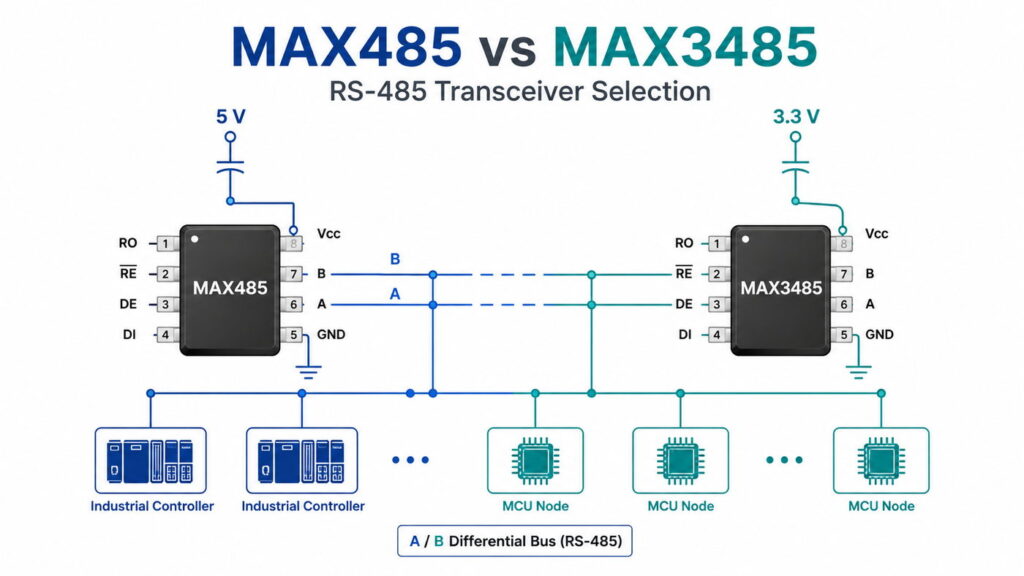
MAX485 and MAX3485 are both RS-485 transceiver choices for half-duplex industrial communication, but they are usually selected for different system voltages. In a practical BOM review, MAX485 points toward legacy 5 V controller designs, while MAX3485 is often considered when the local MCU or logic rail is 3.3 V.
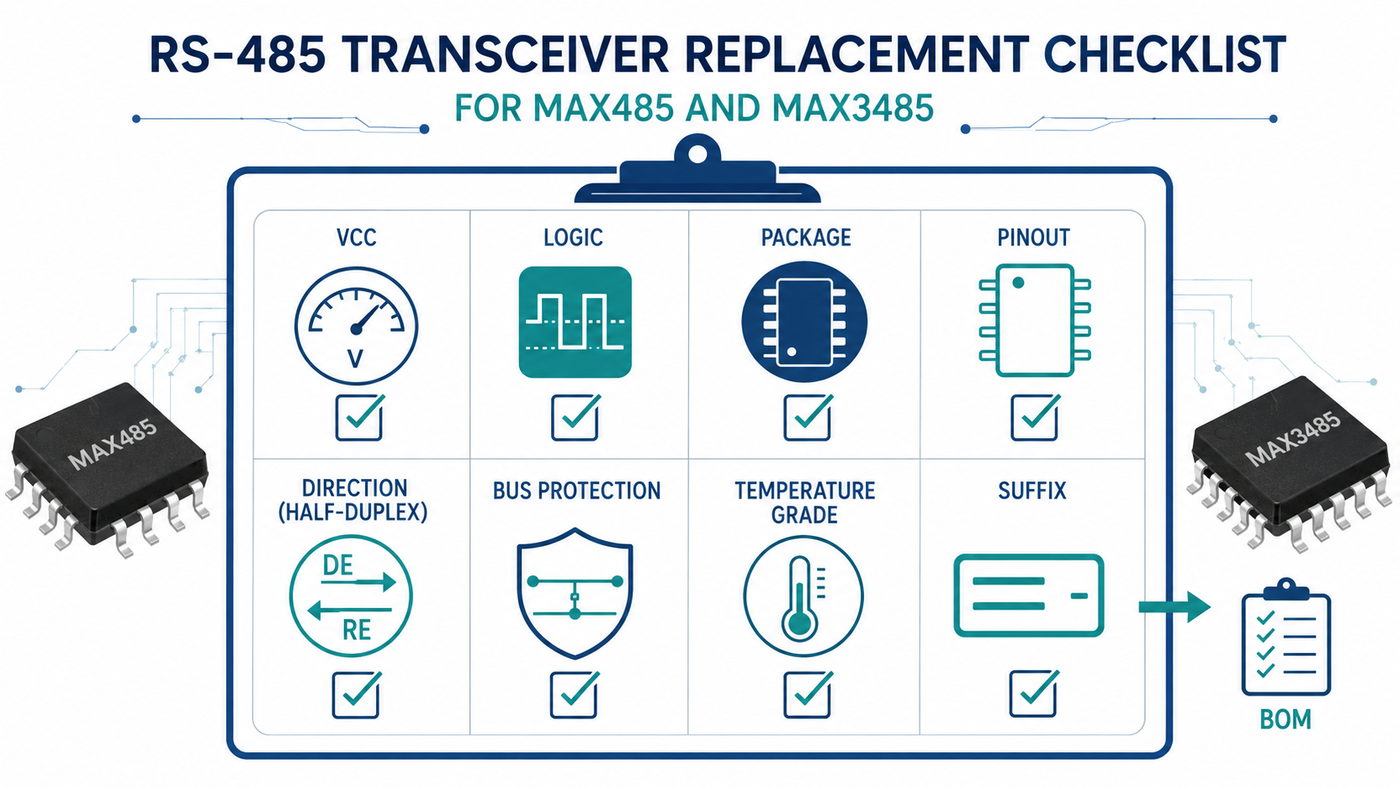
The safest selection is not based on the part number alone. Check VCC, logic-level compatibility, pinout, package, suffix, temperature grade, bus protection requirements, and any approved alternate list before replacing one RS-485 transceiver IC with another.
| Quick Decision Point | MAX485 | MAX3485 |
|---|---|---|
| Typical design fit | 5 V RS-485 nodes and legacy controller boards | 3.3 V MCU-based RS-485 nodes |
| Main risk in replacement | 3.3 V logic may not be compatible without verification | 5 V logic or board assumptions may not be compatible without verification |
| BOM check priority | Exact suffix, package, temperature grade, direction-control pins | Supply rail, logic thresholds, package, suffix, bus protection |
| Best use of this comparison | Keep a 5 V design aligned with the original board | Move or maintain an RS-485 node around a 3.3 V logic rail |
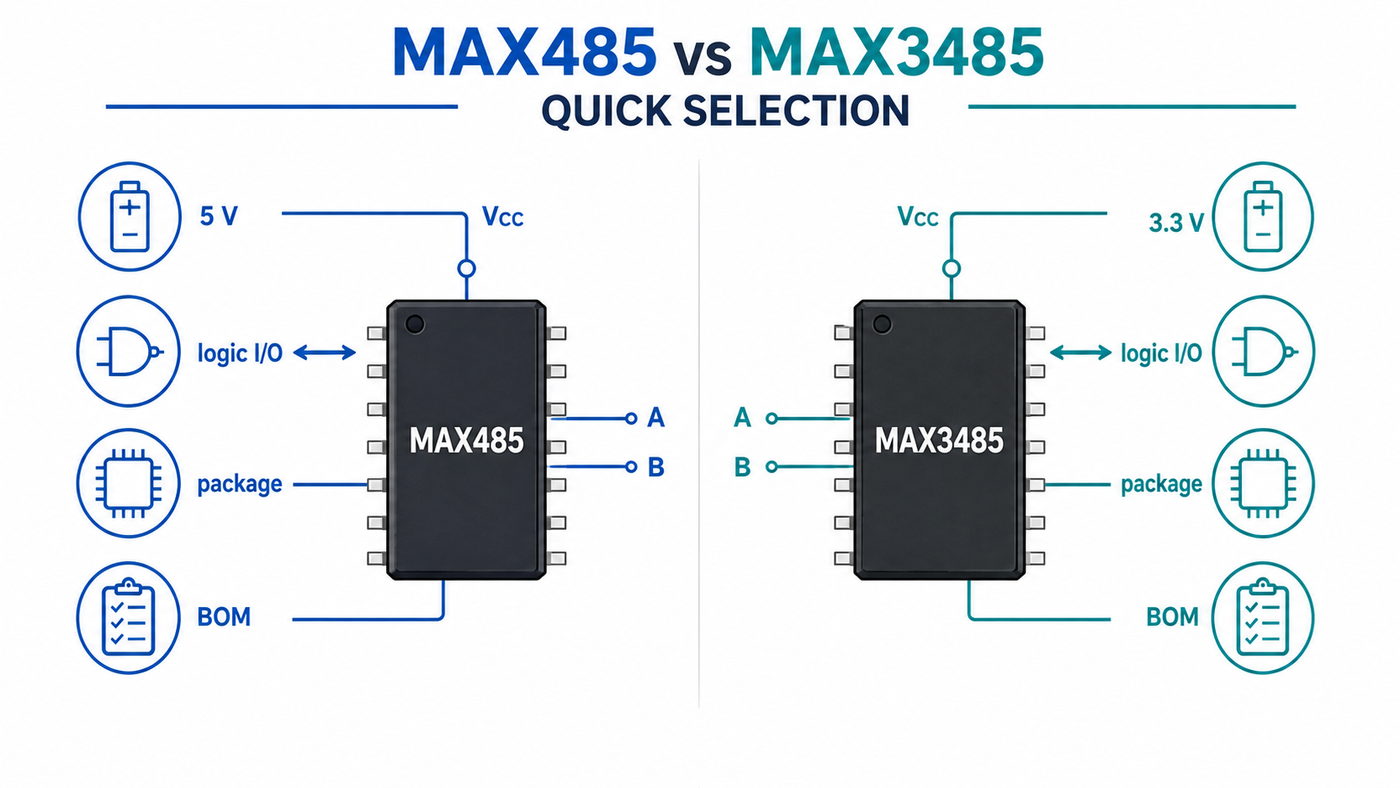
MAX485 vs MAX3485 Quick Selection
Use MAX485 when the board is built around a 5 V logic rail and the original design expects a 5 V RS-485 transceiver. Use MAX3485 when the local controller and interface logic are 3.3 V and the design must avoid unnecessary level shifting.
The comparison becomes more sensitive during replacement. Similar function names do not automatically mean the same suffix, package, temperature range, ESD rating, or system-level behavior. Even when two devices appear pin-compatible, the approved replacement should be checked against the schematic, layout, and original datasheet.
When MAX485 Makes Sense
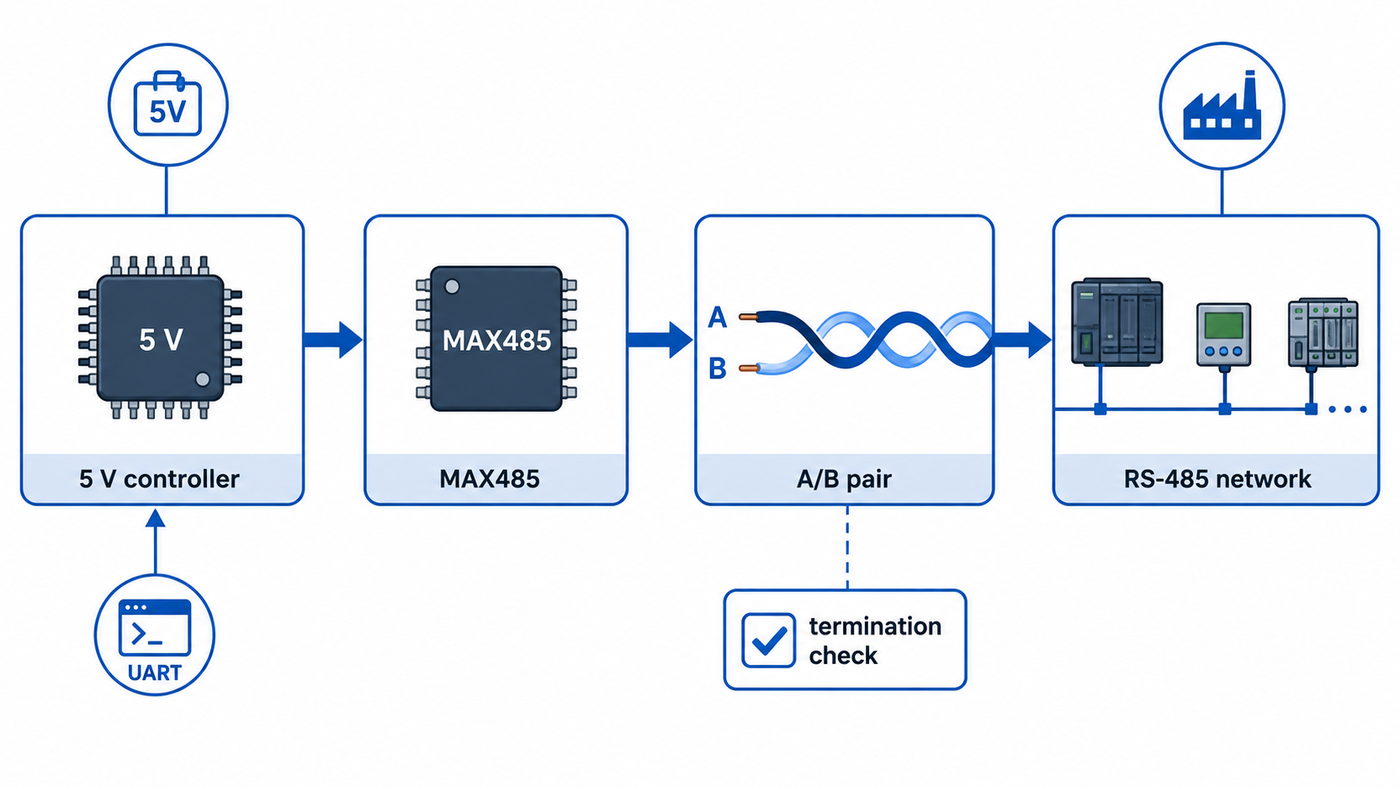
MAX485 is a common choice in legacy 5 V RS-485 equipment, including industrial controllers, building automation nodes, field instruments, power equipment, and embedded communication boards that were designed around 5 V logic.
For procurement teams, the MAX485 decision is often less about choosing a new interface standard and more about keeping an existing product stable. The BOM may specify a particular package and suffix, and a board layout may already assume the original pinout and thermal environment. Changing to a lower-voltage part without checking the MCU logic rail can create validation risk.
When MAX3485 Is the Better Fit
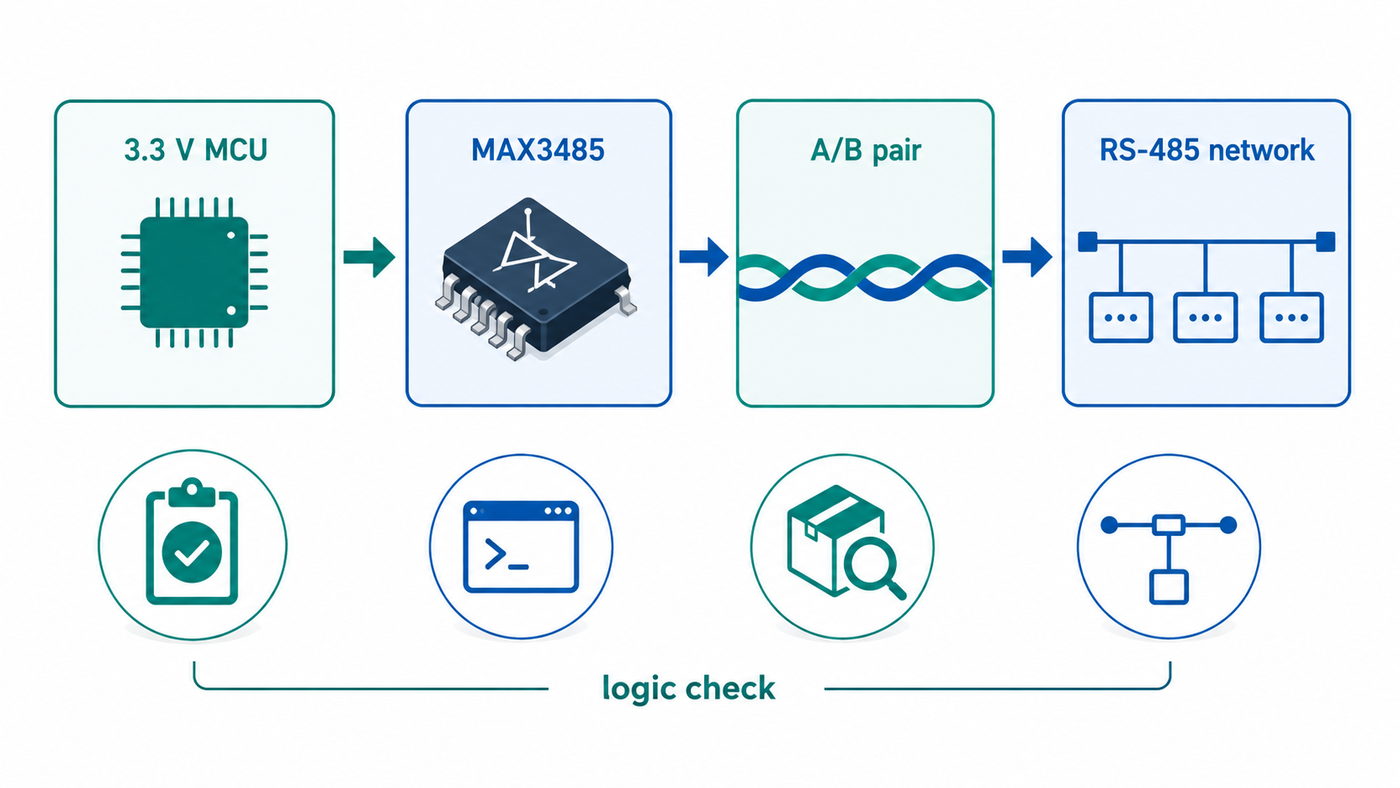
MAX3485 is usually evaluated when the controller side of the circuit is 3.3 V. That makes it relevant for newer MCU, FPGA, sensor, gateway, and compact industrial designs where the logic rail is already low voltage.
The key check is not only the bus side. RS-485 uses differential A/B lines, but the transceiver still interfaces with local logic pins such as DI, RO, DE, and RE. A 3.3 V transceiver choice should therefore be reviewed together with MCU I/O voltage, enable-line timing, package, and operating environment.
Replacement Checklist for MAX485 and MAX3485
Do not treat MAX485 and MAX3485 as automatic substitutes. Before approving a replacement, confirm the exact manufacturer part number and suffix. Similar base numbers may have different package codes, temperature grades, protection levels, or ordering options.
Also check the board-level requirements. Confirm whether the design is half-duplex, how DE and RE are controlled, whether termination and fail-safe biasing are already present on the board, and whether the system needs additional surge, EFT, or isolation components outside the transceiver IC.
Common Sourcing Mistakes
- Ordering by base part number only, without suffix, package, temperature grade, or manufacturer context.
- Assuming a 5 V transceiver and a 3.3 V transceiver are electrically interchangeable on the controller side.
- Ignoring system protection requirements such as isolation, surge protection, EFT robustness, or application temperature range.
- Treating an approved alternate as valid before engineering has checked the schematic, layout, and test conditions.
RFQ Details to Send
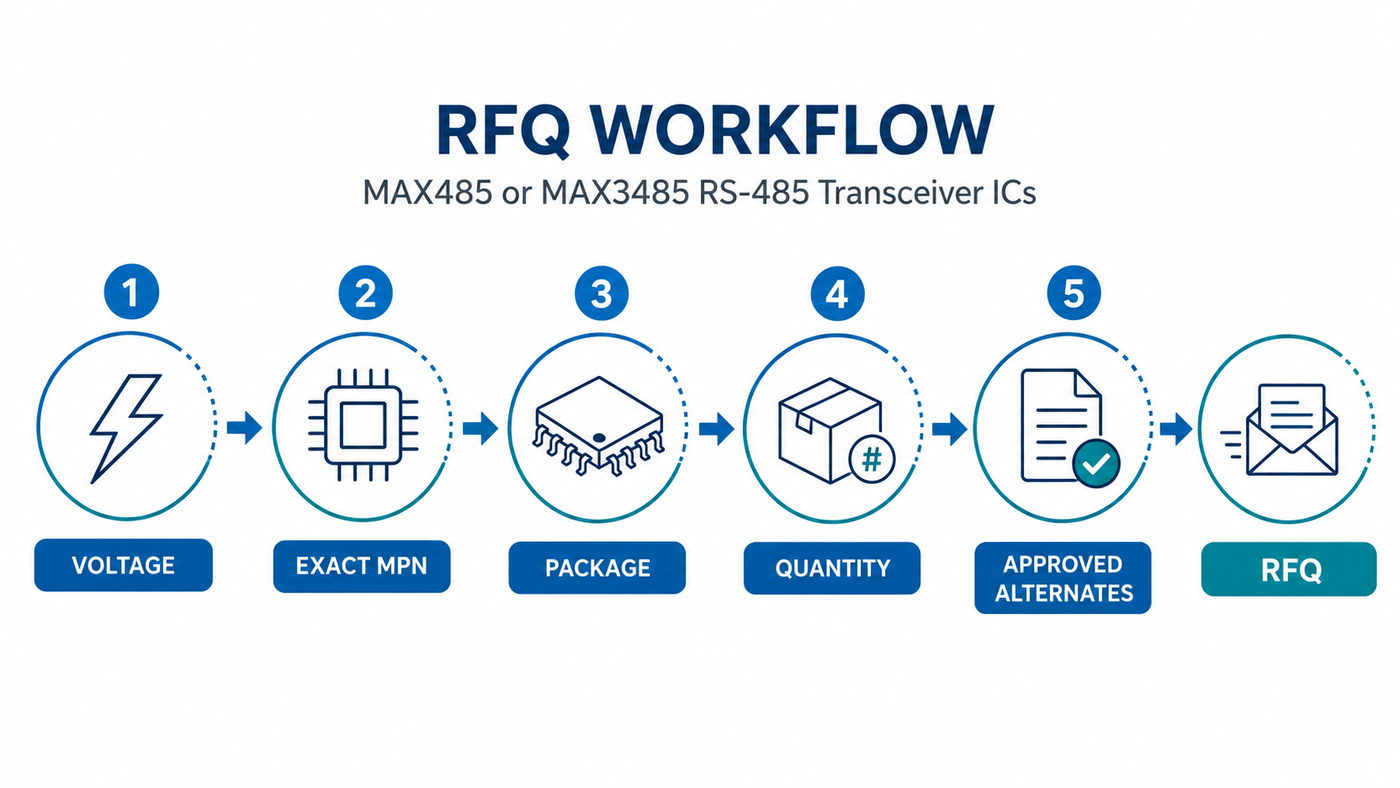
For a sourcing request, send the exact MPN if available, the accepted manufacturer list, package, quantity, target date, and whether approved alternates are allowed. If the design is under redesign or repair, include the system voltage and whether the original node is 5 V or 3.3 V.
ApexComponent can review RS-485 and RS-422 transceiver BOM lines, but inventory, price, lead time, lifecycle, and alternate approval must be checked against the actual MPN and sourcing date. For project lists, use the Quotes & BOM page so the requirements are attached to the inquiry.
FAQ
Is MAX3485 a drop-in replacement for MAX485?
Not automatically. The voltage rail, logic thresholds, package, pinout, suffix, and operating conditions must be checked before replacement. A similar RS-485 function does not prove a safe substitution.
Should I choose MAX485 or MAX3485 for a 3.3 V MCU?
For a 3.3 V MCU design, MAX3485 is usually the better starting point because it aligns with the lower logic rail. Still verify the exact datasheet, bus protection, package, and enable-line control.
Can a 5 V RS-485 bus communicate with a 3.3 V RS-485 transceiver?
RS-485 communication is based on differential bus signaling, but the local transceiver supply and logic interface still matter. Check the exact device limits and the surrounding circuit before mixing 5 V and 3.3 V assumptions.
What should I include in a MAX485 or MAX3485 RFQ?
Include exact part number, package, suffix, quantity, required manufacturer, allowed alternates, target application voltage, and whether the board is for repair, production, or redesign.