
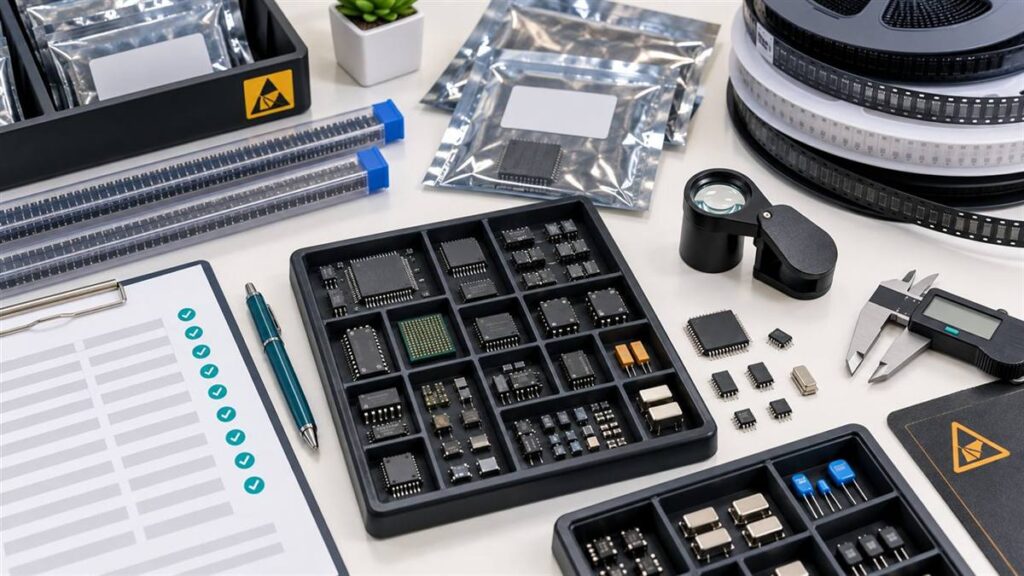
When a production line, repair program, or long-life industrial design depends on a discontinued part, the sourcing decision is not just about finding a seller. It is about verifying lifecycle status, controlling counterfeit risk, comparing alternatives, and giving a distributor enough information to search responsibly.
This guide explains how BOM buyers can work with an obsolete electronic components distributor without treating availability, price, lead time, compatibility, or authenticity as guaranteed. Use it as a practical checklist before sending an RFQ, approving a shortage buy, or accepting an alternate part.
What does obsolete mean in electronic component sourcing?
In component procurement, obsolete usually means the manufacturer no longer recommends the part for new designs or has ended regular production. The part may also be described as end-of-life, discontinued, not recommended for new design, last-time-buy closed, or legacy support only. These labels are related, but they are not identical. Buyers should confirm the status from manufacturer lifecycle notices, distributor data, and internal engineering records before making a sourcing decision.
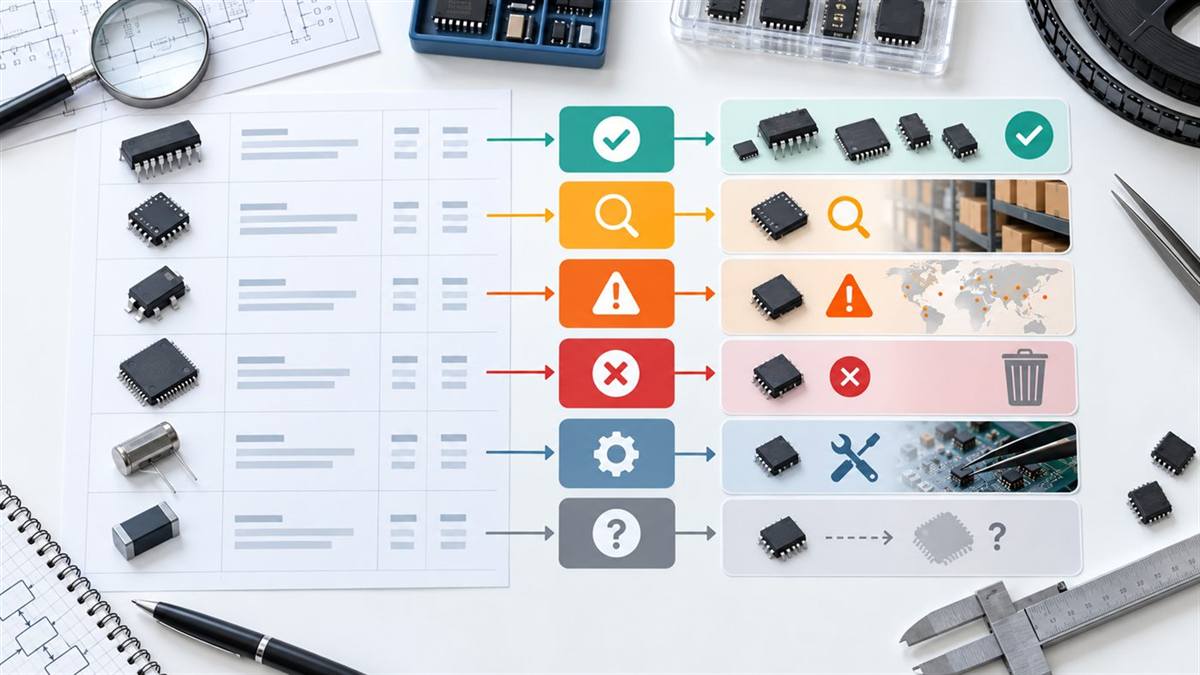
A common mistake is to treat a marketplace listing as proof that the part is safe to buy. For obsolete components, a listing may indicate only that someone claims to have material. It does not automatically prove factory traceability, storage quality, date-code suitability, RoHS status, package condition, or functional compatibility with the assembly.
What an obsolete electronic components distributor should help clarify
An obsolete electronic components distributor can be useful because shortage lines often require broader market research than a standard authorized catalog search. However, the distributor relationship should be managed with clear requirements. Instead of asking only, Do you have stock?, buyers should ask what evidence can be provided and what limitations remain unknown.
Core questions to resolve before purchase
- Is the requested MPN complete, including suffix, package, temperature grade, speed grade, voltage option, and reel or tray format?
- Is the manufacturer confirmed, especially where the same base number exists across multiple brands?
- Does the project require a specific date code, lot code, country of origin, or traceability chain?
- Are RoHS, REACH, conflict minerals, or customer-specific compliance documents required?
- What inspection or testing is expected before shipment?
- Can the buyer accept alternates, and if yes, who has engineering approval authority?
The distributor should not be expected to invent missing specifications. If the buyer cannot confirm acceptable alternates, date-code limits, or compliance requirements, the RFQ should mark those fields as unknown rather than assuming flexibility.
A practical sourcing workflow for obsolete BOM lines
For a single urgent line, speed matters. For a multi-line BOM, structure matters even more. A disciplined workflow makes it easier to compare supplier responses and prevent a promising quote from bypassing quality review.
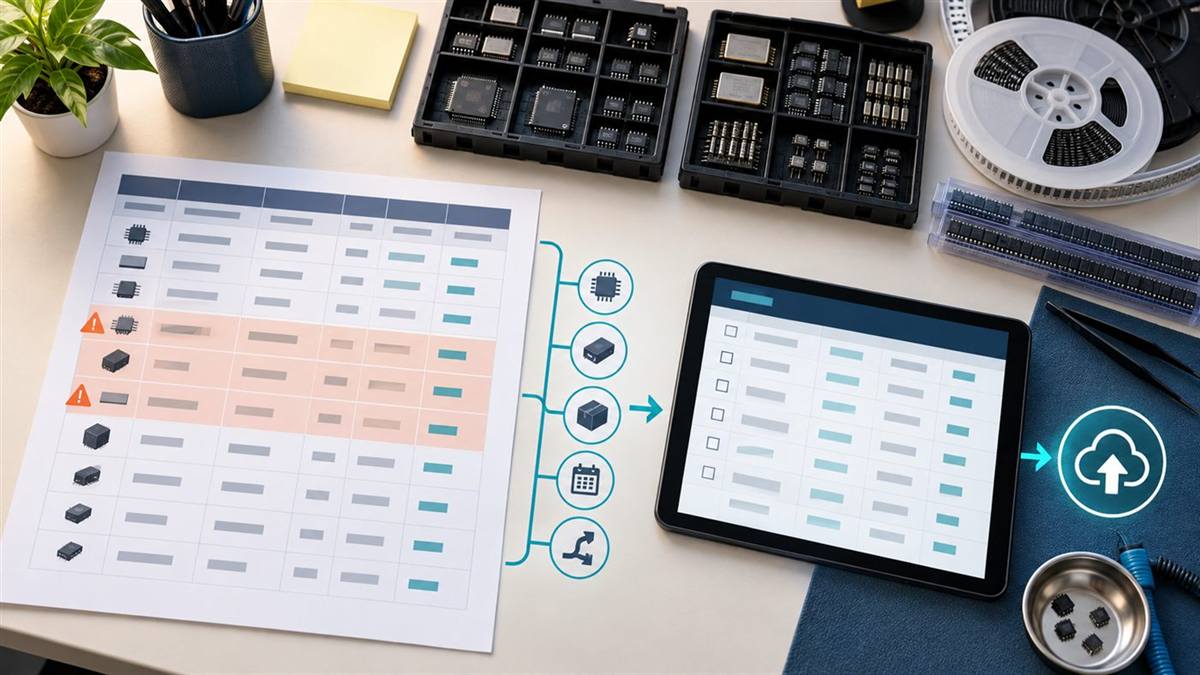
- Normalize the BOM line. Confirm full MPN, manufacturer, description, package, quantity, target delivery date, and end application.
- Check lifecycle status. Compare manufacturer notices, distributor lifecycle labels, and any internal preferred-part-list records.
- Classify urgency and risk. Separate production-stop items from planning buys, engineering samples, and maintenance-only demand.
- Define acceptance criteria. Record date-code limits, packaging type, traceability expectations, test requirements, and compliance documents.
- Search and compare offers. Evaluate supplier history, documentation, quantity, package condition, country of origin, and inspection options.
- Escalate alternates. Route any replacement, cross, or substitute to engineering before commercial approval.
This process keeps procurement from becoming a simple price comparison. With obsolete parts, the lowest offer can become the highest operational risk if the material does not match the application or documentation requirement.
Counterfeit and quality risk control
Obsolete components often move through secondary-market channels, and the age of the material can create additional risk. Buyers should treat authenticity checks, packaging inspection, and documentation review as part of the sourcing workflow rather than a post-purchase activity.

Risk controls may include supplier qualification, photos of labels and packaging, lot-code review, external visual inspection, X-ray inspection, decapsulation, solderability testing, electrical testing, or third-party lab support. The correct level depends on the component value, criticality, application, and customer quality system. For safety-critical, aerospace, medical, automotive, or high-reliability applications, engineering and quality teams should define the acceptance standard before the RFQ is released.
How to evaluate alternatives and cross-references
When the original part is unavailable or carries unacceptable risk, the next question is whether an alternate can work. This is where procurement must slow down and involve engineering. Similar electrical ratings are not enough. The alternate may differ in pinout, package height, thermal behavior, tolerance, firmware assumptions, lifecycle status, qualification standard, or regulatory documentation.
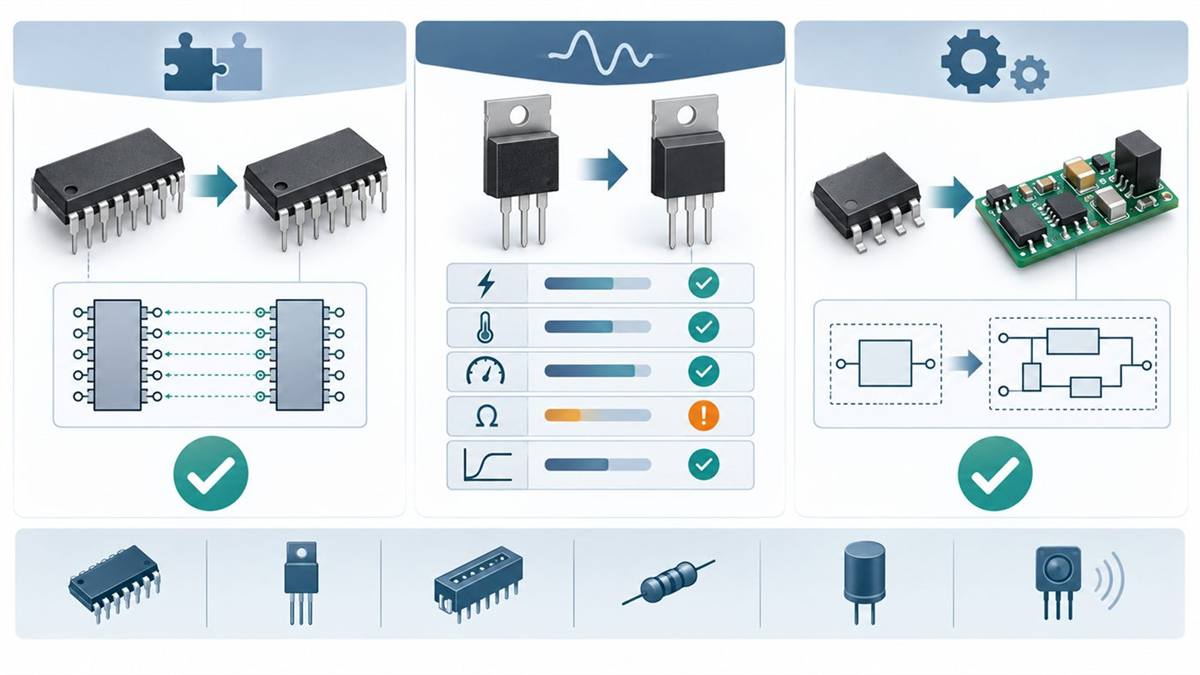
| Validation area | Buyer-side check | Why it matters |
|---|---|---|
| Electrical parameters | Voltage, current, tolerance, speed, timing, noise, leakage, power rating | A small datasheet difference can create field failures or yield loss. |
| Package and footprint | Pinout, dimensions, land pattern, height, thermal pad, moisture sensitivity | A package mismatch can block assembly even when the function is similar. |
| Environmental and compliance | RoHS, REACH, halogen-free, temperature grade, qualification standard | Customer or regional compliance requirements may limit acceptable options. |
| Firmware or system behavior | Register map, startup behavior, timing margin, calibration, software dependency | Digital and mixed-signal parts can fail substitution even when pin-compatible. |
| Lifecycle of the alternate | Active status, NRND label, last-time-buy notice, expected sourcing path | A substitute that is also near end-of-life may only move the shortage forward. |
A cross-reference should be treated as a candidate, not an approval. Procurement can collect options, but engineering should decide whether the alternate is acceptable for prototype, production, repair, or no-use status.
RFQ checklist for obsolete electronic components
A complete RFQ improves response quality. It helps the distributor search more accurately and reduces back-and-forth questions that can slow a shortage project.
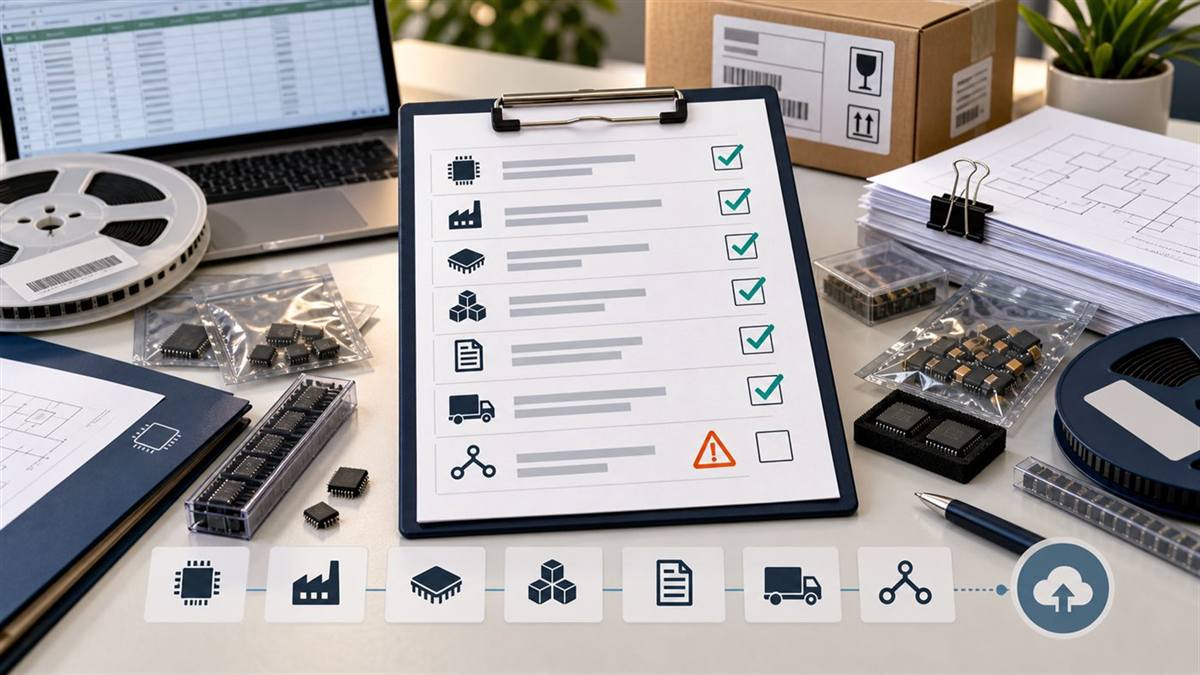
Include these fields in the RFQ
- Full manufacturer part number and manufacturer name
- Target quantity, acceptable split quantities, and whether excess quantity is acceptable
- Required date code range or maximum component age, if applicable
- Packaging requirement such as cut tape, reel, tray, tube, or bulk
- RoHS or other compliance requirements
- Required documentation such as COC, photos, traceability, test report, or lab inspection
- Target delivery date and destination country or region
- End application and criticality level where disclosure is allowed
- Whether alternates are allowed, and who approves them
If the sourcing request is urgent, separate must-have criteria from preferred criteria. This lets the distributor report realistic options without assuming that missing documentation, different packaging, or older date codes are acceptable.
How buyers should compare distributor responses
When several suppliers respond, compare offers with a consistent framework. Price is only one field. Availability, documentation, inspection path, and residual risk can matter more than unit cost for a critical line.
| Comparison factor | What to confirm |
|---|---|
| Exact match | Manufacturer, suffix, package, grade, and packaging format match the BOM requirement. |
| Evidence | Photos, labels, date codes, lot details, compliance documents, or traceability are available where required. |
| Inspection | The inspection level matches the risk level of the end application. |
| Commercial terms | Quantity, pricing, payment terms, lead time, validity window, and cancellation limits are clearly stated. |
| Engineering approval | Any alternate or substitute is reviewed by the correct technical owner before procurement approval. |
When to redesign instead of continuing to source obsolete parts
Sometimes the right answer is not another shortage buy. If a product has recurring demand, repeated sourcing risk, or rising inspection cost, engineering should evaluate a redesign or approved alternate strategy. Obsolete sourcing can protect a near-term production or service need, but it may not be the best long-term supply-chain plan.
Redesign discussions are especially important when the same obsolete component appears across multiple BOMs, when test cost is increasing, when customer documentation requirements are strict, or when the project has a multi-year service obligation. Procurement can support this decision by documenting sourcing difficulty, risk comments, and supplier response patterns.
FAQ: obsolete electronic components distributor sourcing
Can a distributor guarantee that an obsolete component is available?
No sourcing request should assume availability until the distributor has confirmed the material, quantity, condition, documentation, commercial terms, and validity window. For obsolete parts, offers can change quickly, so buyers should treat each quote as time-sensitive and evidence-dependent.
Is an obsolete component the same as a hard-to-find component?
Not always. A hard-to-find component may still be active but constrained by allocation, long lead time, or limited channel supply. An obsolete component usually indicates that regular production has ended or the manufacturer no longer supports it for new demand.
Should buyers accept a cross-reference suggested by a distributor?
A cross-reference can be useful as a starting point, but it should be reviewed by engineering before approval. Buyers should compare datasheets, package, pinout, qualification, compliance, and system-level behavior before substitution.
What documents should be requested for obsolete components?
The required documents depend on the application and quality system. Common requests include photos, COC, traceability information, date-code details, compliance documents, inspection reports, and test evidence. If a document is mandatory, state it clearly in the RFQ.
What should I send when asking for an obsolete parts quote?
Send the full manufacturer part number, manufacturer name, quantity, target delivery date, acceptable date code, packaging requirement, compliance needs, documentation requirements, and whether alternates are allowed. If any requirement is unknown, mark it as unknown instead of leaving it ambiguous.
Request Quote or Upload BOM
If your BOM includes obsolete or hard-to-find electronic components, send the exact part numbers, manufacturer names, suffixes and target quantities to ApexComponent for sourcing review. For multi-line projects, upload the BOM and mark which items require traceability, date-code control, compliance documents, testing or approved alternates.
Contact ApexComponent with the BOM line details and sourcing constraints you want reviewed.