
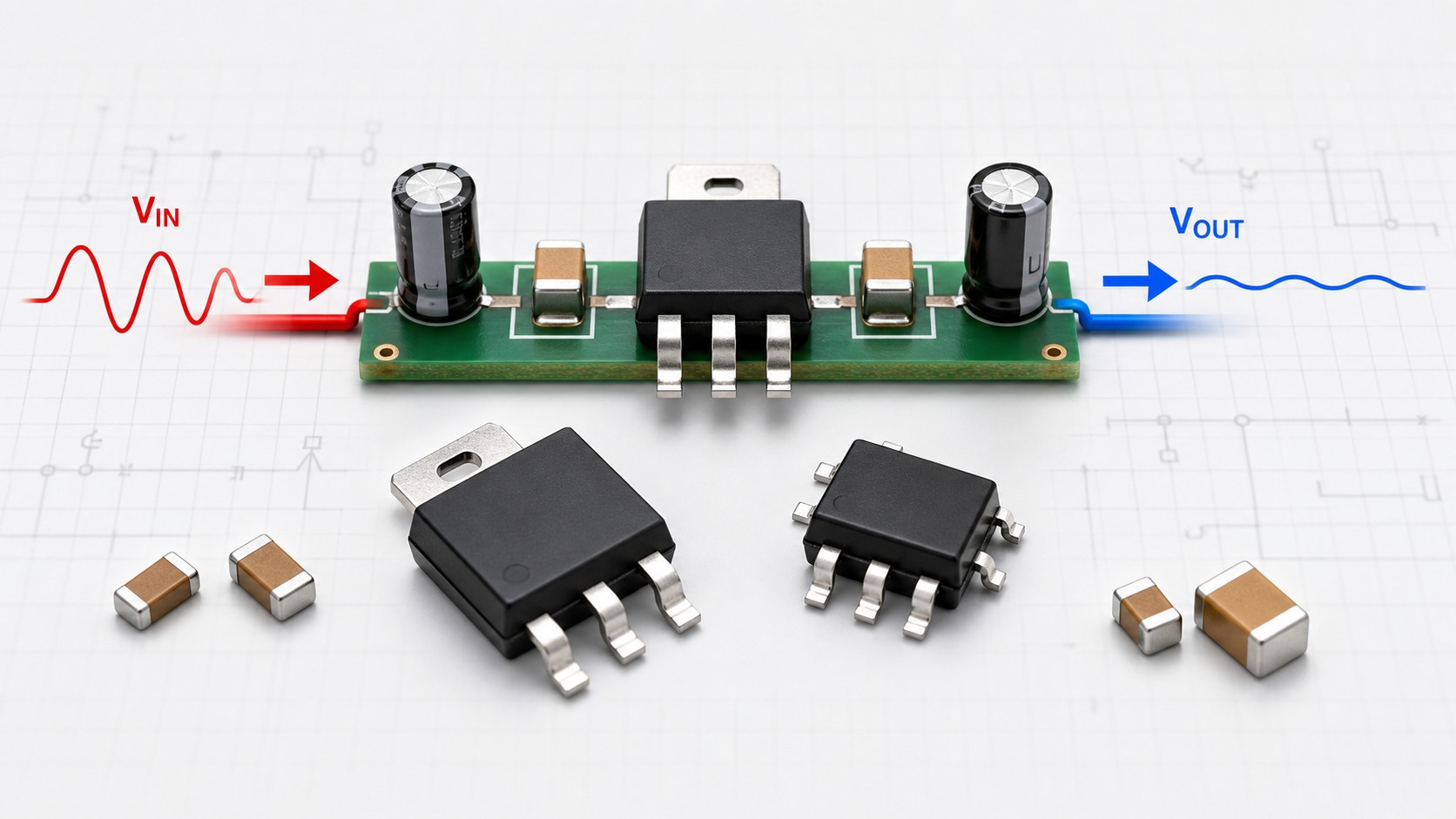
LDO Linear Regulator: Selection, Applications and Buying Guide
An LDO linear regulator is a voltage regulator IC that turns a higher input voltage into a stable lower output voltage while needing only a small input-to-output voltage difference. It
An LDO linear regulator is a voltage regulator IC that turns a higher input voltage into a stable lower output voltage while needing only a small input-to-output voltage difference. It
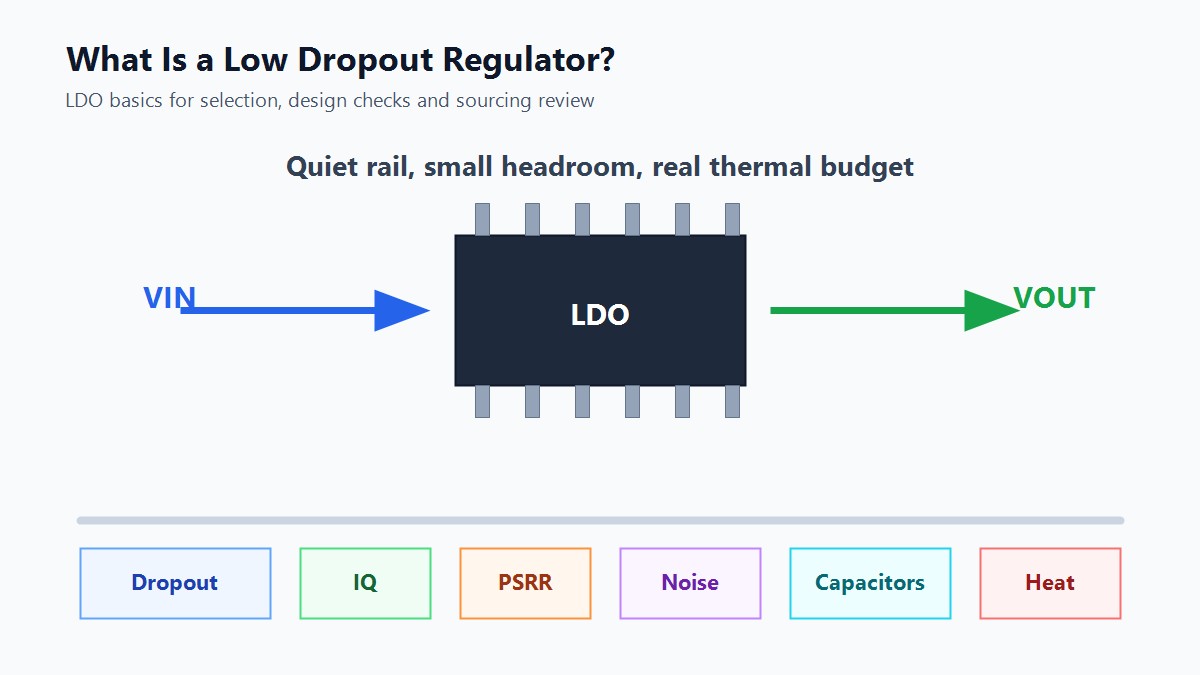
A low dropout regulator, or LDO, is a linear voltage regulator that keeps a stable output voltage when the input voltage is only slightly higher than the output voltage. That
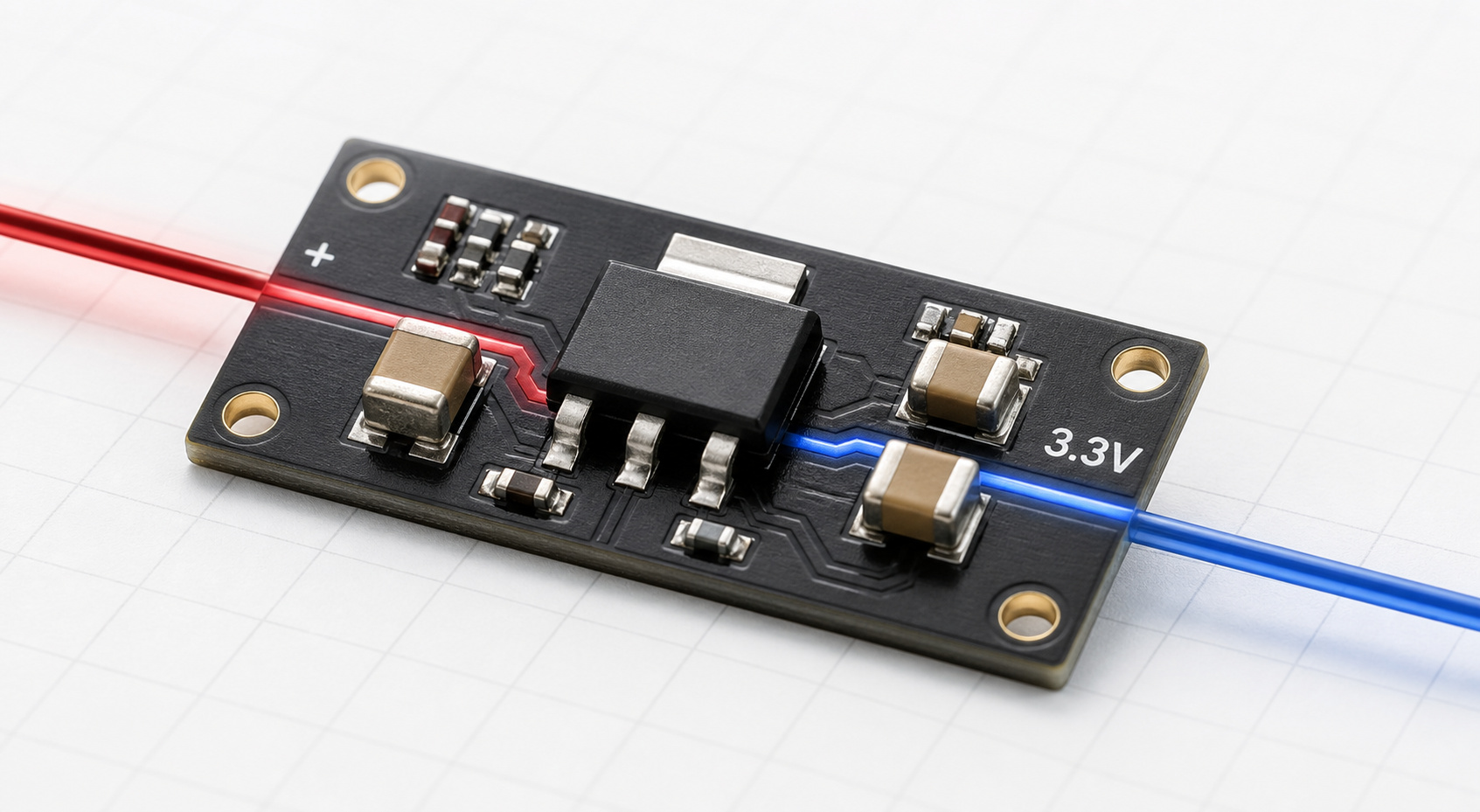
Quick Take TLV1117-33 is TI’s fixed 3.3 V member of an 800 mA, 15 V linear-regulator family—but “-33” alone is not the complete engineering identity. TI’s current data sheet distinguishes
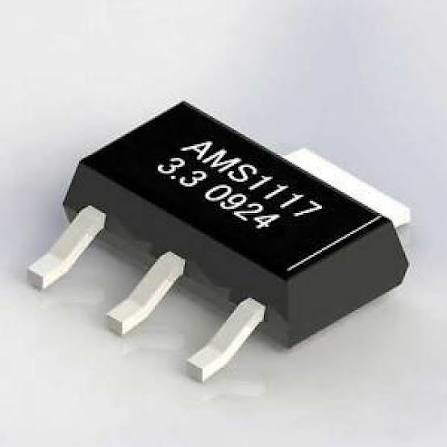
An AMS1117 3.3V circuit is a simple linear regulator circuit that converts a higher DC input, commonly 5V, into a regulated 3.3V rail for microcontrollers, sensors, logic ICs and small
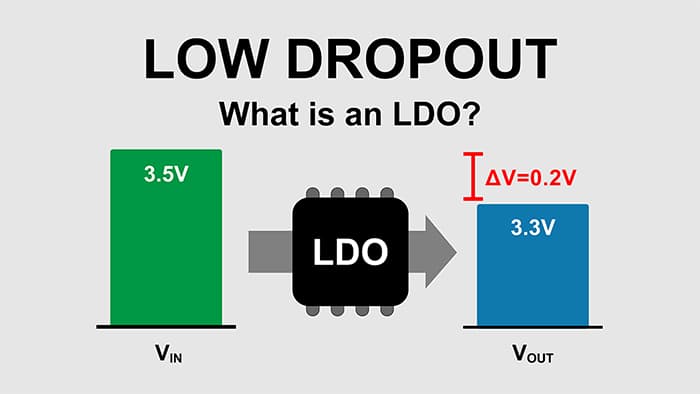
1.Introduction A Low-Dropout Regulator, often called an **LDO**, is a common power management IC used in many electronic products. It provides a stable output voltage from a higher input voltage.