
Table of Contents
MCU Selection Guide for Industrial IoT Applications
1.Introduction
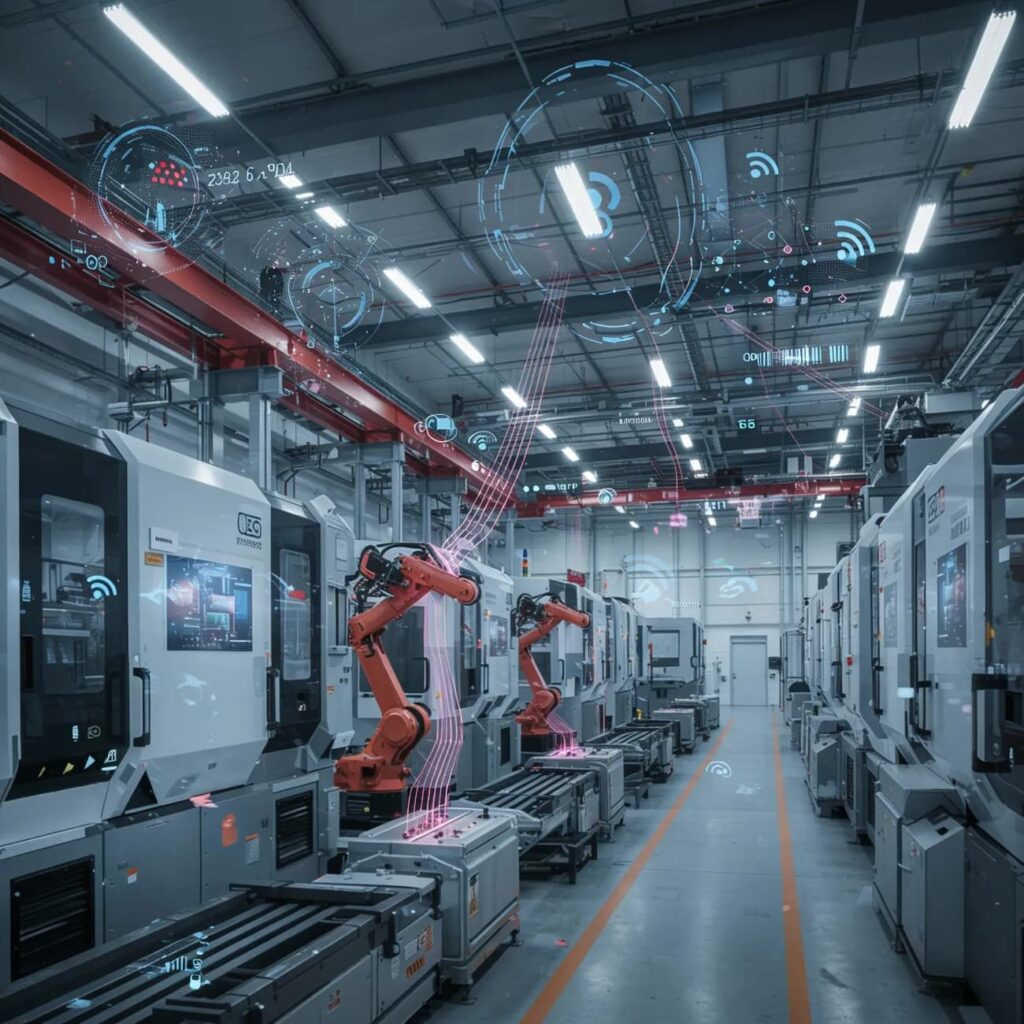
Industrial IoT, also called IIoT, connects machines, sensors, controllers, and cloud systems. In many IIoT products, the microcontroller unit, or MCU, is the main control component.
An MCU is a small integrated circuit that can process data, control signals, read sensors, and manage communication. For industrial products, choosing an MCU is not only about speed. Buyers and engineers also need to check reliability, temperature range, security, software support, lifecycle status, and long-term supply.
This guide explains how to choose an MCU for Industrial IoT applications. It also compares several common MCU families from STMicroelectronics, NXP, Renesas, and Espressif.
2.What Makes an MCU Suitable for Industrial IoT?
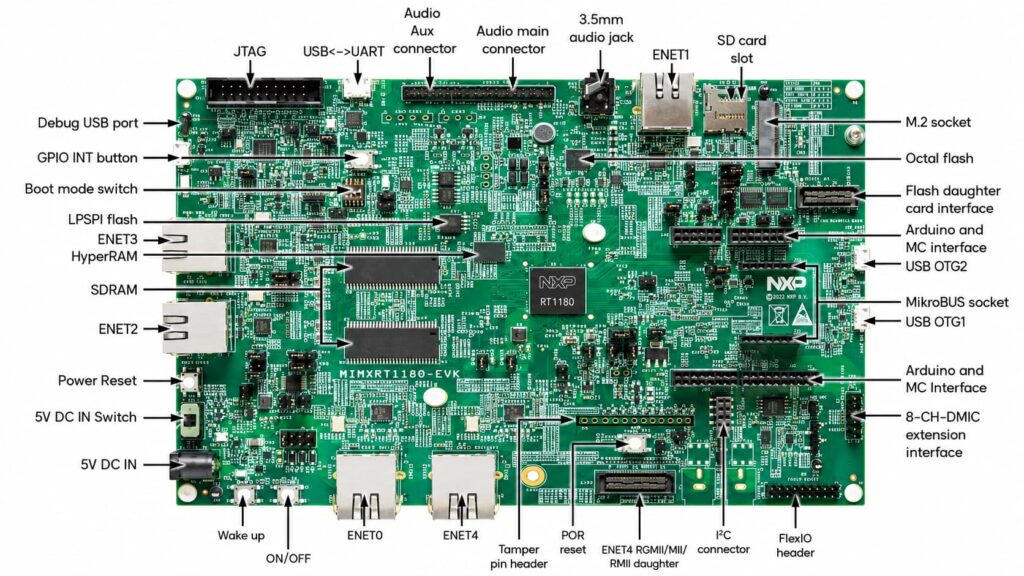
Industrial products usually work for many years. They may also be used in factories, outdoor systems, energy equipment, smart meters, motor control systems, and monitoring devices.
Because of this, an industrial MCU should meet stricter requirements than a basic consumer MCU.
I. Wide Temperature Range
Many industrial MCUs support -40°C to +85°C or -40°C to +105°C / +125°C, depending on the part number.
This is important for applications such as:
– Factory automation
– Outdoor sensors
– Energy systems
– Motor control
– Industrial gateways
When sourcing MCUs, buyers should check the full part number and datasheet. The same MCU family may include different temperature grades.
II. Stable Long-Term Supply
Industrial products often have long product lifecycles. A machine, controller, or sensor system may need maintenance parts for 5 to 10 years or longer.
Before choosing an MCU, procurement teams should check:
Lifecycle status
Active or NRND status
Manufacturer supply plan
Alternative part options
Package availability
Factory lead time
NRND means “Not Recommended for New Designs.” If an MCU is NRND, it may still be available, but it is usually not a good choice for a new long-term project.
III. Security Features
Industrial IoT devices are often connected to networks. This creates security risks. A secure MCU can help protect firmware, data, and device identity.
Important security features include:
Secure Boot
Hardware Root of Trust
Cryptographic engine
Key storage
Debug protection
Secure firmware update
For example, selected STM32U5 products have security certifications such as PSA Certified Level 3 and SESIP Level 3, but buyers should confirm the exact part number and security documentation before selection.
IV. Industrial Connectivity
Industrial IoT products often need communication interfaces. Common examples include:
Ethernet
CAN / CAN FD
UART
SPI
I2C
USB
RS-485 support through external transceivers
The MCU does not always include every physical interface inside the chip. Buyers should check the MCU peripherals and the full system requirement.
3.Common MCU Families for Industrial IoT
STMicroelectronics STM32H7 and STM32U5
STM32 MCUs are widely used in embedded and industrial systems because they have a large product range, strong software support, and many development resources.
STM32H7 is suitable for high-performance control, data processing, industrial gateways, and edge computing. Many STM32H7 devices run at up to 480 MHz, while newer STM32H7RS lines can run up to 600 MHz.
STM32U5 is suitable for low-power industrial sensors, handheld devices, and battery-powered IoT products. It focuses on low power and security. Selected STM32U5 devices also support advanced security certification guidance.
Good fit for:
Industrial sensors
Smart meters
Edge control devices
Secure connected products
Low-power monitoring systems
NXP i.MX RT and MCX Series
NXP offers MCU families for high-performance embedded applications and AI-enabled edge devices.
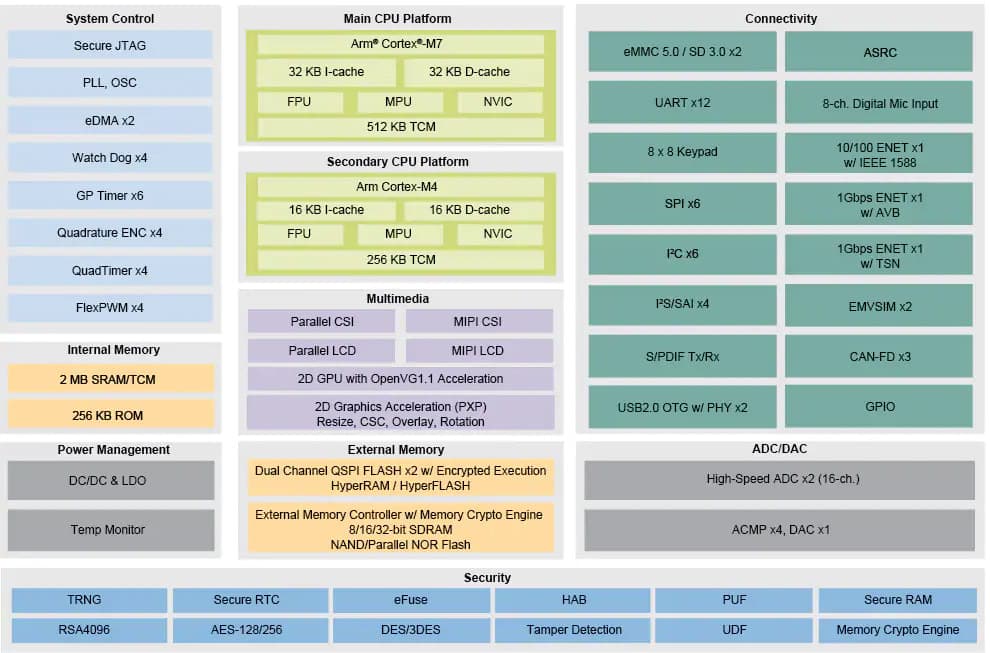
i.MX RT devices are often called crossover MCUs. They provide high MCU performance while keeping real-time control features. For example, the i.MX RT1170 includes an Arm Cortex-M7 core running up to 1 GHz and supports industrial and IoT applications.
MCX Series is NXP’s newer MCU platform. Some MCX N families include an eIQ Neutron NPU, which helps run machine learning tasks on the MCU, such as anomaly detection or simple object classification.
Good fit for:
– Industrial HMI
– Motor control
– Edge AI devices
– Industrial gateways
– High-speed data processing
Renesas RA and RX Series
Renesas MCUs are often used in industrial control, motor control, metering, and reliable embedded systems.
RA Series uses Arm Cortex-M cores. For example, RA6M5 uses a 200 MHz Arm Cortex-M33 core, TrustZone technology, Ethernet, CAN FD, and Secure Crypto Engine features.
RX Series uses Renesas’ own RX CPU core. It is known for performance efficiency, fast interrupt response, and low power consumption in embedded systems.
Good fit for:
Motor control
Industrial controllers
Energy systems
Metering products
Long-life embedded products
Espressif ESP32-C6 and ESP32-P4
Espressif MCUs are often used in connected IoT products where wireless communication and cost control are important.
ESP32-C6 supports 2.4 GHz Wi-Fi 6, Bluetooth 5 LE, Zigbee, and Thread. It uses a RISC-V processor and is suitable for wireless IoT products.
ESP32-P4 is a high-performance RISC-V MCU for applications that need more computing power, image processing, voice processing, and rich interfaces. Espressif recently released ESP32-P4 chip version v3.x, so buyers should check the correct version, hardware design notes, and firmware support before purchasing.
Good fit for:
Wireless sensors
Smart IoT terminals
HMI products
Edge computing devices
Cost-sensitive connected products
4.MCU Comparison Table
| MCU Family | Core Type | Main Strength | Typical Use | Sourcing Note |
|---|---|---|---|---|
| STM32H7 / H7RS | Arm Cortex-M7 | High performance | Industrial gateways, edge control | Check exact speed, flash, package, and lifecycle |
| STM32U5 | Arm Cortex-M33 | Low power and security | Battery sensors, secure IoT | Confirm exact security certification by part number |
| NXP i.MX RT | Arm Cortex-M | Very high MCU performance | HMI, motor control, gateway systems | Check memory, package, and external component needs |
| NXP MCX | Arm Cortex-M33 | Edge AI options | AI-enabled sensors, automation | NPU is available only on selected families |
| Renesas RA | Arm Cortex-M | Security and industrial control | Controllers, meters, connected systems | Check FSP software support and lifecycle |
| Renesas RX | Renesas RX core | Performance efficiency | Motor control, embedded control | Confirm toolchain and migration plan |
| ESP32-C6 | RISC-V | Wireless integration | Wi-Fi, Zigbee, Thread devices | Check RF requirements and certification needs |
| ESP32-P4 | RISC-V | HMI, image, voice processing | Advanced IoT and edge devices | Check chip version and design guidance |
5.How to Choose the Right MCU
I.Start with the Application
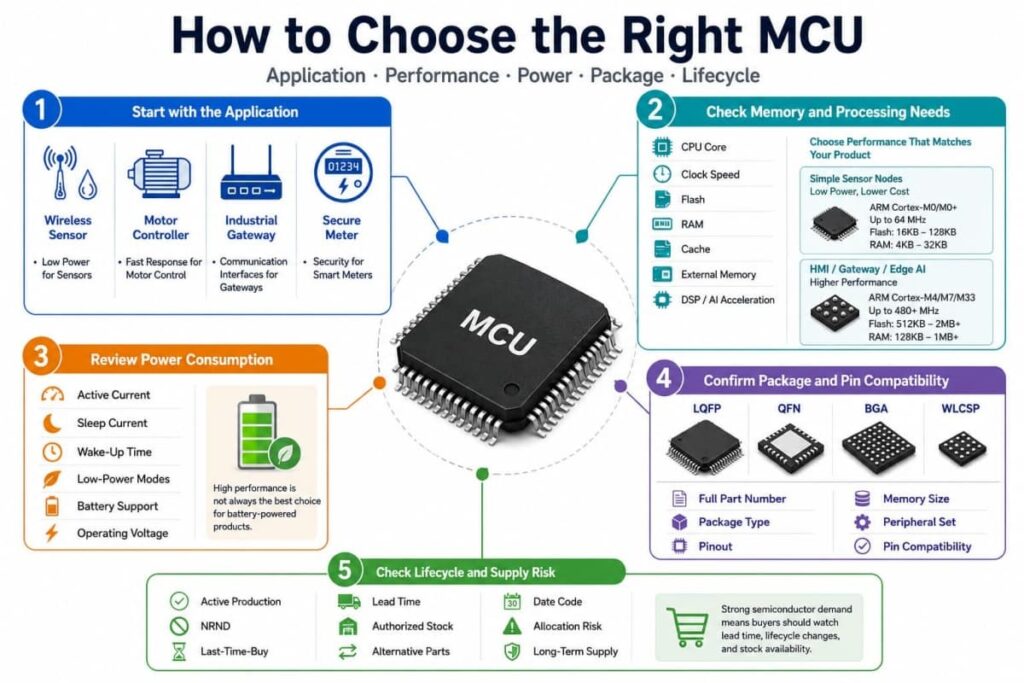
Different IIoT products need different MCU features.
For example:
A wireless sensor needs low power and wireless connectivity.
A motor controller needs fast response and control peripherals.
An industrial gateway needs more processing power and communication interfaces.
A secure meter needs strong security and long-term supply.
Do not choose an MCU only because it has a high clock speed. The right MCU must match the real product function.
II.Check Memory and Processing Needs
Important MCU specifications include:
– CPU core
– Clock speed
– Flash size
– RAM size
– Cache
– External memory support
– DSP or AI acceleration
For simple sensor nodes, a smaller MCU may be enough. For HMI, gateway, or edge AI products, a higher-performance MCU may be needed.
III.Review Power Consumption
Power consumption is important for wireless sensors, portable instruments, smart meters, and remote monitoring devices.
Buyers should check:
Active current
Sleep current
Wake-up time
Low-power modes
Battery support
Operating voltage
A high-performance MCU may not be the best choice if the product must run for years on a battery.
IV.Confirm Package and Pin Compatibility
MCUs may use different package types, such as:
LQFP
QFN
BGA
WLCSP
For sourcing, package type is very important. Even if two MCUs belong to the same family, they may not have the same pinout, memory size, or peripheral set.
Always confirm the full manufacturer part number before purchasing.
V.Check Lifecycle and Supply Risk
The semiconductor market is growing strongly in 2026. WSTS forecasts the global semiconductor market to reach about USD 975 billion in 2026, with strong growth in logic and memory. SIA also reported strong Q1 2026 chip sales. This means demand is active, but buyers still need to watch lead times, allocation risk, and lifecycle changes.
For long-term MCU sourcing, check:
Active production status
NRND status
Last-time-buy notice
Factory lead time
Authorized channel stock
Alternative part options
Date code requirements
6.MCU Sourcing and Quality Control Tips
For B2B buyers, MCU sourcing is not only about price. MCUs are key control components, so quality and traceability are important.
Before purchasing MCUs, buyers should confirm:
– Full manufacturer part number
– Brand and original source
– Package type
– Temperature grade
– Memory size
– Speed grade
– Security version
– Date code and lot number
– Moisture sensitivity level
– Original packaging condition
– RoHS / REACH compliance
– Lifecycle status
– Available alternatives
For industrial projects, buyers may also need:
– Visual inspection
– Label and packaging inspection
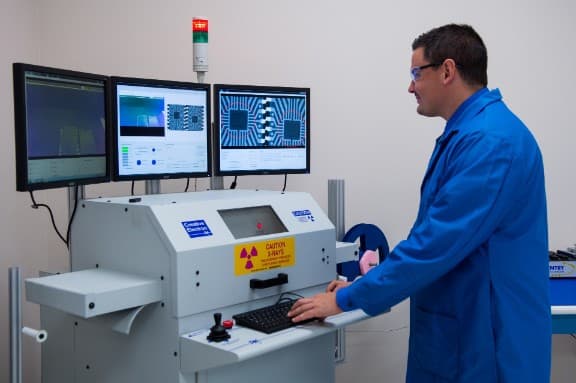
– X-ray inspection if required
– Electrical testing when possible
– Traceability documents
– BOM review
– Alternative part recommendation
If the original MCU is hard to source, an alternative MCU should not be approved only by similar specifications. Engineers must check software compatibility, pinout, peripherals, memory, package, power, and firmware changes.
7.Conclusion
Selecting an MCU for Industrial IoT requires a balance between performance, power consumption, security, connectivity, lifecycle, and supply stability.
STM32H7 and STM32U5 are strong options for high-performance and low-power industrial products. NXP i.MX RT and MCX are suitable for high-speed control and edge AI applications. Renesas RA and RX are useful for reliable industrial control and motor control. Espressif ESP32-C6 and ESP32-P4 are suitable for connected and cost-sensitive IoT products.
For procurement teams, the most important step is to check the full part number, lifecycle status, packaging, quality documents, and long-term availability before purchase.
For MCU sourcing, BOM review, original component supply, alternative part recommendations, inventory support, or quality inspection, our team can help review your requirements and provide suitable electronic component options.
8.FAQ
1. What is an MCU?
An MCU, or microcontroller unit, is an integrated circuit used to control electronic systems. It usually includes a processor, memory, and input/output functions in one chip.
2. What is the difference between an MCU and an MPU?
An MCU is usually used for real-time control and simple embedded tasks. An MPU has higher computing power and often runs a full operating system such as Linux.
3. Which MCU is suitable for Industrial IoT?
There is no single answer. The right MCU depends on performance, power, security, communication interface, software support, lifecycle, and supply availability.
4. Can one MCU be replaced by another MCU?
Sometimes, but it must be checked carefully. Engineers need to compare pinout, package, memory, peripherals, voltage, firmware support, and software compatibility.
5. What should buyers check before sourcing MCUs?
Buyers should check the full part number, manufacturer, package, temperature grade, date code, lifecycle status, stock source, compliance documents, and quality inspection requirements.