
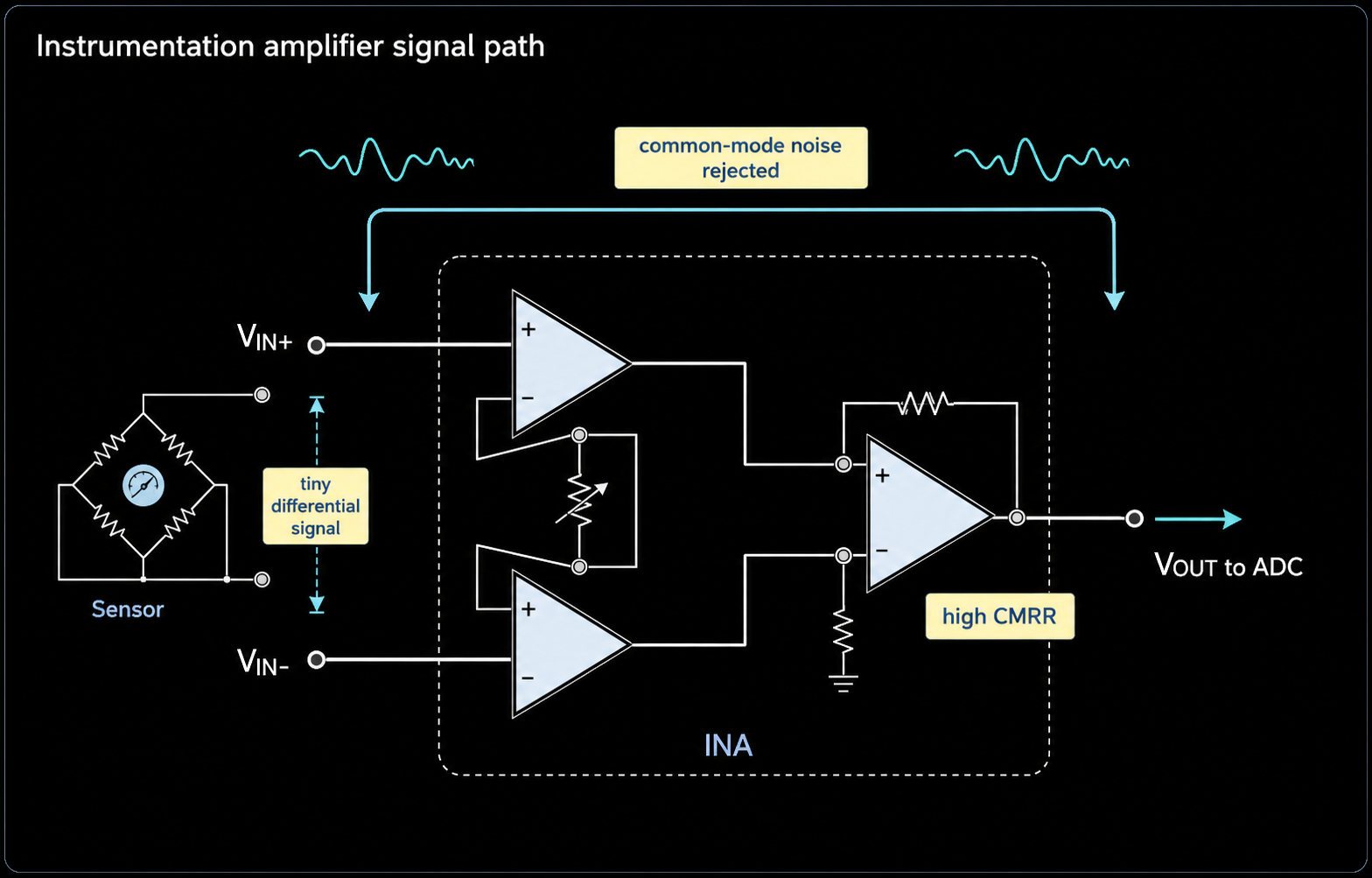
Instrumentation Amplifier: High CMRR Sensor Signal Guide
An instrumentation amplifier is a precision amplifier for small differential signals. It is often used when a sensor gives only a few millivolts, but the circuit also has noise or
An instrumentation amplifier is a precision amplifier for small differential signals. It is often used when a sensor gives only a few millivolts, but the circuit also has noise or
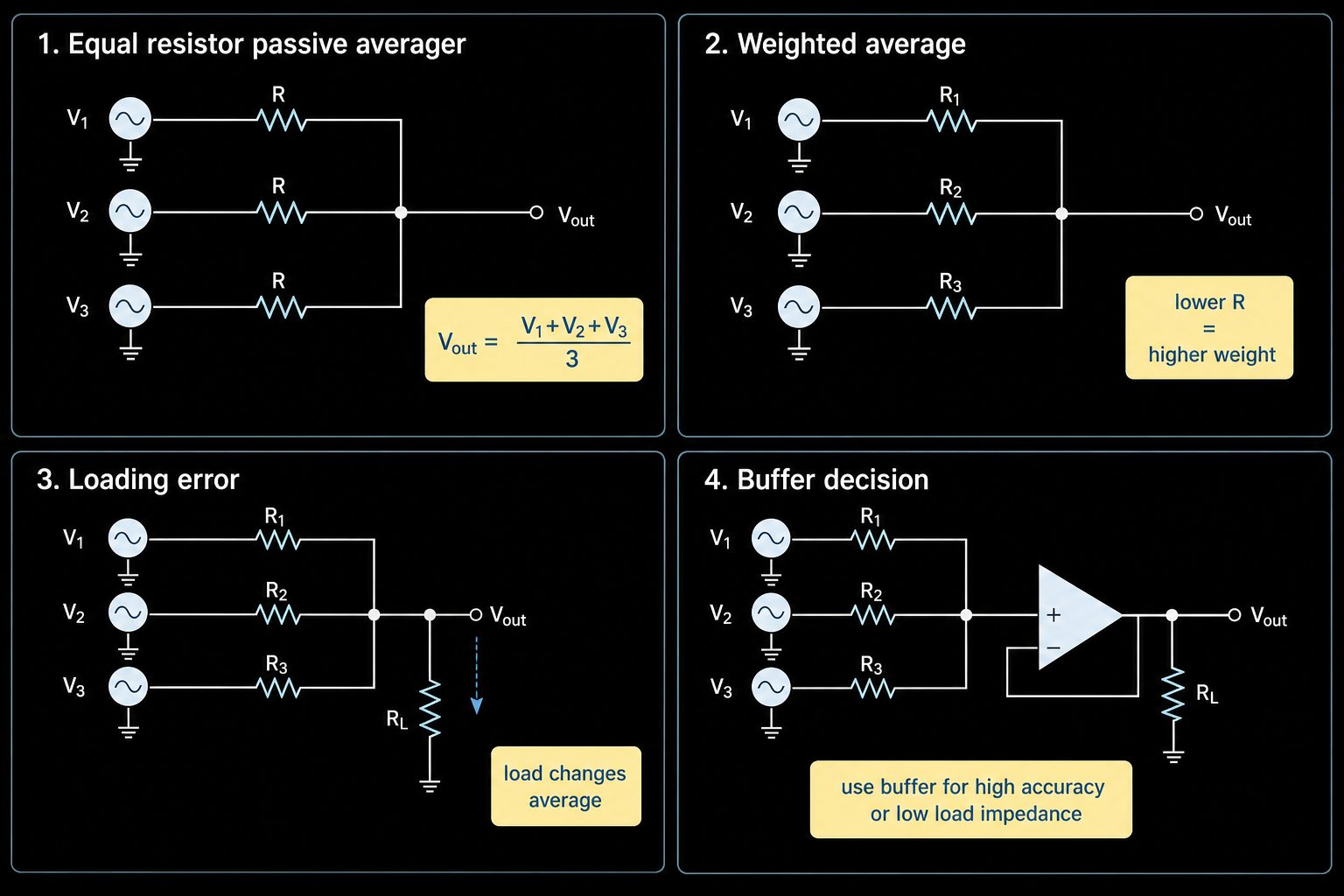
A passive averager is a resistor network that combines two or more voltage inputs into one output node. If all input resistors are equal and the load does not disturb
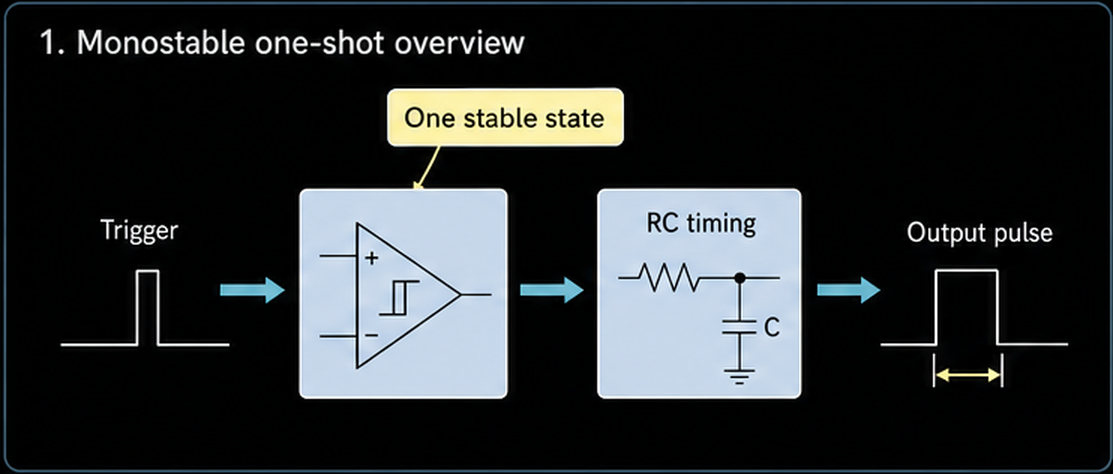
An op amp monostable is a one-shot pulse circuit. It normally stays in one stable state. When a trigger arrives, the output changes state for a set time, then returns
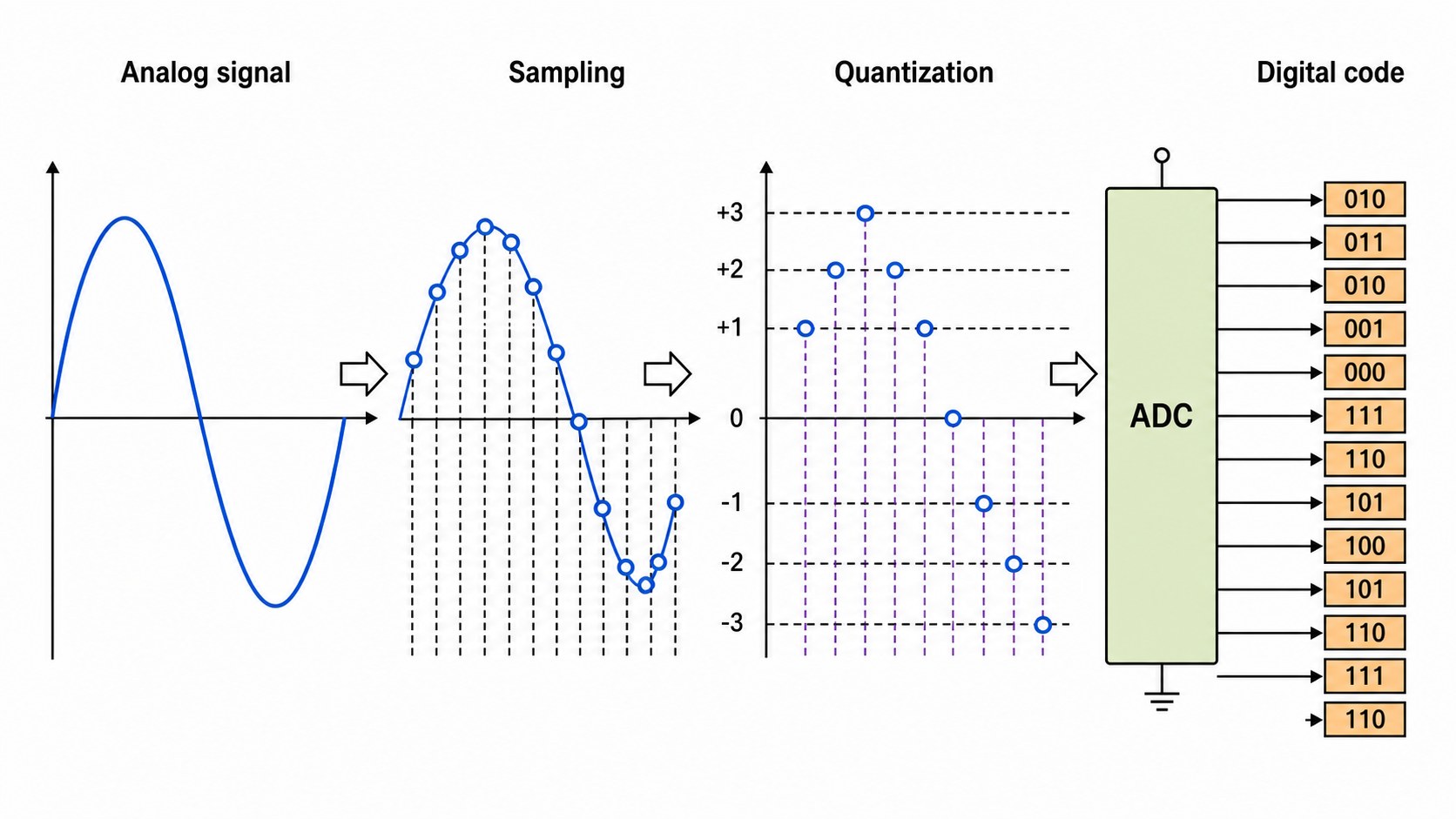
An analog-to-digital converter, usually called an ADC or A/D converter, changes an analog electrical signal into digital data that a microcontroller, processor, DSP, FPGA, or computer can use. Sensors, microphones,
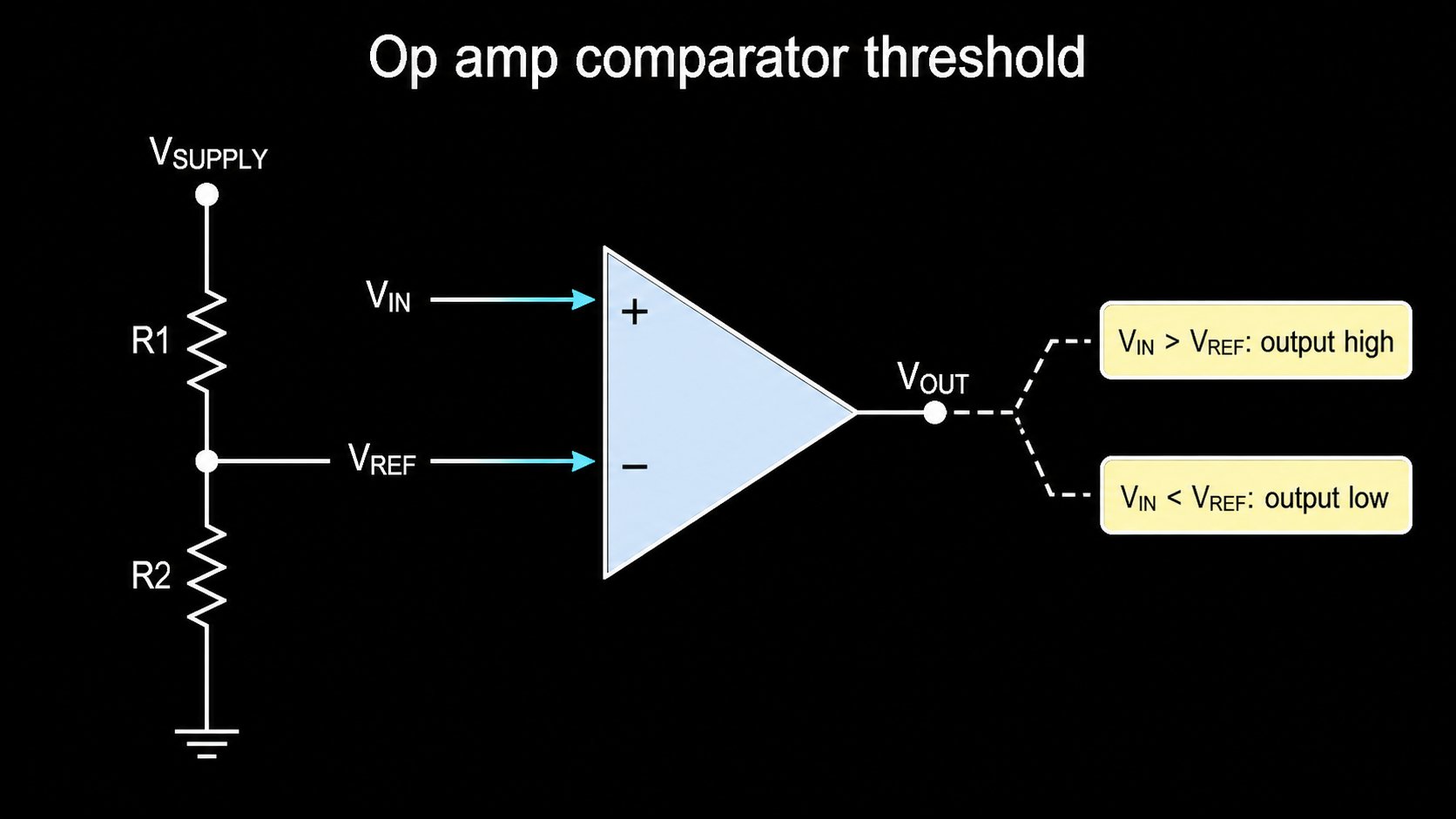
An op amp comparator is a simple voltage decision circuit. It compares an input voltage with a reference voltage. If the input is above the reference, the output changes to

Coverage: August 8–15, 2026 (industry developments published or surfaced during the seven days before this run) Published: August 15, 2026 This Week’s Procurement Signal AI infrastructure demand continues to pull
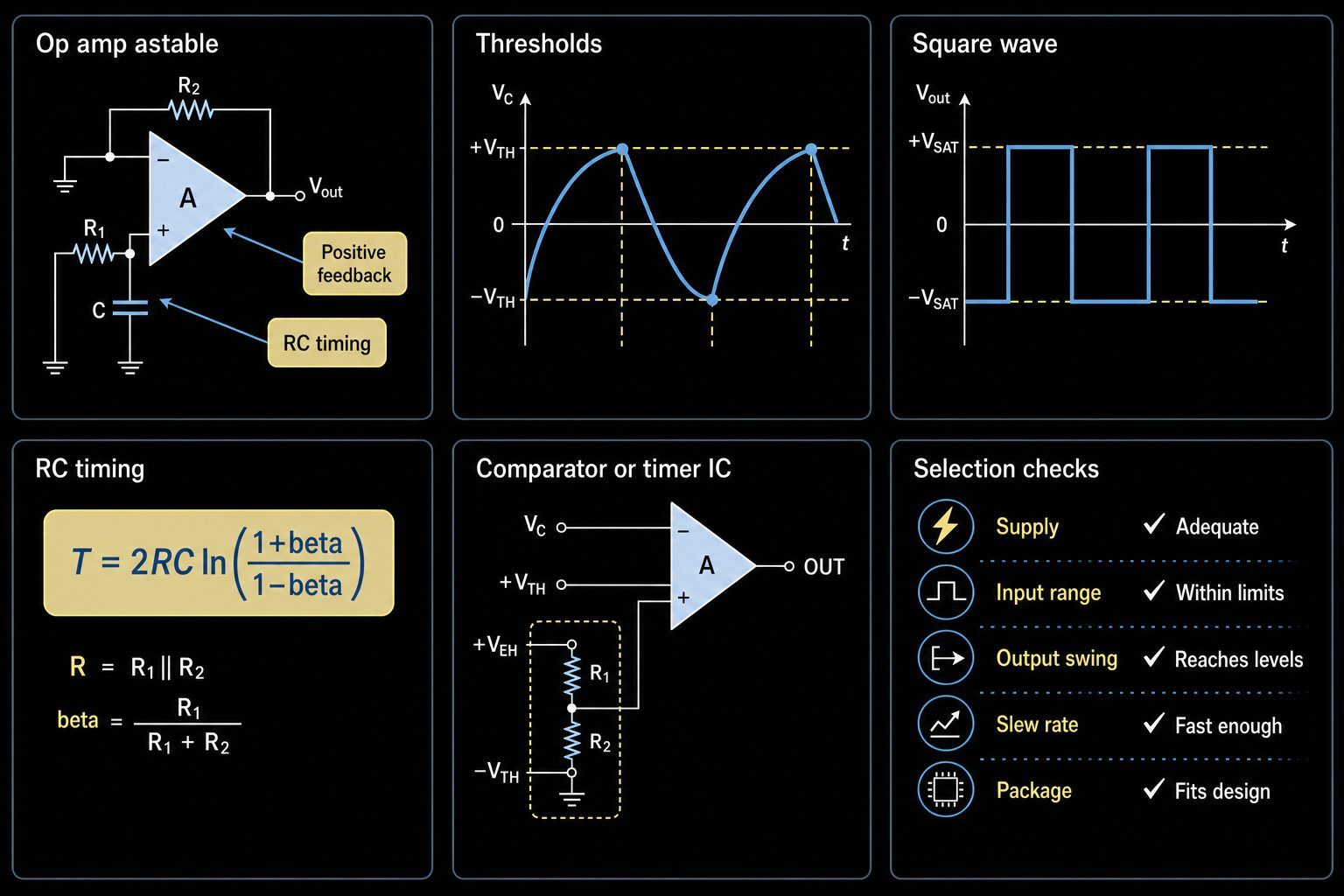
An op amp multivibrator is a timing circuit that can switch its output between a high level and a low level. In this article, the main focus is the astable
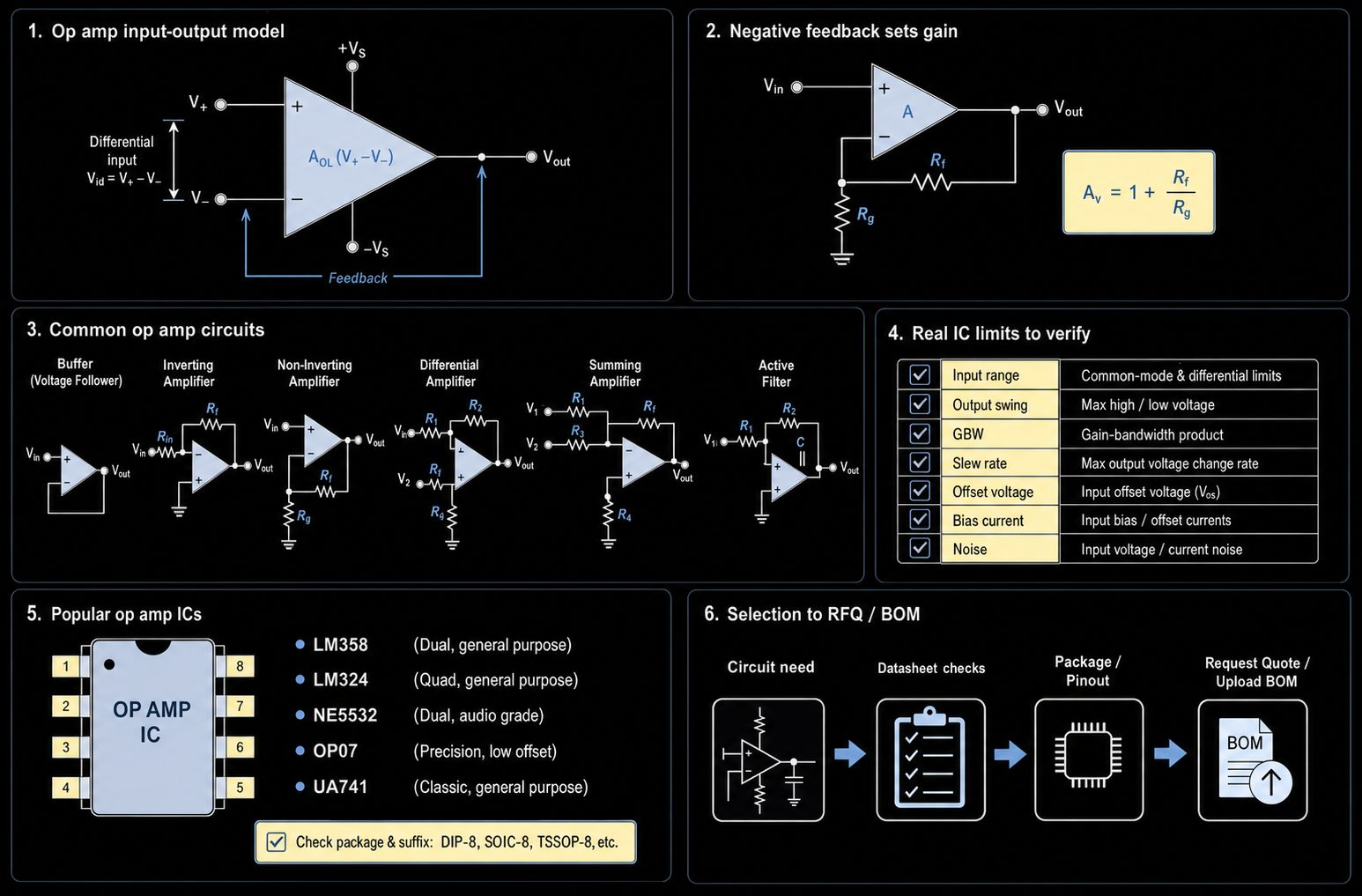
Operational amplifiers, usually called op amps, are analog ICs that amplify the voltage difference between two input pins and drive one output pin. This summary focuses on practical circuit types,
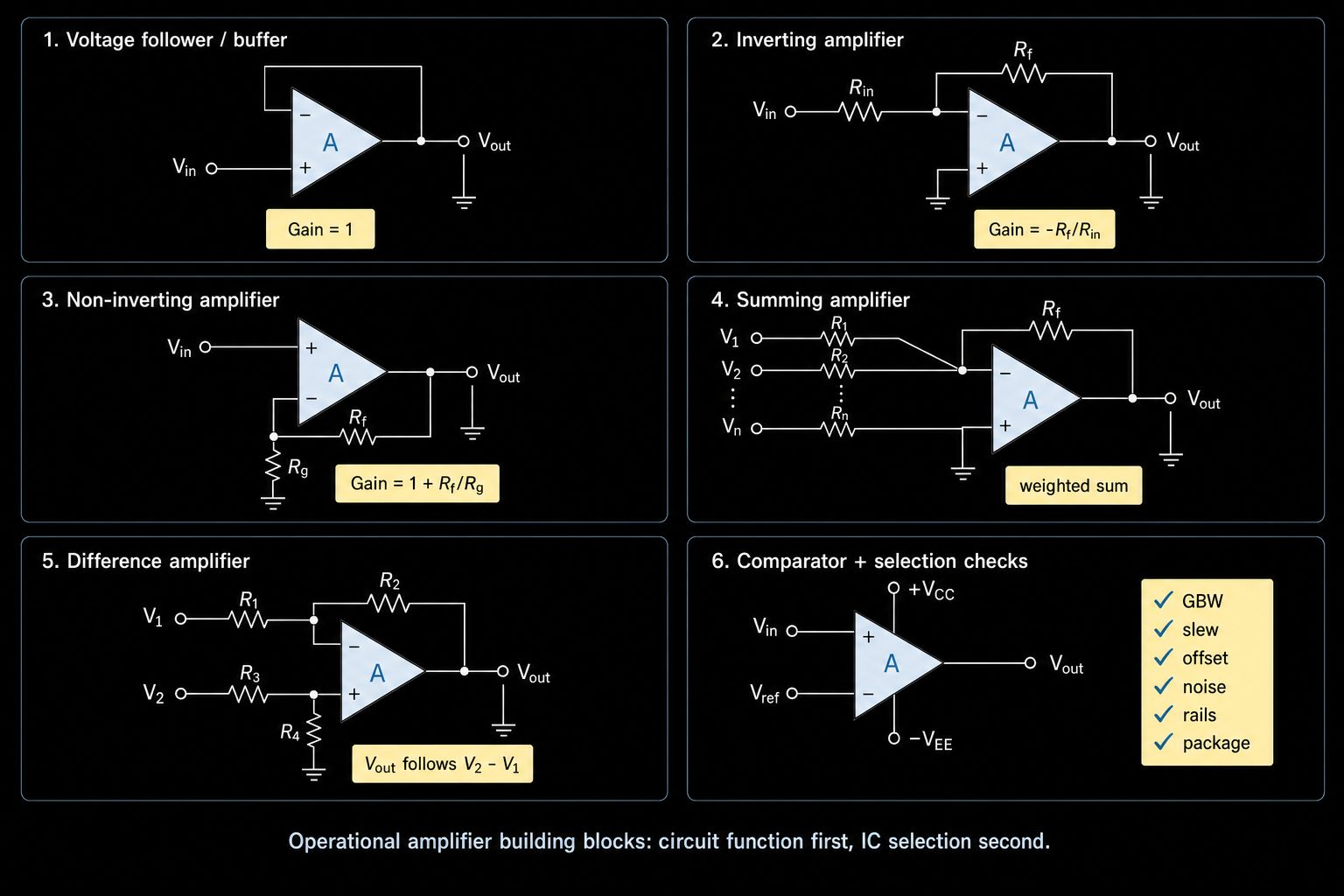
Operational amplifier building blocks are the common op amp circuits that designers reuse for buffering, gain, inversion, signal addition, subtraction, comparison-like decisions, integration, differentiation and filtering. They are not only
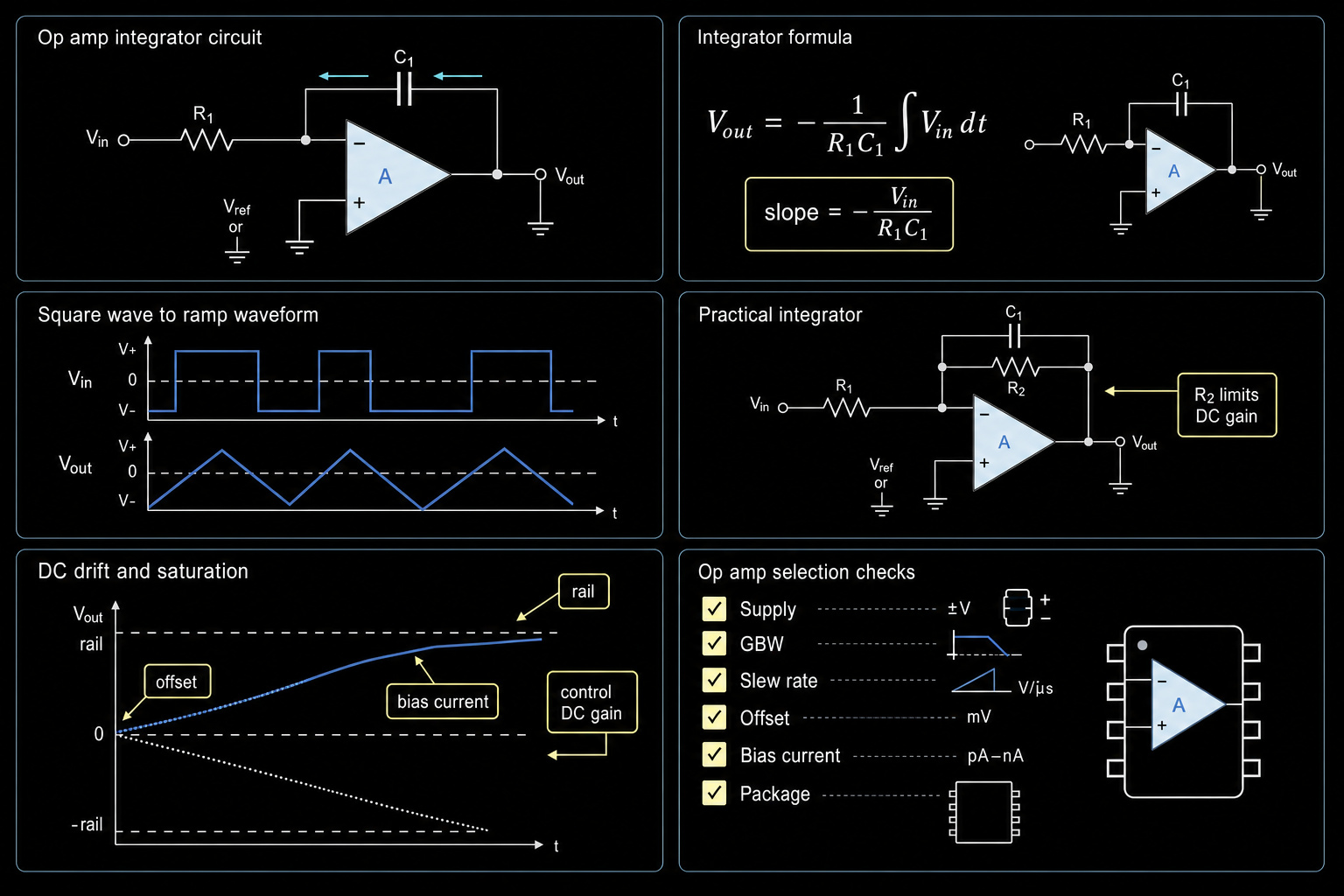
An op amp integrator circuit uses an operational amplifier, an input resistor and a feedback capacitor to produce an output voltage proportional to the time integral of the input voltage.