
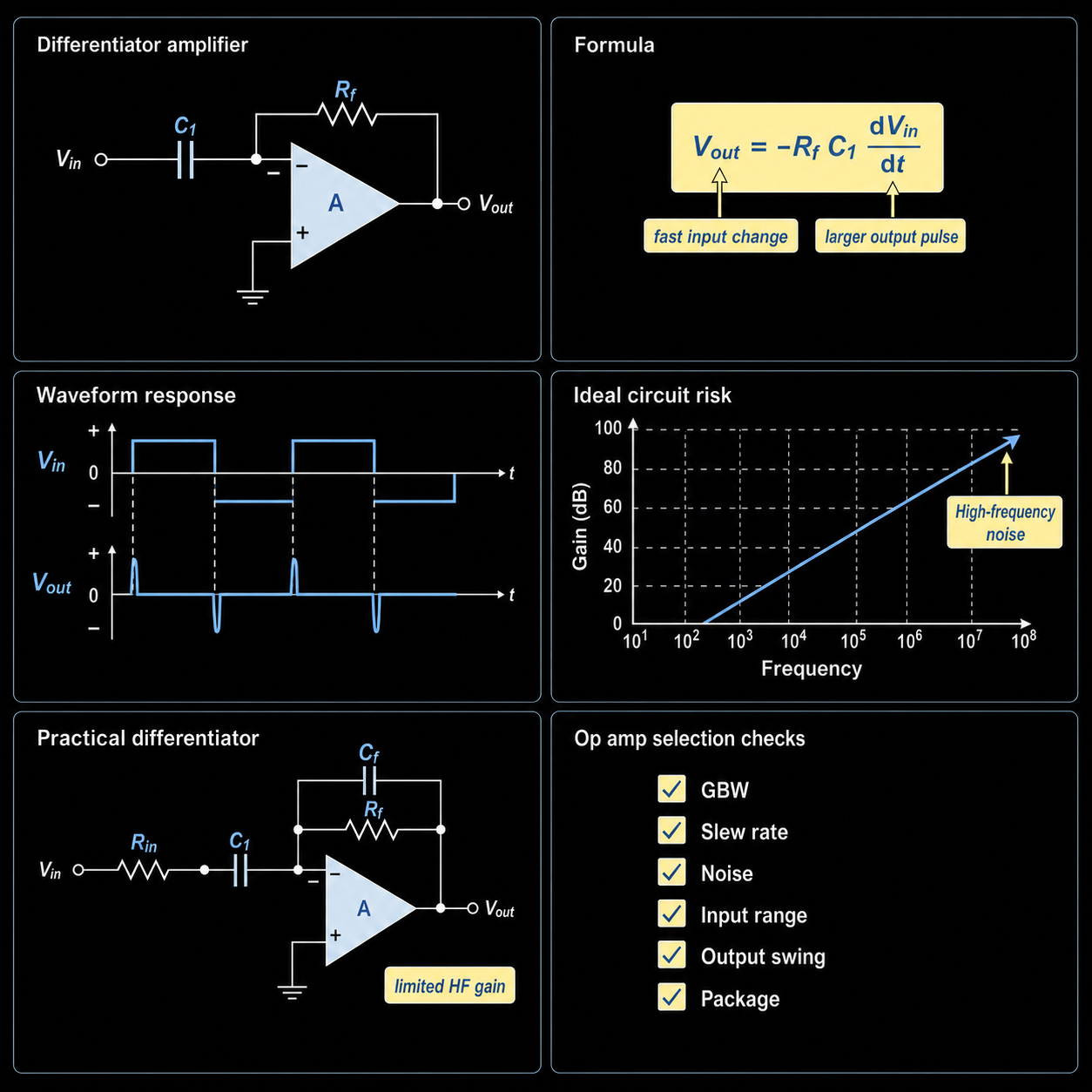
Op Amp Differentiator Amplifier Circuit: Formula and Practical Checks
An op amp differentiator amplifier is a circuit that gives an output based on how fast the input voltage is changing. If the input changes quickly, the output becomes larger.
An op amp differentiator amplifier is a circuit that gives an output based on how fast the input voltage is changing. If the input changes quickly, the output becomes larger.
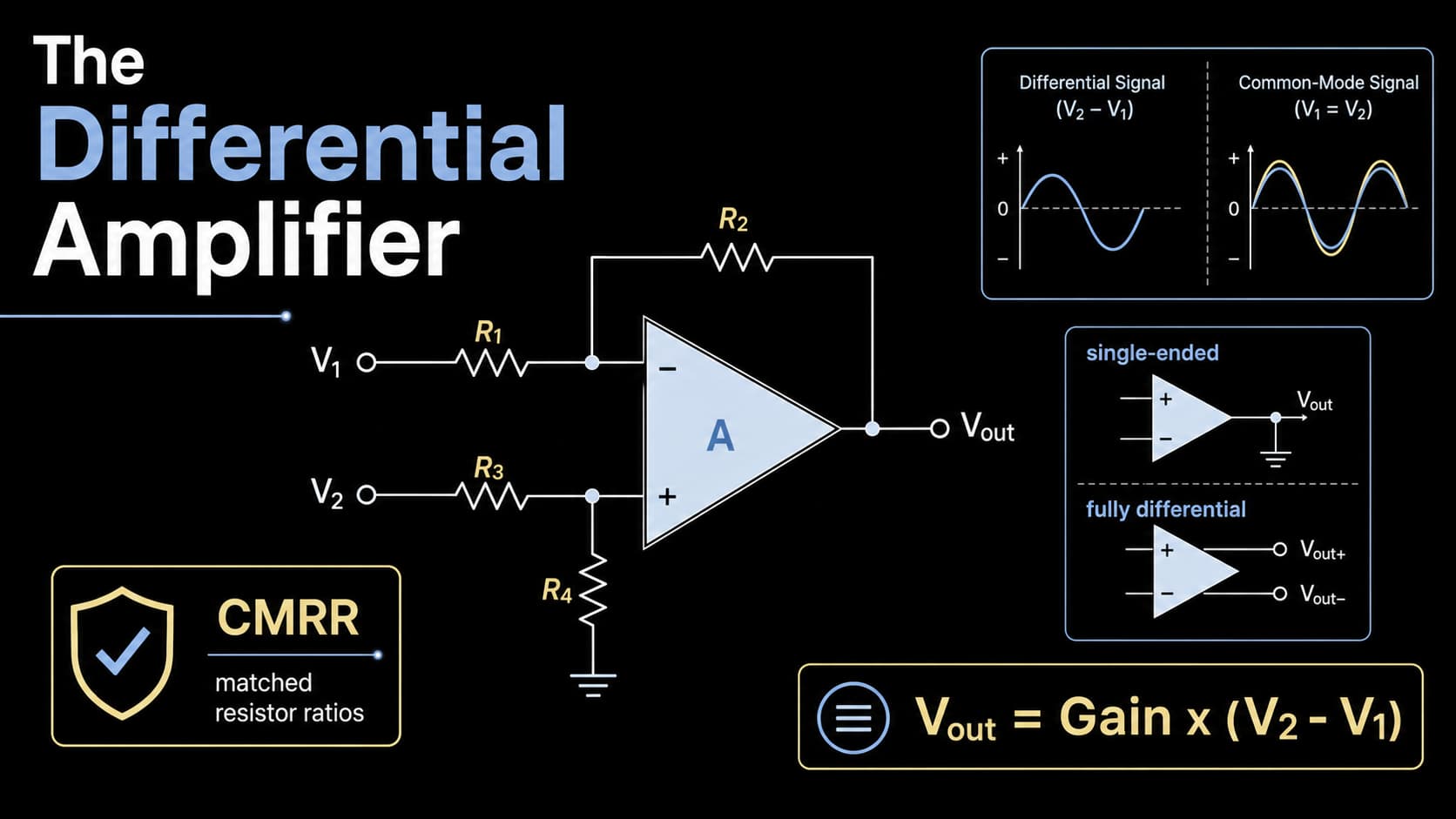
A differential amplifier is an amplifier circuit that responds mainly to the difference between two input voltages. In the basic op amp version, the output is proportional to V2 –
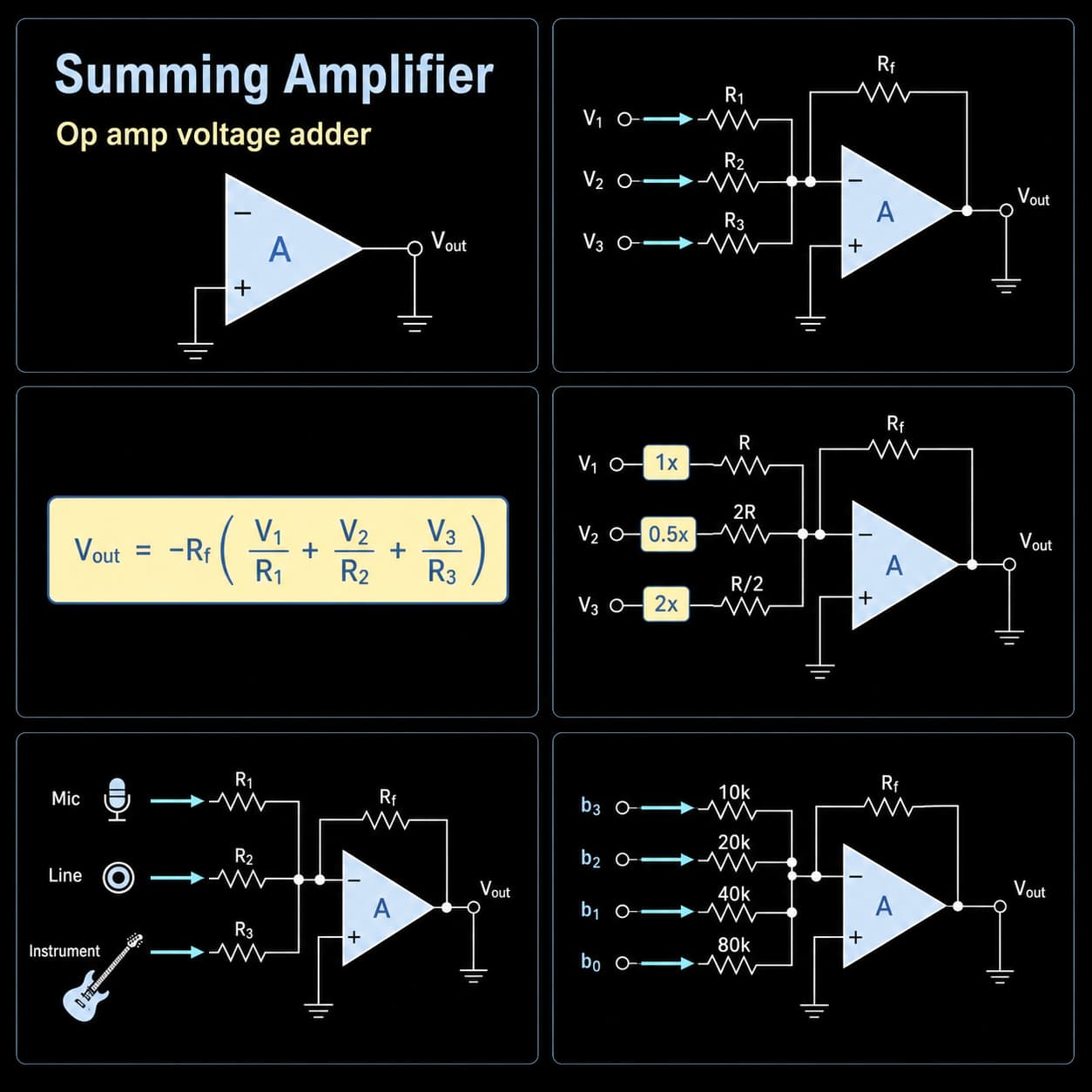
A summing amplifier is an op amp circuit that combines two or more input signals into one output. The most common form is the inverting summing amplifier, where each input
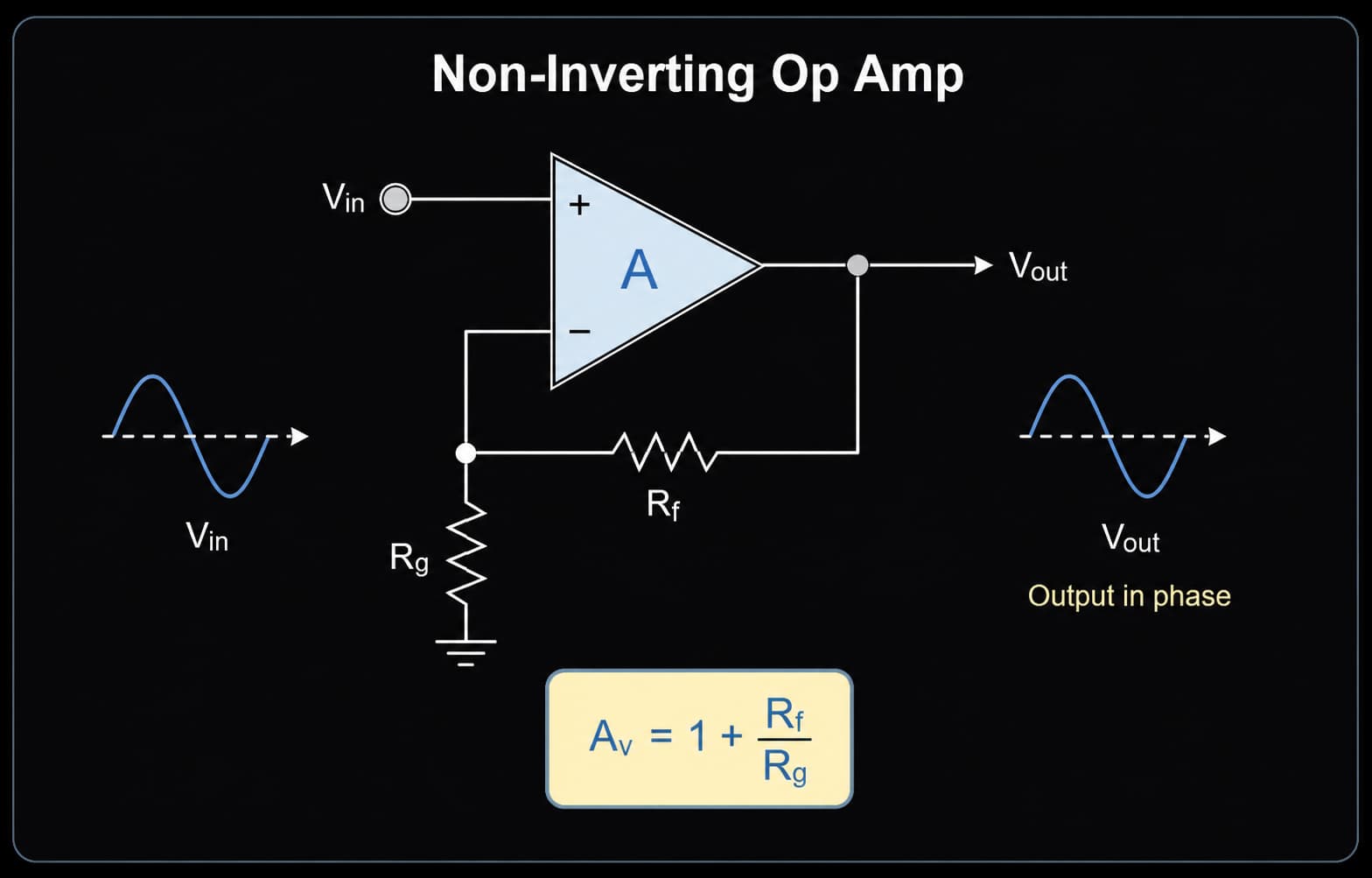
A non-inverting operational amplifier is an op amp circuit where the input signal is applied to the non-inverting input, so the output keeps the same polarity as the input. The
Coverage: August 1–8, 2026 Published: August 8, 2026 This Week’s Procurement Signals Memory remains negotiation-sensitive. TrendForce’s August 5 bulletin describes delayed DRAM contracts, a flat spot market on low volume,
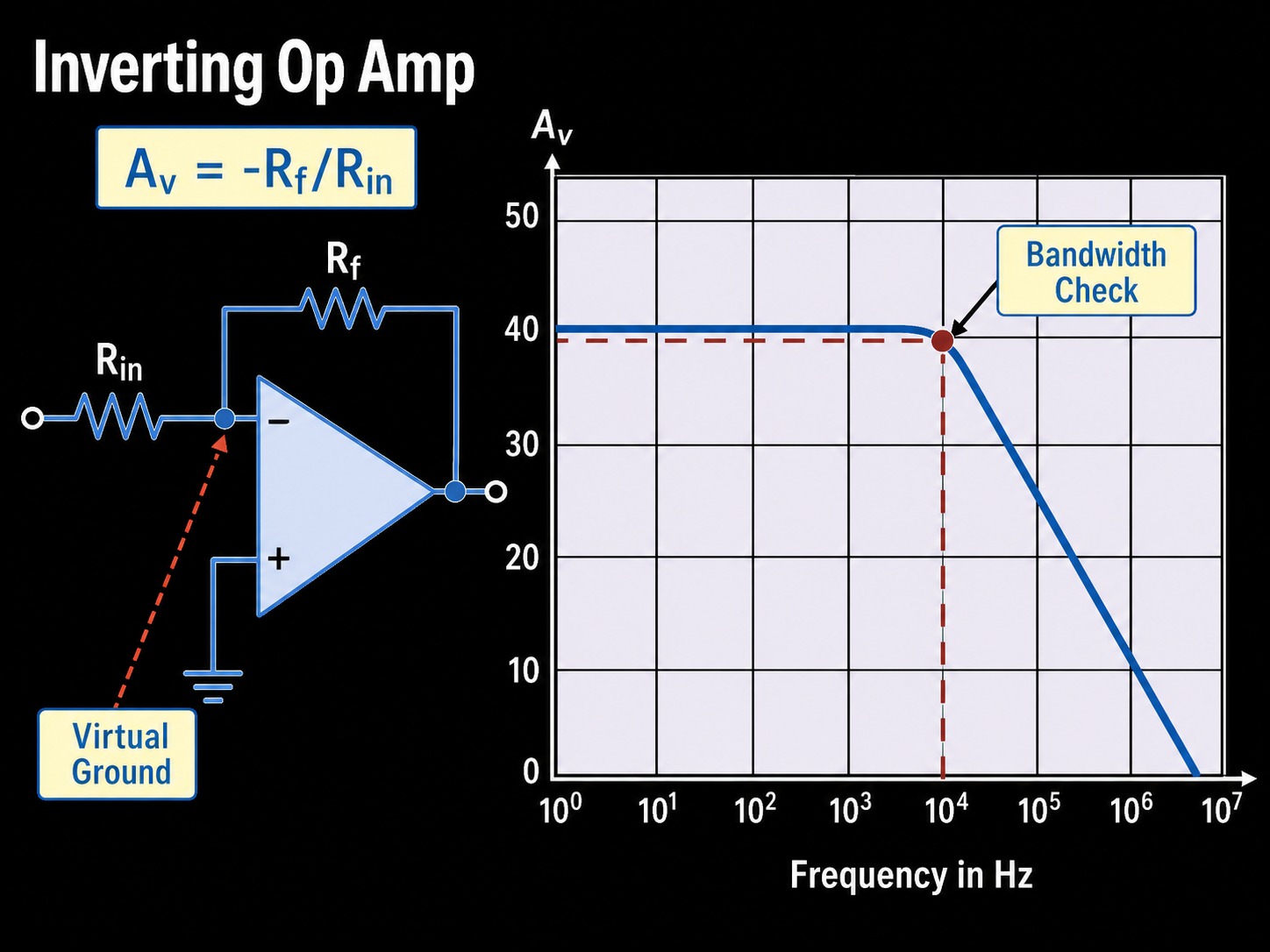
An inverting operational amplifier is an op amp circuit that produces an output with opposite polarity from the input. In the ideal resistor-feedback form, the closed-loop gain is set by
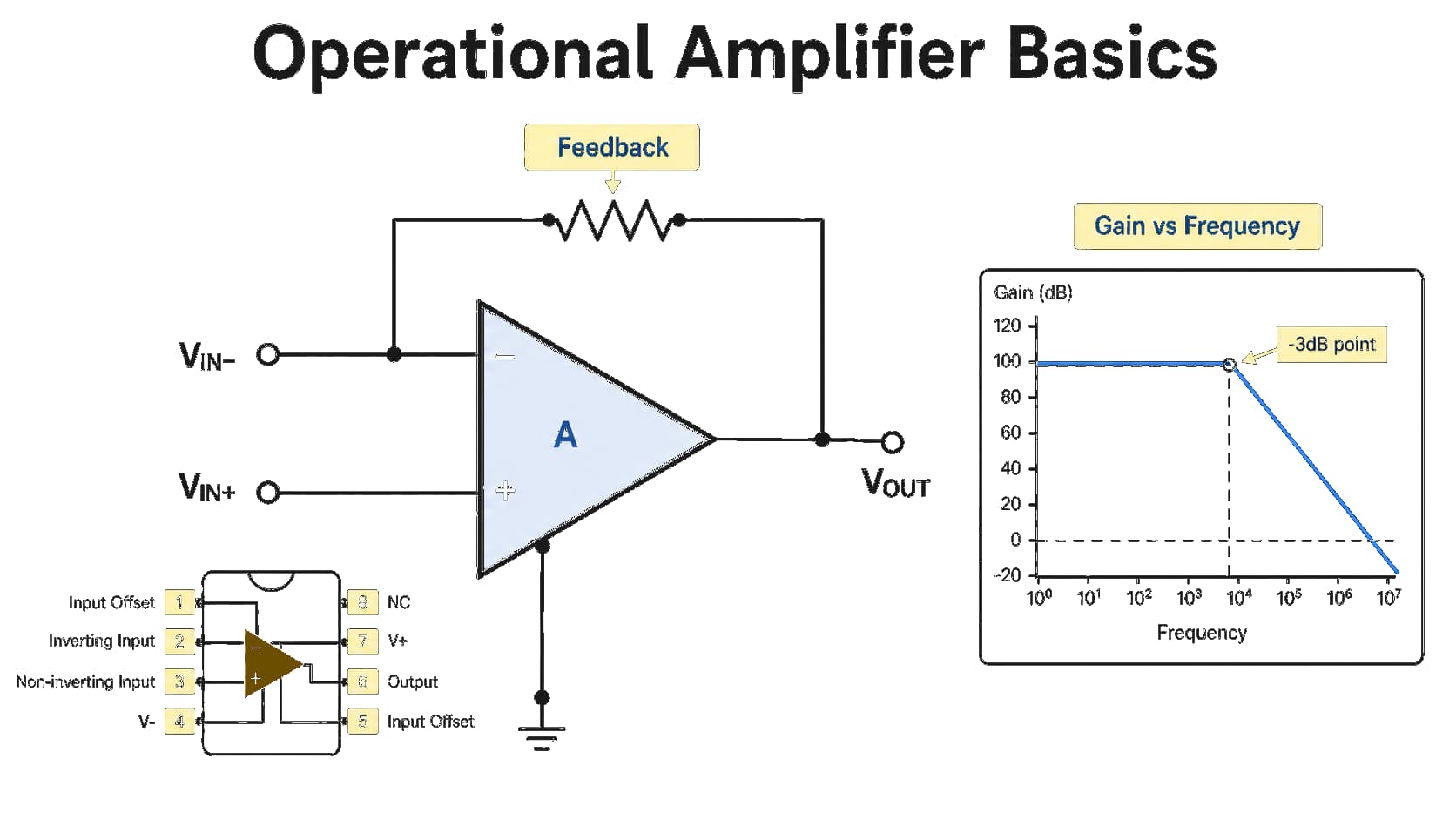
An operational amplifier, usually called an op amp, is an analog integrated circuit that amplifies the voltage difference between two input terminals and drives one output. The two inputs are
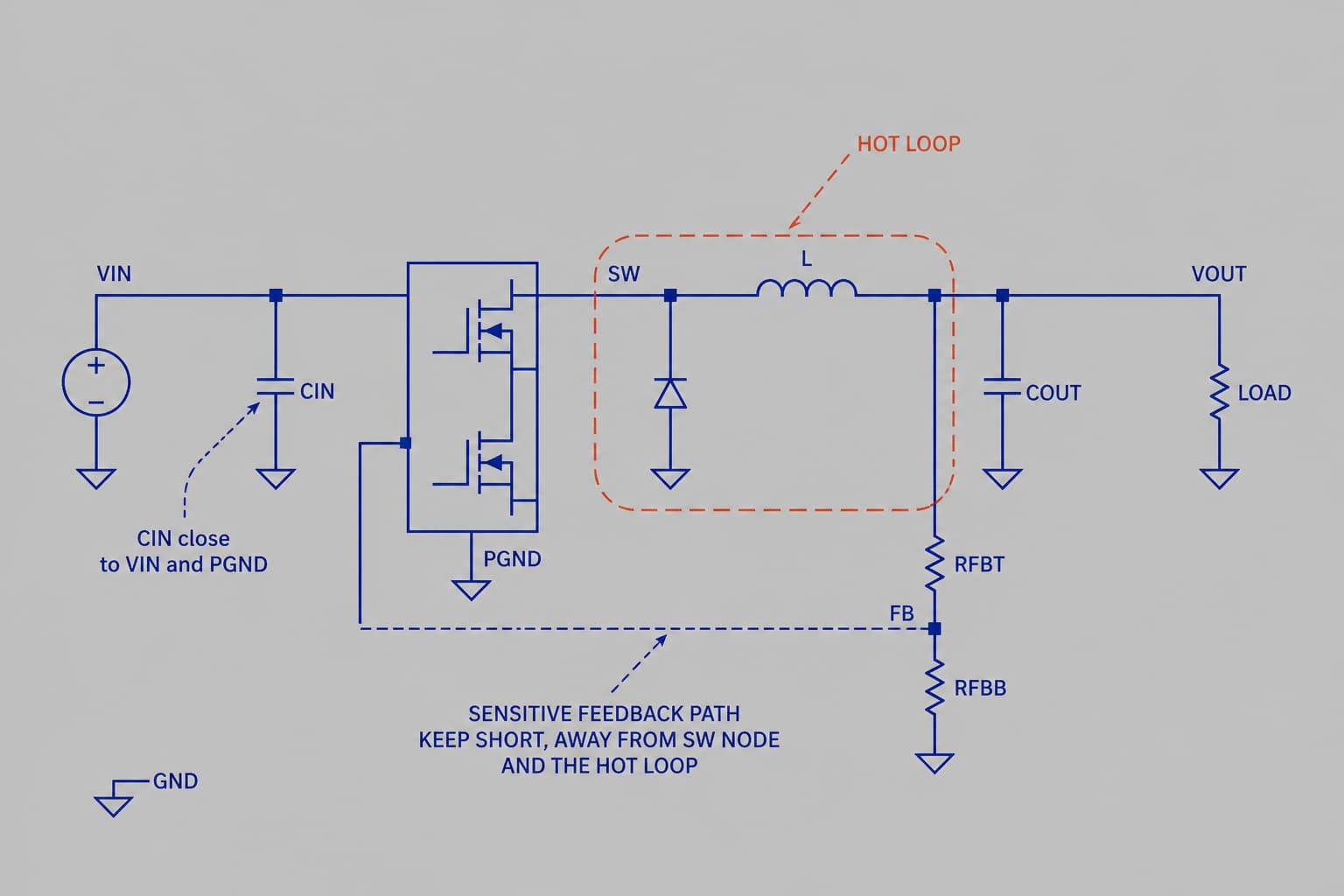
A DC-DC converter may work on paper, but PCB layout decides whether it works well in real life. Good layout helps lower EMI, reduce ripple, improve stability, and keep temperature
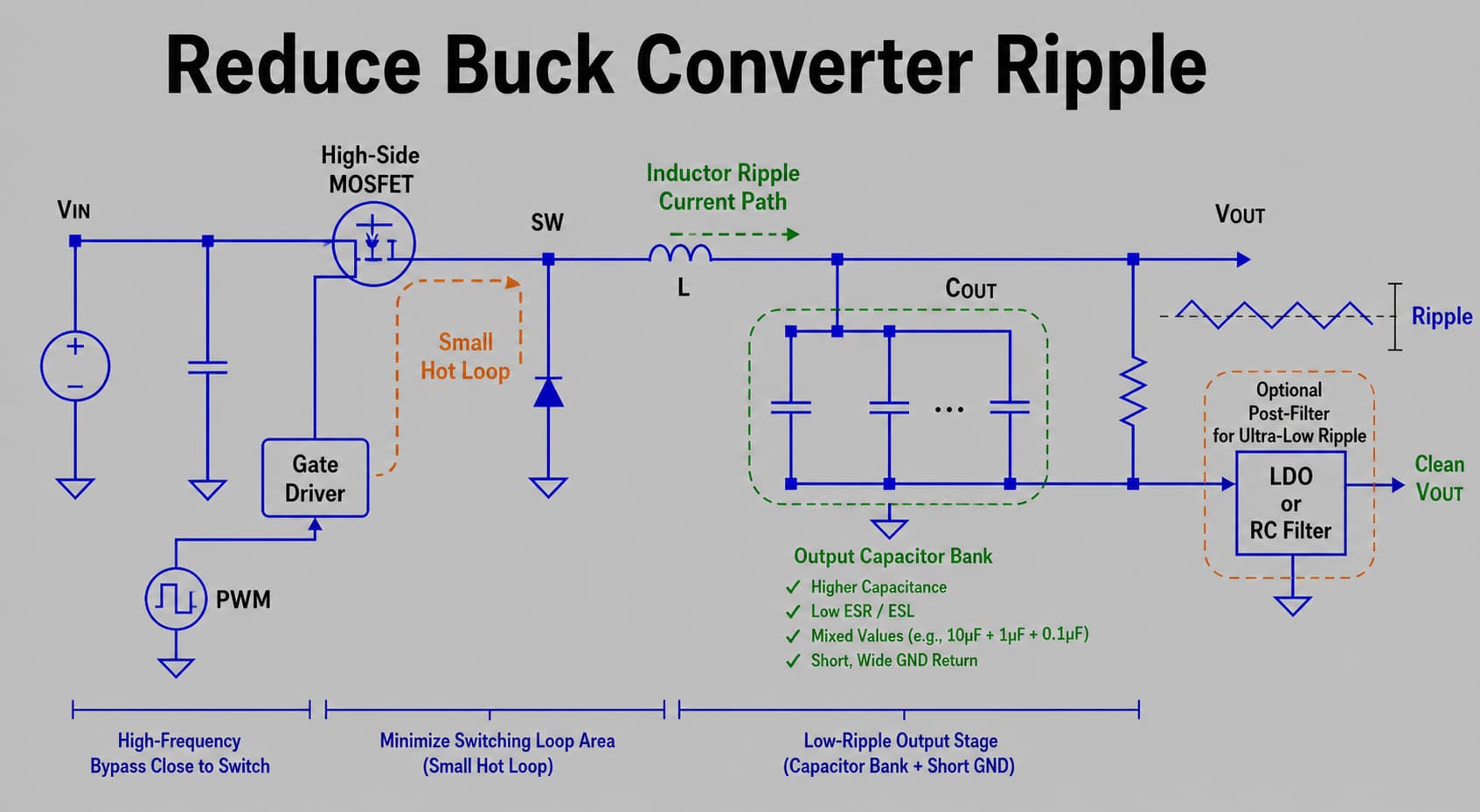
To reduce ripple voltage in a buck converter, first confirm that you are measuring real output ripple rather than probe-induced switching spikes. Then reduce the electrical causes: lower the inductor
Coverage: July 25–August 1, 2026Published: August 1, 2026 This Week’s Procurement Signals AI infrastructure continues to pull demand toward HBM/DRAM, advanced packaging, wafer-fab equipment, silicon photonics, and high-volume test. At