
Table of Contents
STM32G4 for Motor Control: Features, Applications, and Selection Tips
Introduction
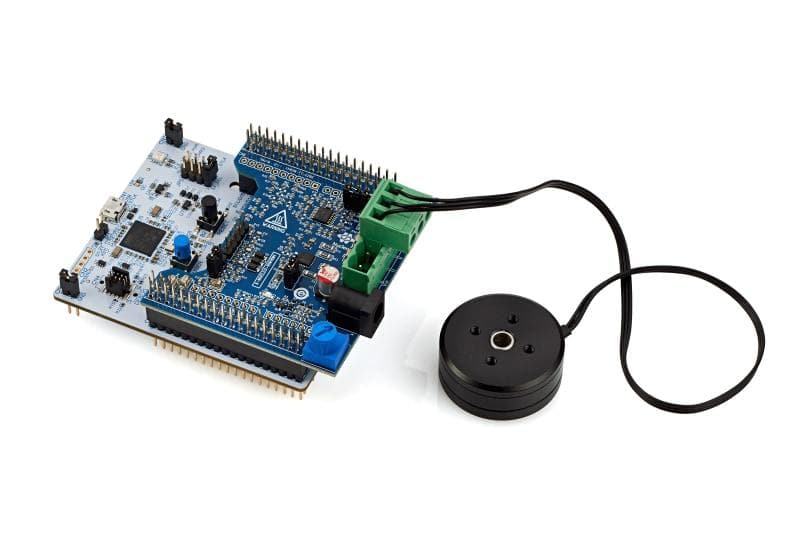
Engineers working on embedded systems often need a reliable motor control MCU that balances performance, power efficiency, and cost. The STM32G4 from STMicroelectronics is the go-to STM32G4 motor control solution. This ARM Cortex-based device sits in the STM32G series, offering a perfect blend of real-time control capabilities and advanced peripherals tailored for power electronics.
Why is the STM32G4 a good fit for STM32G4 motor control? Its 32-bit architecture delivers fast processing, while features like precise analog-to-digital conversion and multiple timer channels support servo motors, stepper motors, and brushless DC motors. In industrial settings, it powers embedded motor control systems that require quick responses to feedback loops. The STM32G4 motor control MCU makes motor control more efficient, reducing development time and improving system reliability. Its position in the STM32 family provides access to a vast ecosystem of tools, libraries, and community support, making it a go-to for engineers designing motor control solutions.
1.Key Features of the STM32G4 MCU Relevant to Motor Control
The STM32G4 microcontroller features an ARM Cortex-M4 core running at up to 170 MHz. This speed ensures real-time control MCU performance, handling complex calculations without lag. It includes a 16-bit STM32 ADC with 4.26 MSPS sampling rate, perfect for monitoring currents and voltages.
The device supports 12 STM32 timer units, essential for generating precise PWM signals to drive motor drivers. Up to 17 communication peripherals, including I2C, SPI, CAN, and UART, enable seamless integration with sensors, displays, and communication networks. Additional highlights include integrated power management for efficient operation and built-in safety features like error detection and watchdog timers.
These specs make the STM32G4 a strong fit for embedded motor control. Its design supports field-oriented control and sensorless algorithms, critical for smooth operation in industrial motor control. The STM32G4 is an ideal power electronics MCU for industrial motor control.
2.Applications of the STM32G4 in Motor Control
The STM32G4 sees wide use in servo motors for robotics and automation. Its precise timers and ADC support closed-loop control, delivering accurate positioning. Stepper motors benefit from the PWM outputs and communication peripherals, allowing engineers to build cost-effective solutions for 3D printers and CNC machines.
Brushless DC motors (BLDC) and permanent magnet synchronous motors (PMSM) rely on the STM32G4 for commutation and speed regulation. In industrial motor control, it powers variable frequency drives and servo drives, where power electronics requirements demand high reliability.
Embedded motor control scenarios, such as electric vehicles and HVAC systems, also utilize the STM32G4. Its ability to handle multiple motors simultaneously makes it versatile for real-time tasks in harsh environments.
3.Hardware Components in STM32G4 for Motor Control
Key hardware components include the STM32 ADC for current sensing in motor control. The STM32 ADC converts analog signals from shunts or hall sensors into digital data for feedback. Complementing this, STM32 timer units generate PWM signals for motor phase commutation and control loops.
The DMA controller accelerates data transfer between peripherals and memory, crucial for high-speed motor control applications. In industrial settings, the STM32G4 integrates with external drivers and power stages, using GPIO pins for signaling.
These components enable efficient embedded motor control without complex external circuitry, reducing costs and board size.
4.Software and Programming Considerations for STM32G4 Motor Control
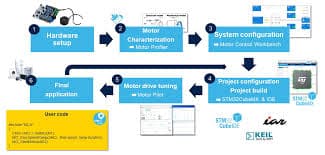
Development tools like STM32CubeIDE simplify coding with its graphical interface and auto-generated code. The HAL and LL libraries provide low-level access for optimized performance. FreeRTOS integration adds multitasking support for complex algorithms.
For motor control, engineers implement PID control for speed regulation or field-oriented control (FOC) for torque optimization. Sensorless techniques use back-EMF estimation, leveraging the STM32G4’s processing power. Real-time performance is enhanced through interrupt-driven code and efficient timer interrupts.
Proper software design ensures stable operation even under load.
5.Selection Tips for STM32G4 in Motor Control Projects
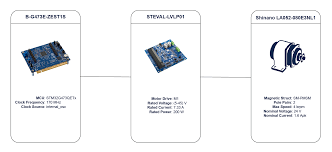
When selecting the STM32G4 for motor control projects, consider memory size: 128 KB to 512 KB for holding algorithms and buffers. Pin count of 48 to 100 pins balances I/O availability for sensors and drivers.
Packages like LQFP suit industrial environments for thermal management. Voltage range of 2.7V to 3.6V supports battery-powered or line-powered systems. The temperature range from -40°C to 85°C ensures reliability in industrial motor control applications.
Trade-offs include choosing variants with more ADC channels for multi-phase motors or higher pin counts for complex communication. Power consumption and reliability should align with your industrial control needs, consulting datasheets for exact specs.
6.Advantages and Limitations of STM32G4 for Motor Control
Advantages of the STM32G4 include affordability, a comprehensive ecosystem, and strong performance in motor control. The STM32G4 ADC and timers deliver high accuracy, while the family-wide compatibility speeds up development.
Limitations involve limited high-power handling without external circuits, requiring proper cooling in industrial use. Compared to STM32F4, the G4 offers better power efficiency and peripherals for modern motor control, though F4 may suit simpler tasks.
Overall, the STM32G4 provides an excellent balance for most applications.
7.Conclusion
The STM32G4 excels in motor control due to its advanced features, wide applications, and straightforward selection process. From servo motors to industrial motor control, its STM32G4 ADC, timers, and real-time capabilities ensure precise, efficient operation. Whether building embedded motor control systems or power electronics MCUs, the STM32G4 delivers reliability and performance.
For custom solutions, consult ST documentation or partners like OpenWond. Explore our STM32G4 Motor Control MCU Selection Guide and order today – optimized for industrial motor control and power electronics MCU projects.