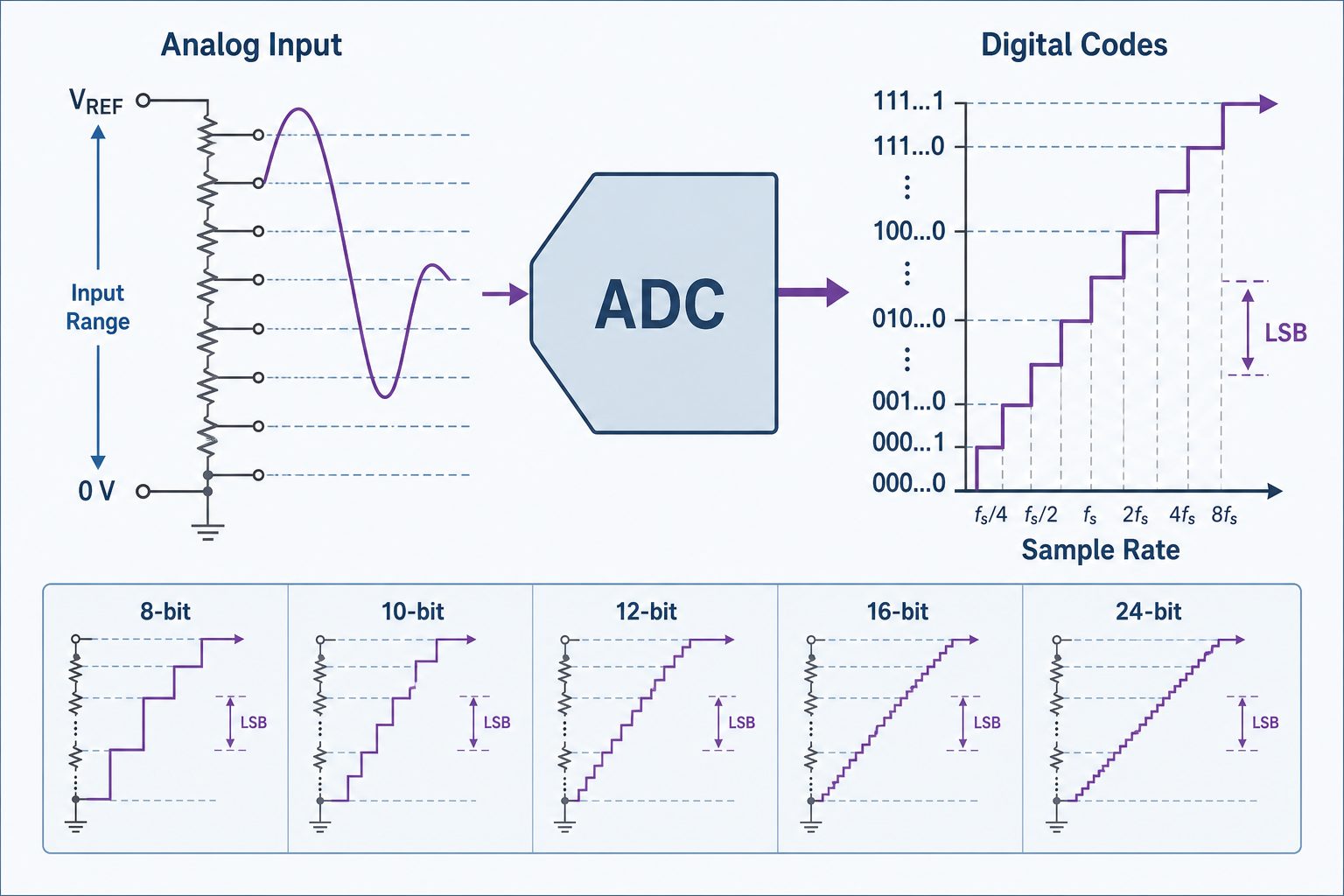
24bit ADC Selection Guide: Resolution, LSB, and Sampling Rate Choosing an analog-to-digital converter is not simply a matter of selecting the highest bit count. A 24-bit ADC provides 16,777,216 digital
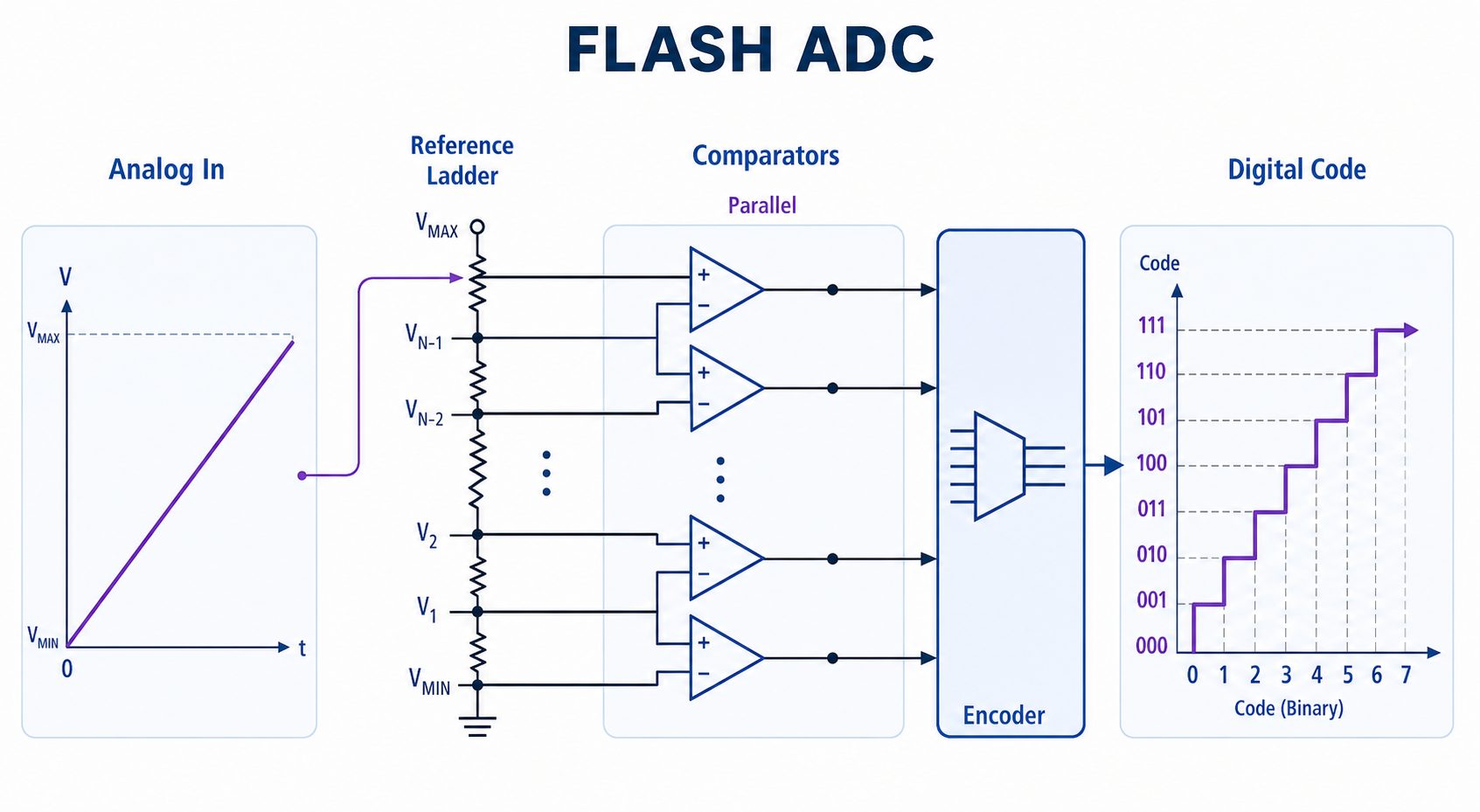
Flash Analog to Digital Converter Explained: Speed, Architecture, and Trade-Offs
A flash ADC, also called a parallel ADC, is an analog-to-digital converter architecture built for very high conversion speed and low decision latency. Instead of testing one bit at a
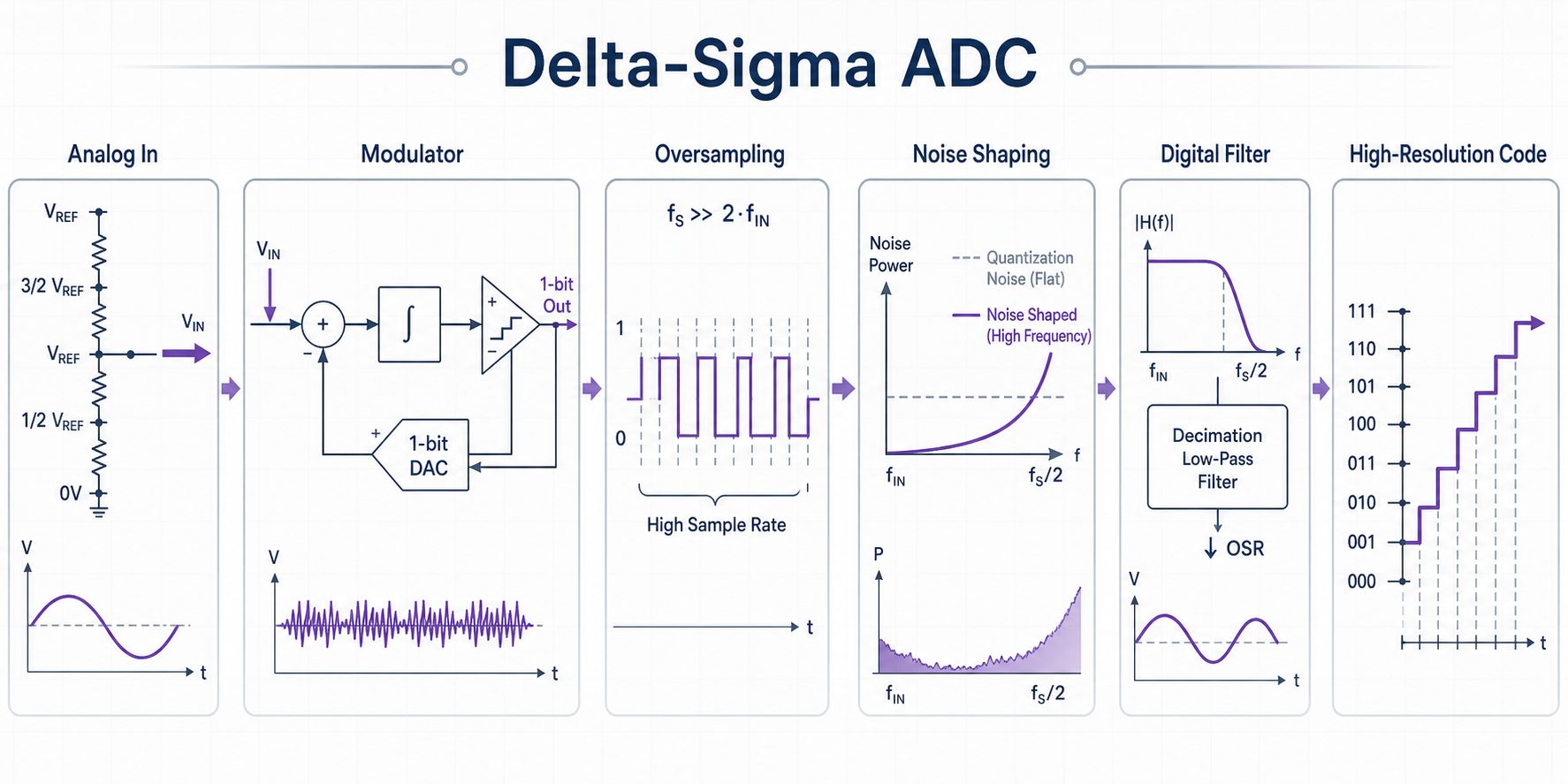
Delta-Sigma ADC Explained: Oversampling, Noise Shaping, and Best Uses
A delta-sigma ADC, also called a sigma-delta ADC, is an analog-to-digital converter architecture designed to achieve high resolution and strong noise performance over a limited signal bandwidth. Instead of making
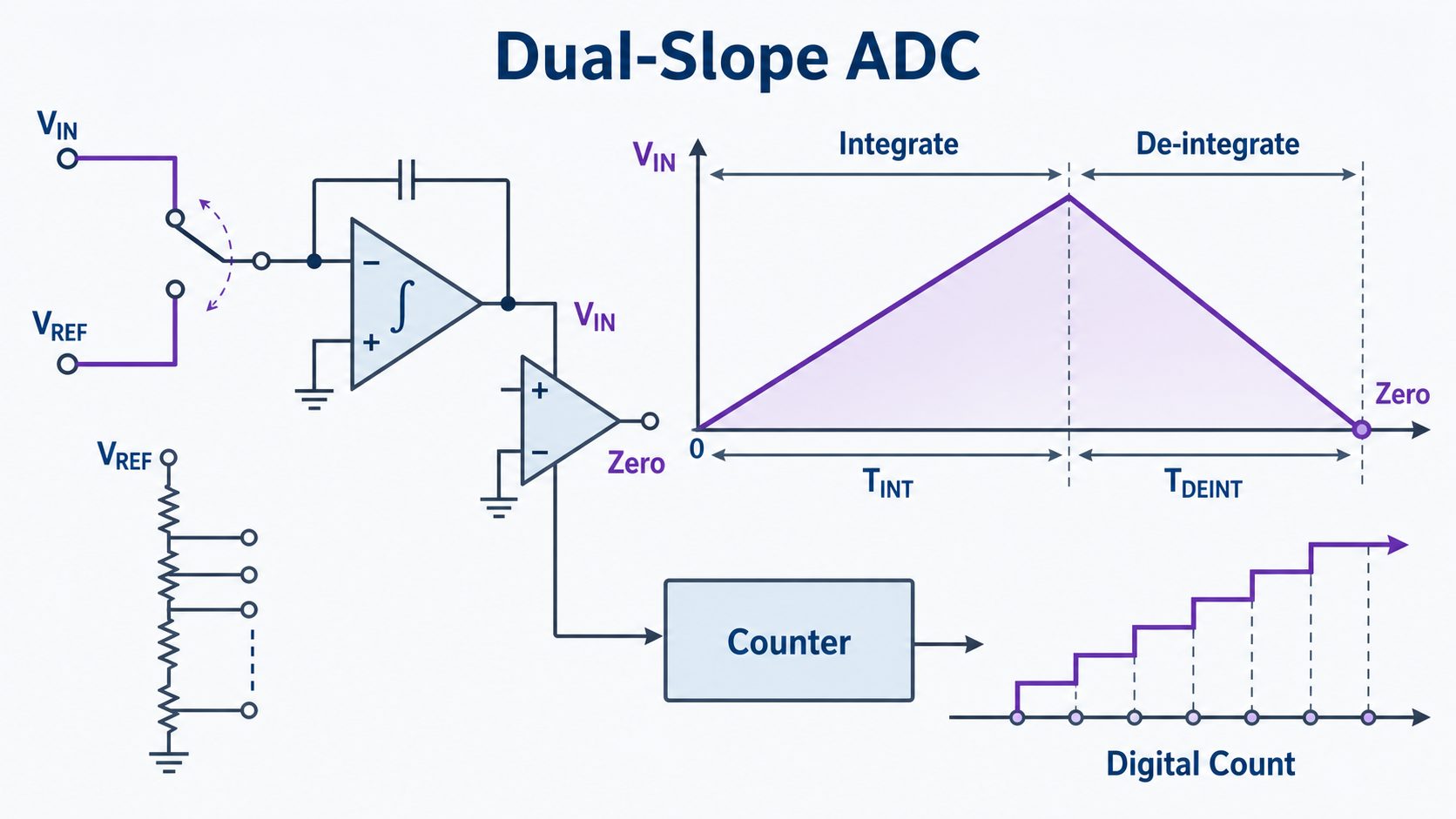
Dual-Slope ADC Explained: Why Integrating ADCs Are Used in Measurement
A dual-slope ADC is an integrating analog-to-digital converter designed for accurate, low-speed measurement. Instead of making an instantaneous comparison or running a binary search, it measures the average input over
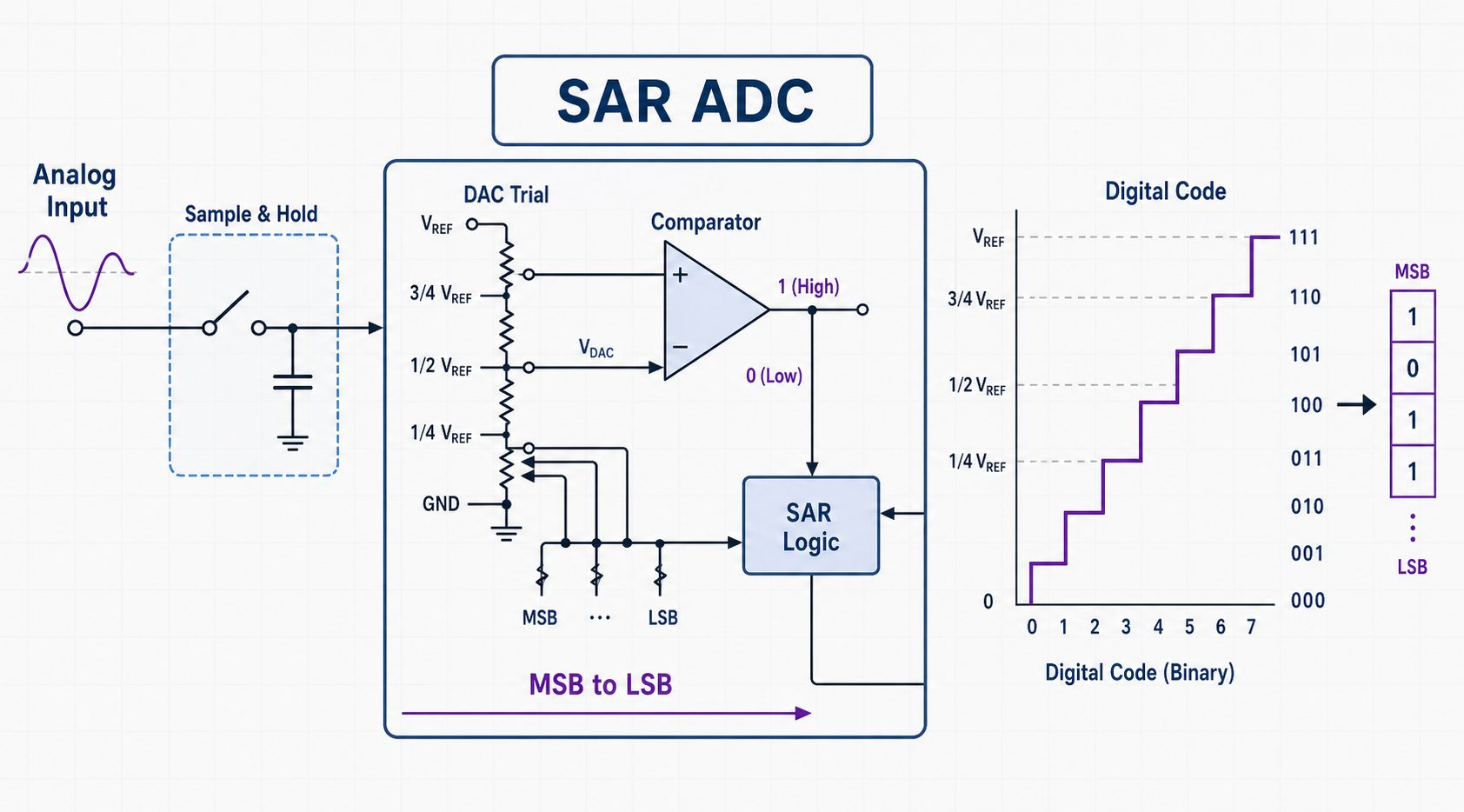
SAR ADC Explained: How Successive Approximation Converters Work
A SAR ADC, or successive approximation register analog-to-digital converter, converts an analog input into a digital code by making a sequence of bit decisions. Instead of checking every possible output
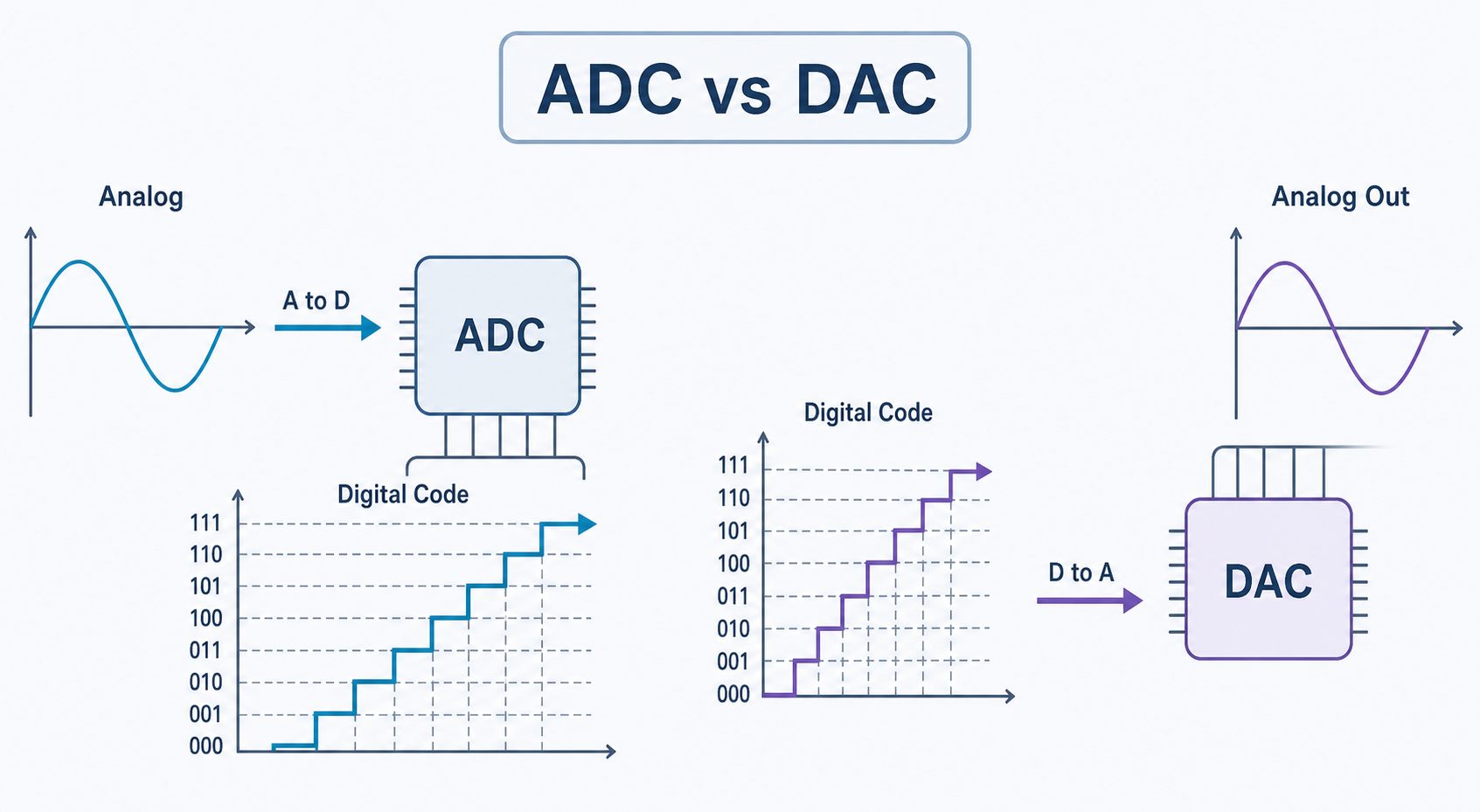
ADC vs DAC: Difference Between DAC and ADC Converters
The main difference between an ADC and a DAC is the direction of conversion. An analog-to-digital converter (ADC) converts an analog input into digital data. A digital-to-analog converter (DAC) converts
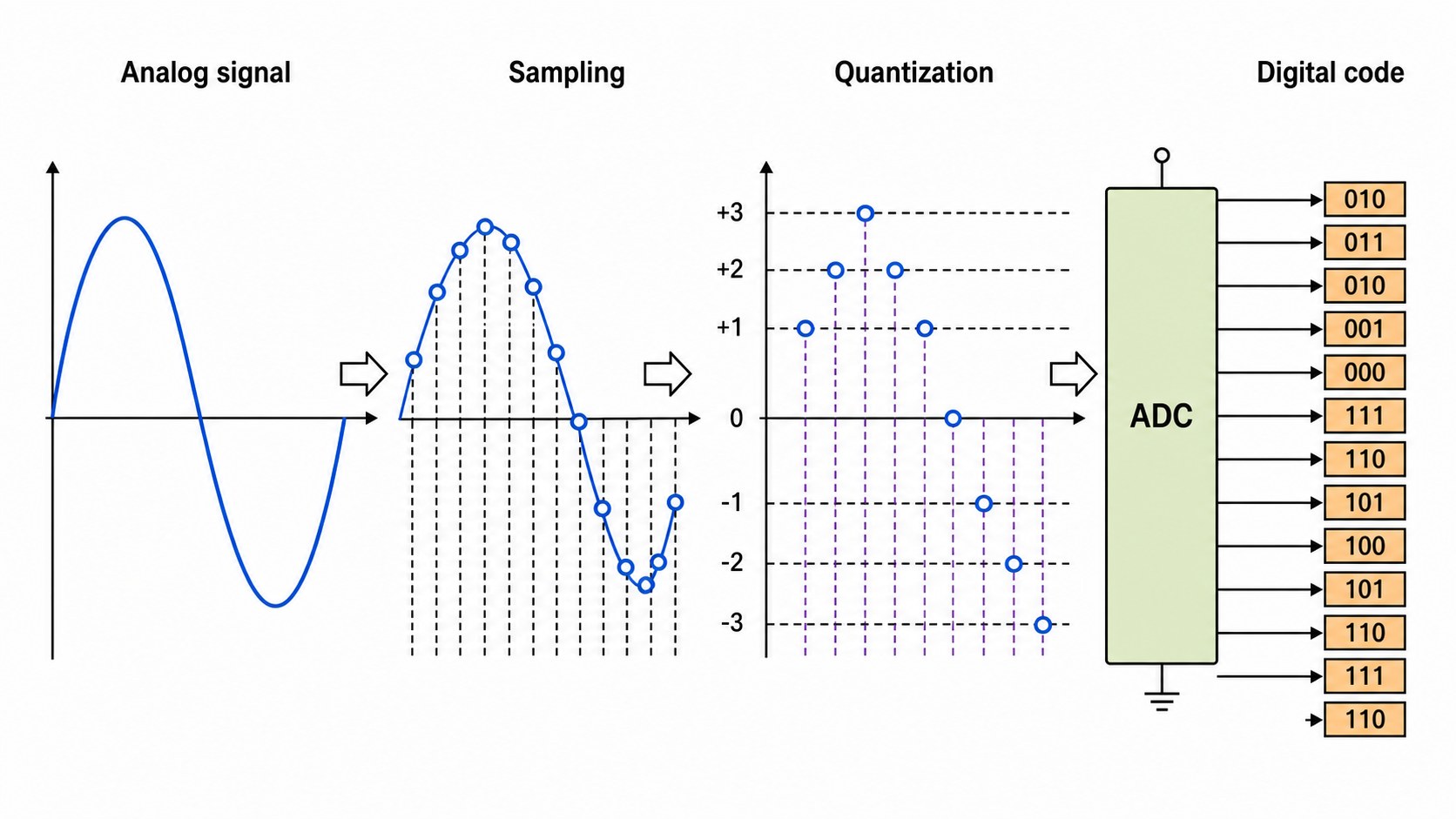
How Does an Analog-to-Digital Converter Work? ADC Basics Explained
An analog-to-digital converter, usually called an ADC or A/D converter, changes an analog electrical signal into digital data that a microcontroller, processor, DSP, FPGA, or computer can use. Sensors, microphones,