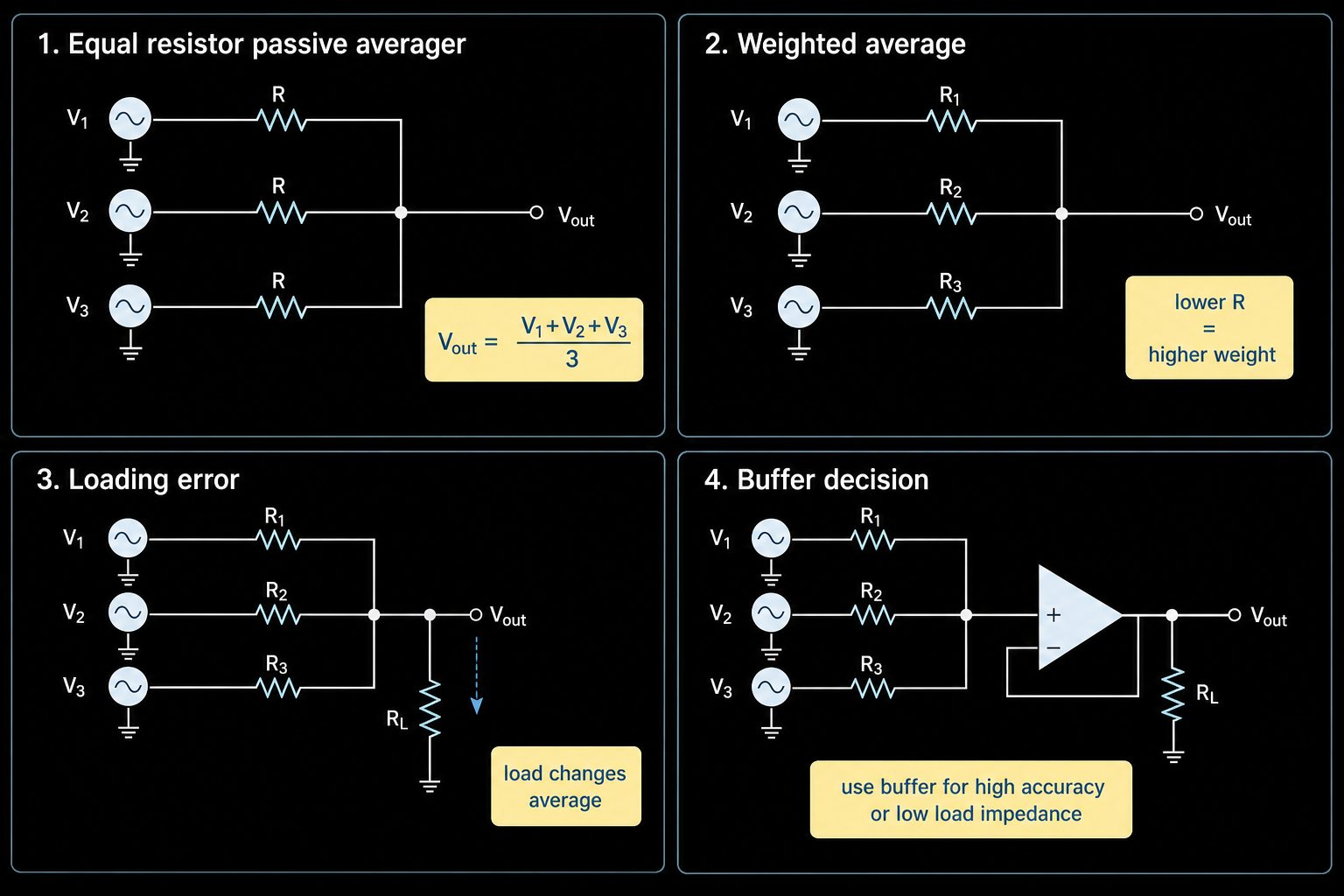
A passive averager is a resistor network that combines two or more voltage inputs into one output node. If all input resistors are equal and the load does not disturb
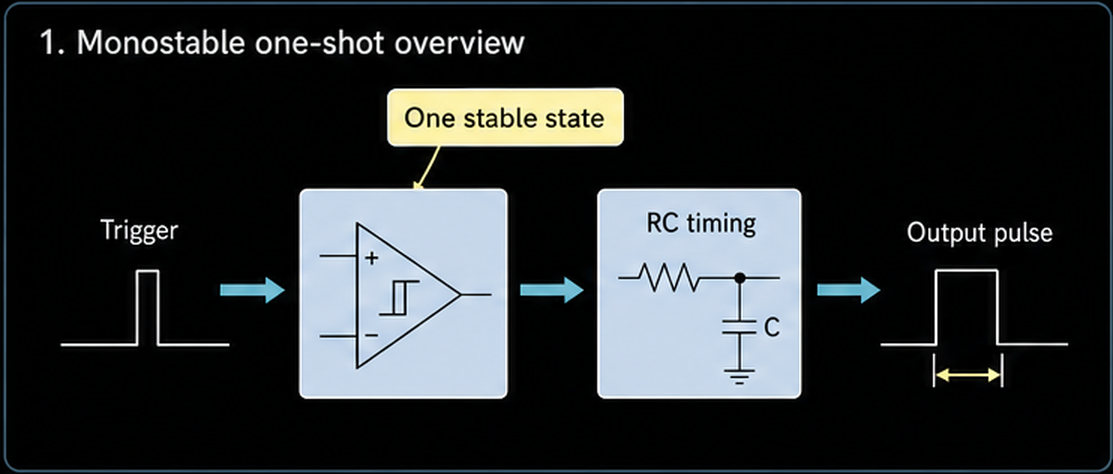
Op Amp Monostable: One-Shot Pulse Circuit and RC Timing Guide
An op amp monostable is a one-shot pulse circuit. It normally stays in one stable state. When a trigger arrives, the output changes state for a set time, then returns
Op Amp Comparator: Threshold, Hysteresis, and When to Use a Comparator IC
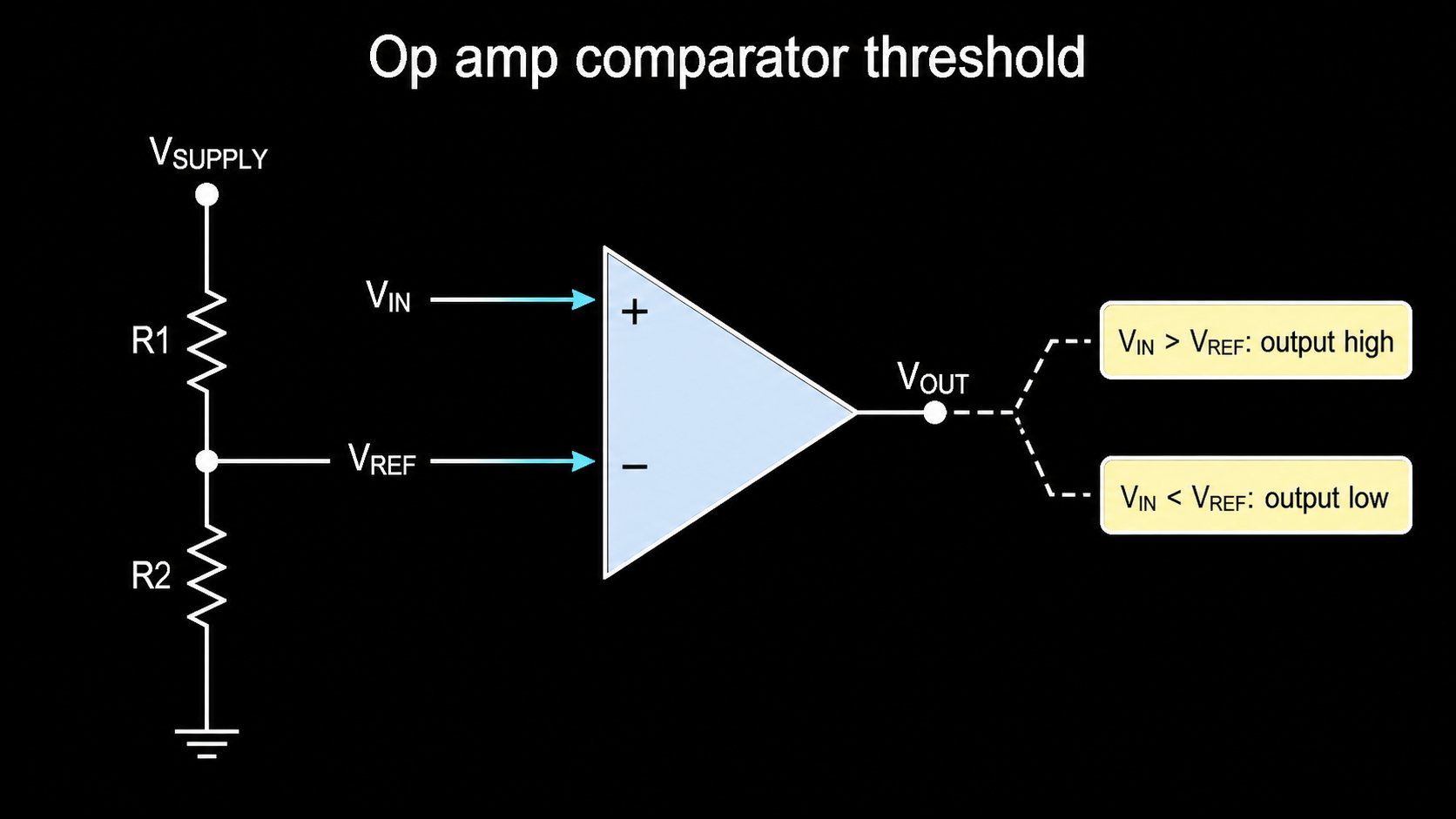
An op amp comparator is a simple voltage decision circuit. It compares an input voltage with a reference voltage. If the input is above the reference, the output changes to
Op Amp Multivibrator: Astable Square Wave Generator and Selection Checks
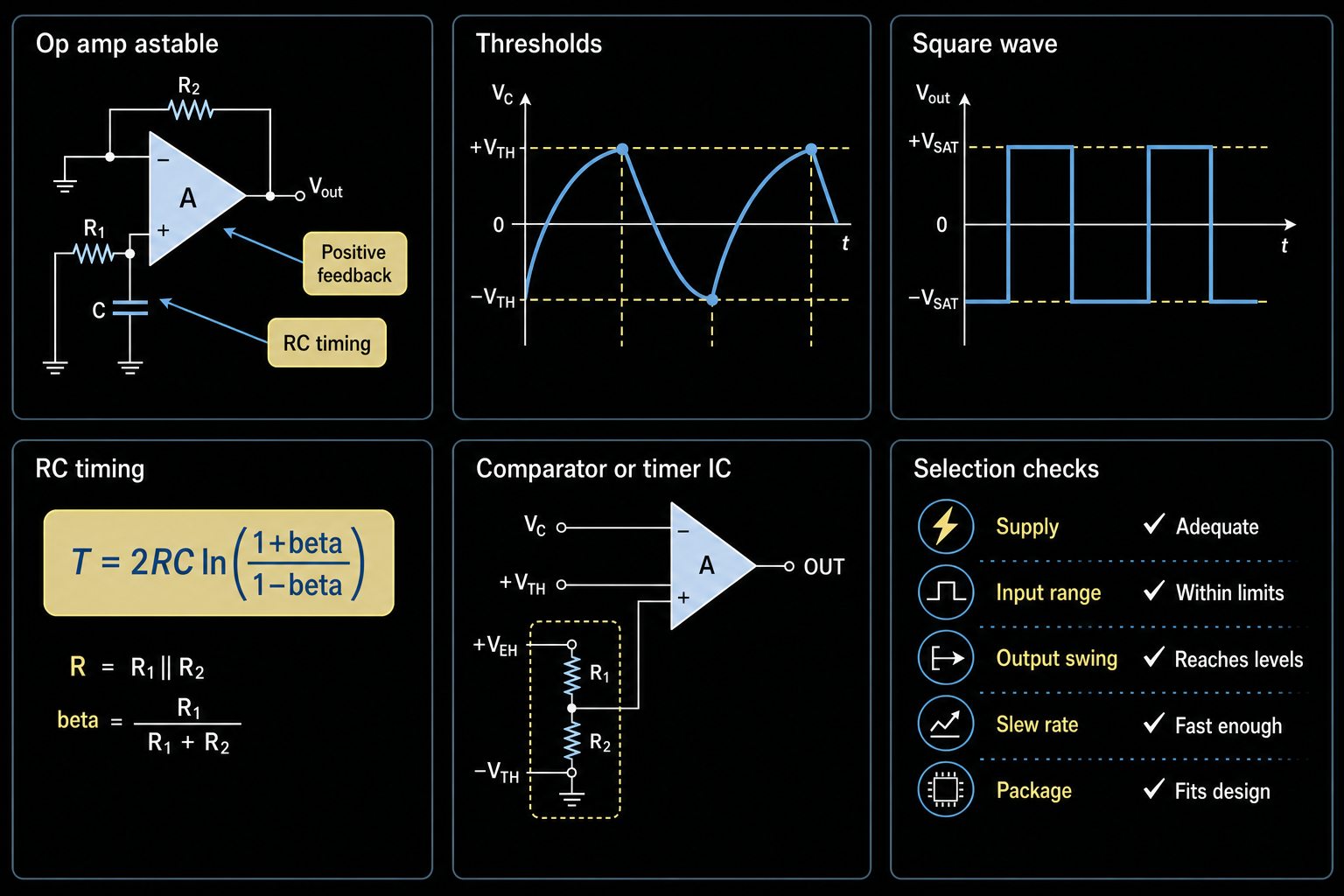
An op amp multivibrator is a timing circuit that can switch its output between a high level and a low level. In this article, the main focus is the astable
Op Amp Circuit Types and Building Blocks
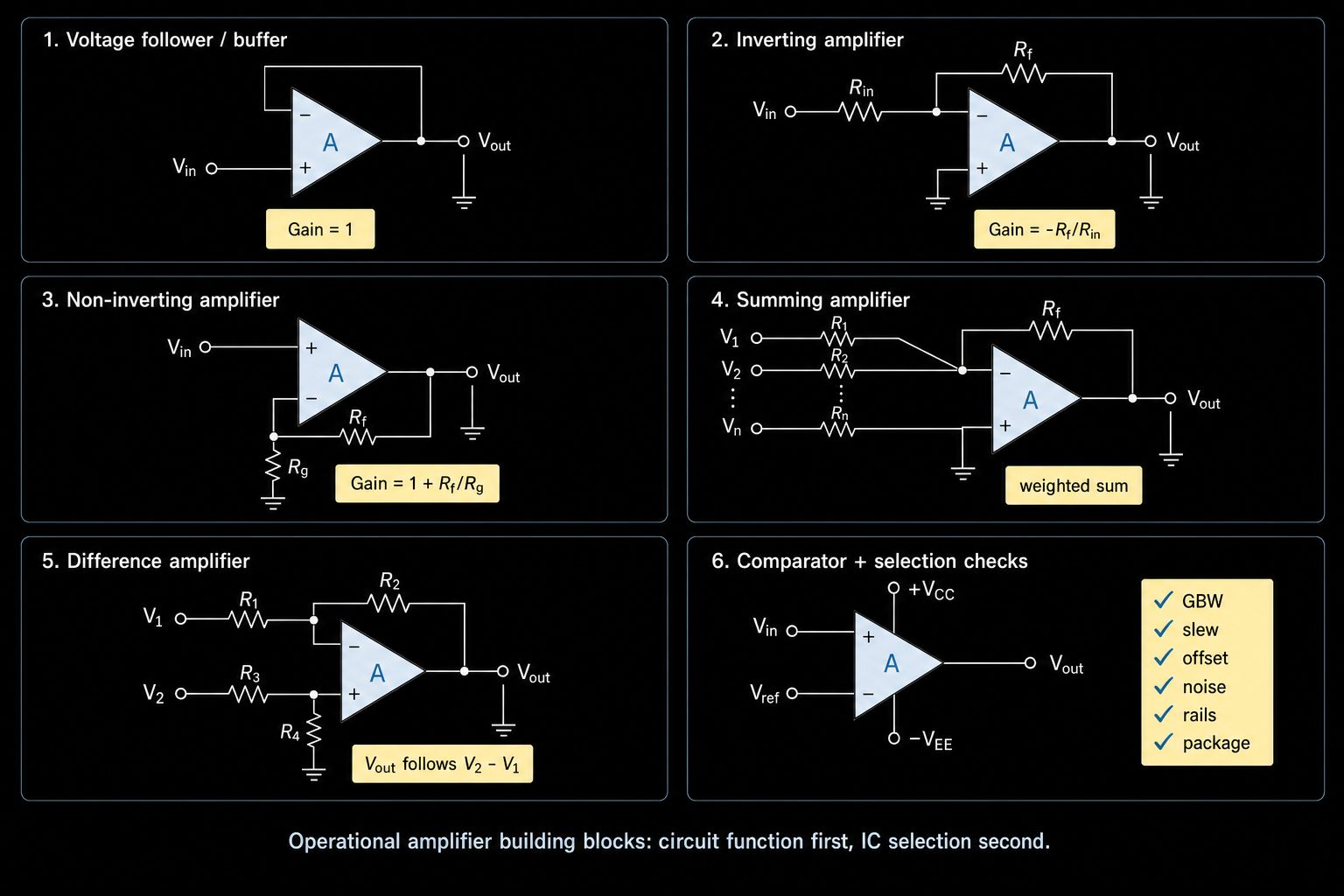
Operational amplifier building blocks are the common op amp circuits that designers reuse for buffering, gain, inversion, signal addition, subtraction, comparison-like decisions, integration, differentiation and filtering. They are not only
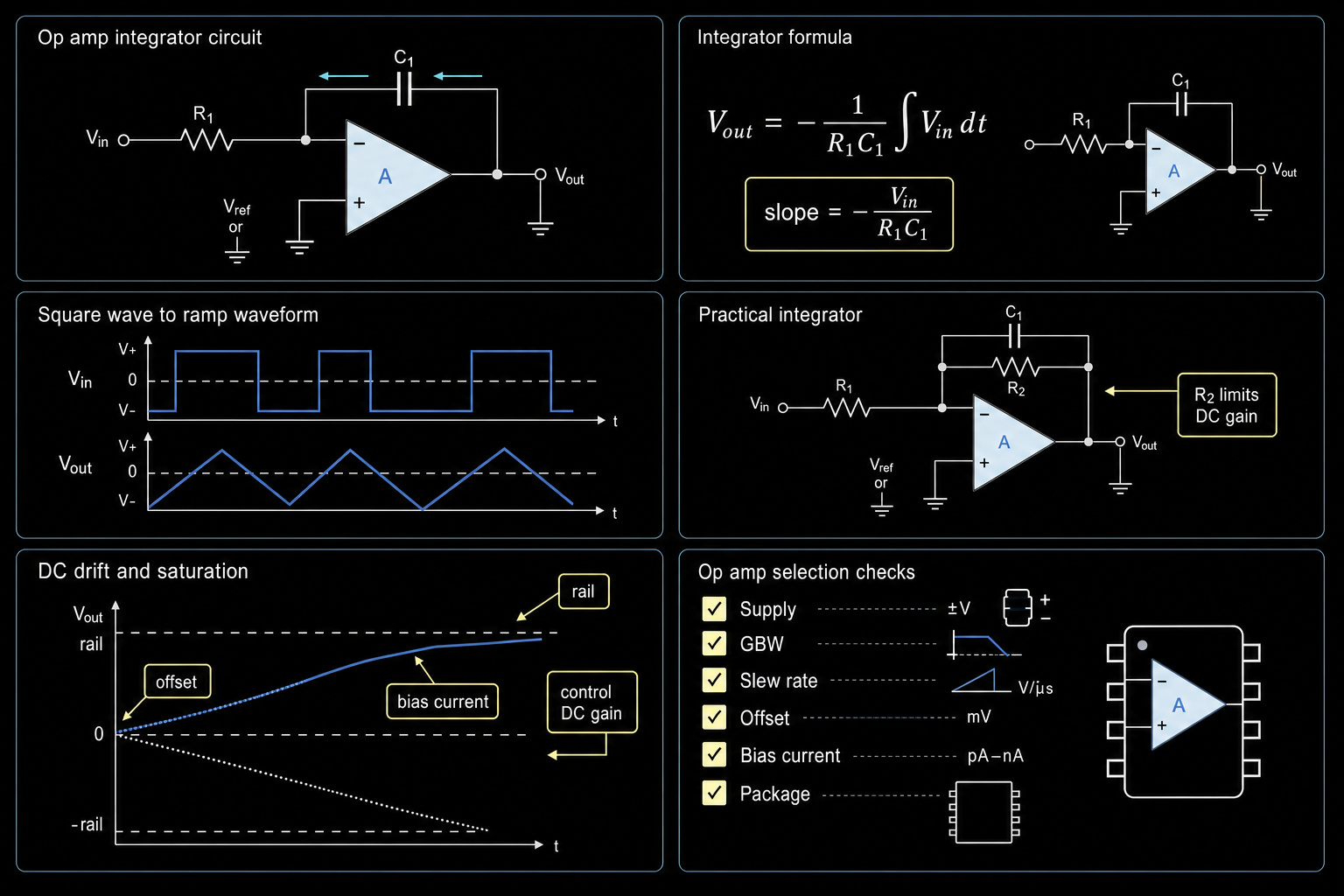
Op Amp Integrator Circuit Diagram: Practical Integrator Using Op Amp
An op amp integrator circuit uses an operational amplifier, an input resistor and a feedback capacitor to produce an output voltage proportional to the time integral of the input voltage.
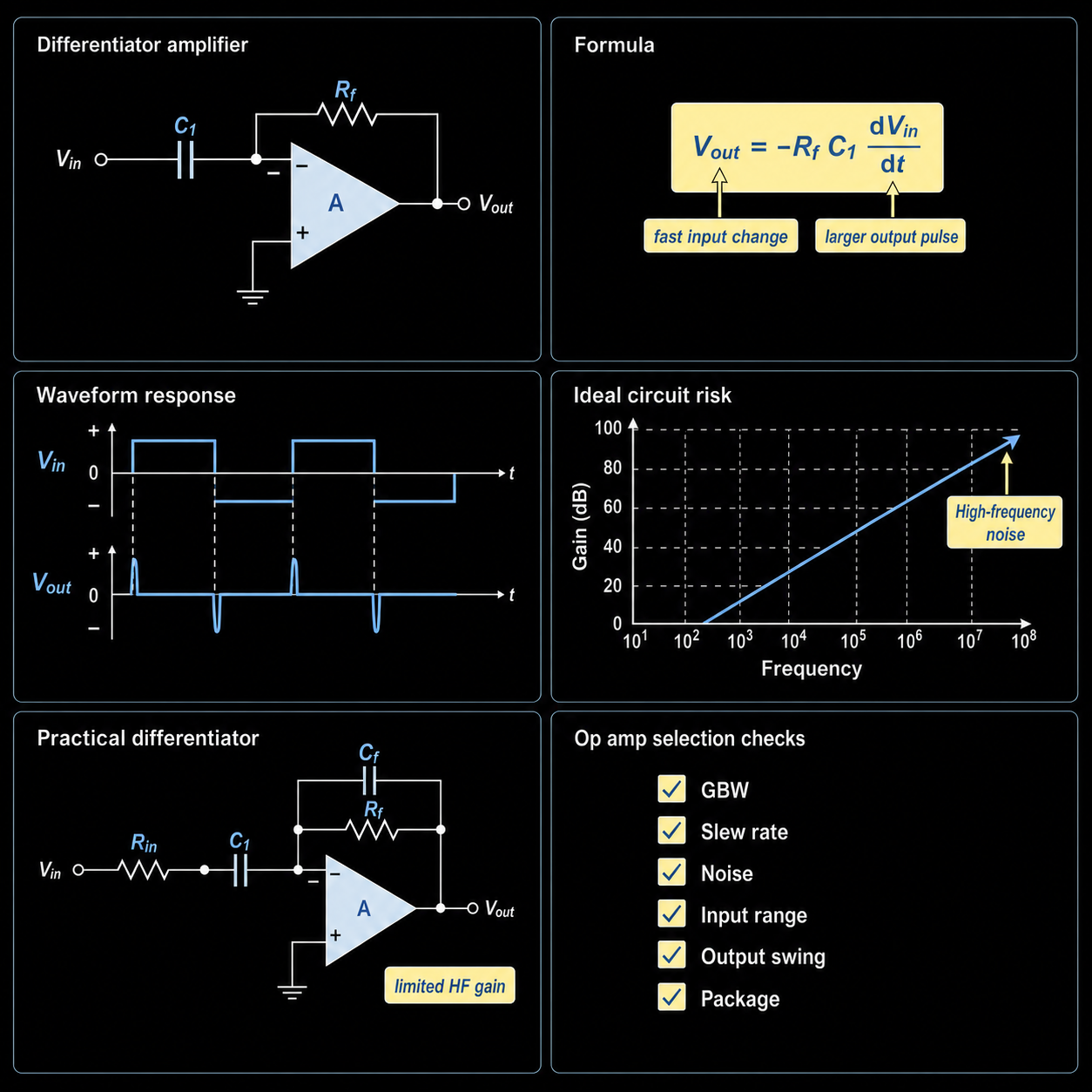
Op Amp Differentiator Amplifier Circuit: Formula and Practical Checks
An op amp differentiator amplifier is a circuit that gives an output based on how fast the input voltage is changing. If the input changes quickly, the output becomes larger.
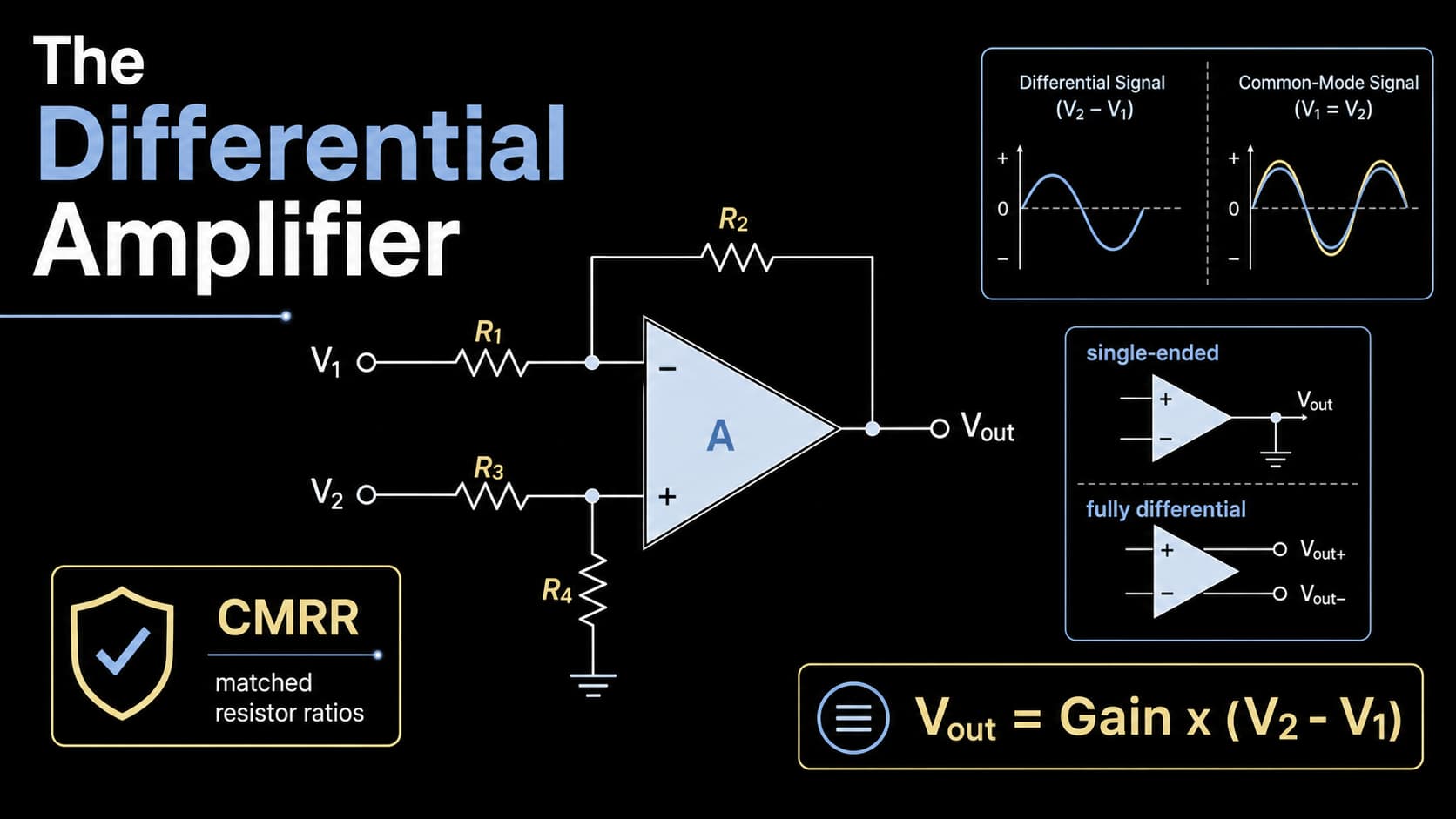
The Differential Amplifier: Circuit, Formula, CMRR and Practical Design Notes
A differential amplifier is an amplifier circuit that responds mainly to the difference between two input voltages. In the basic op amp version, the output is proportional to V2 –
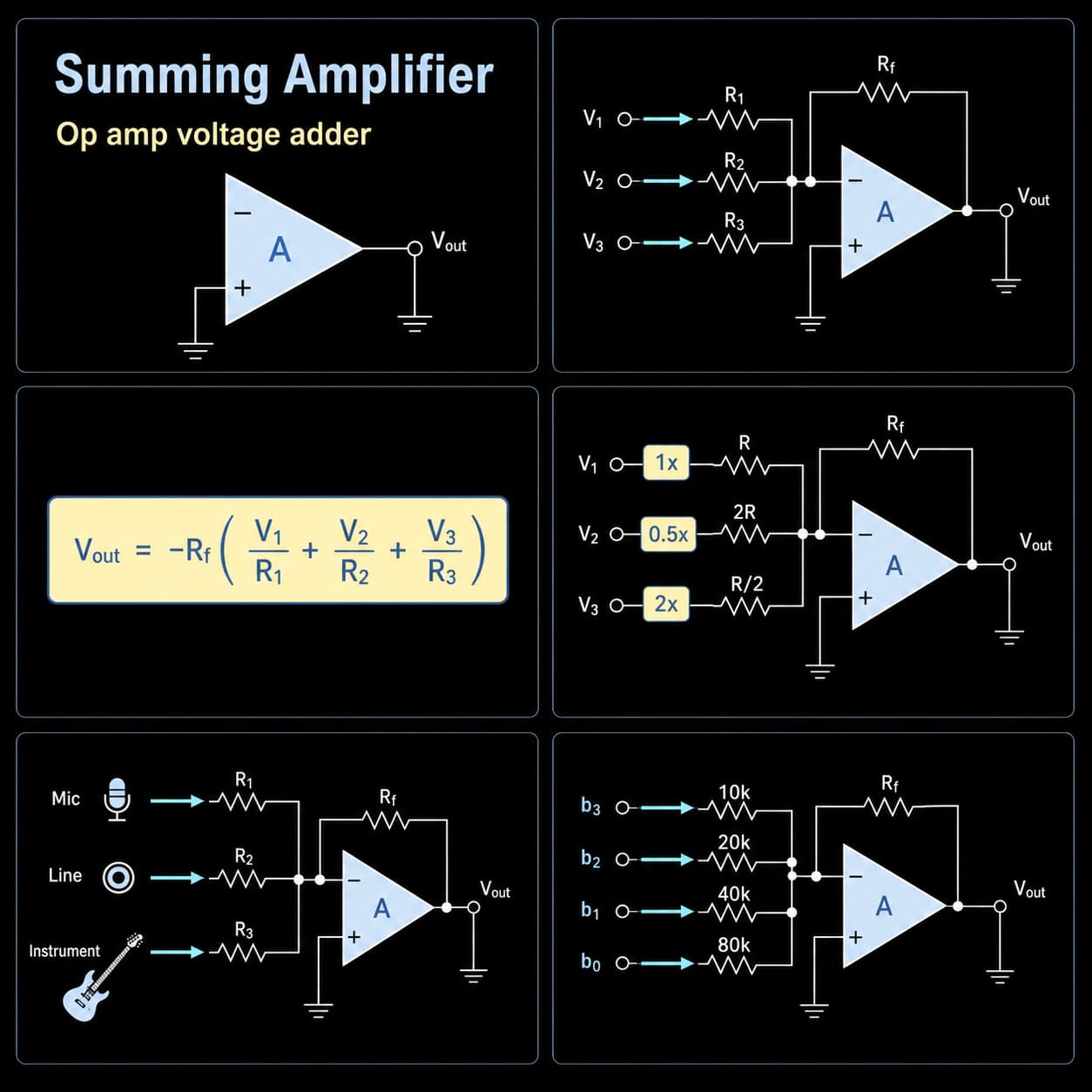
Summing Amplifier: Op Amp Voltage Adder, Formula and Practical Cases
A summing amplifier is an op amp circuit that combines two or more input signals into one output. The most common form is the inverting summing amplifier, where each input
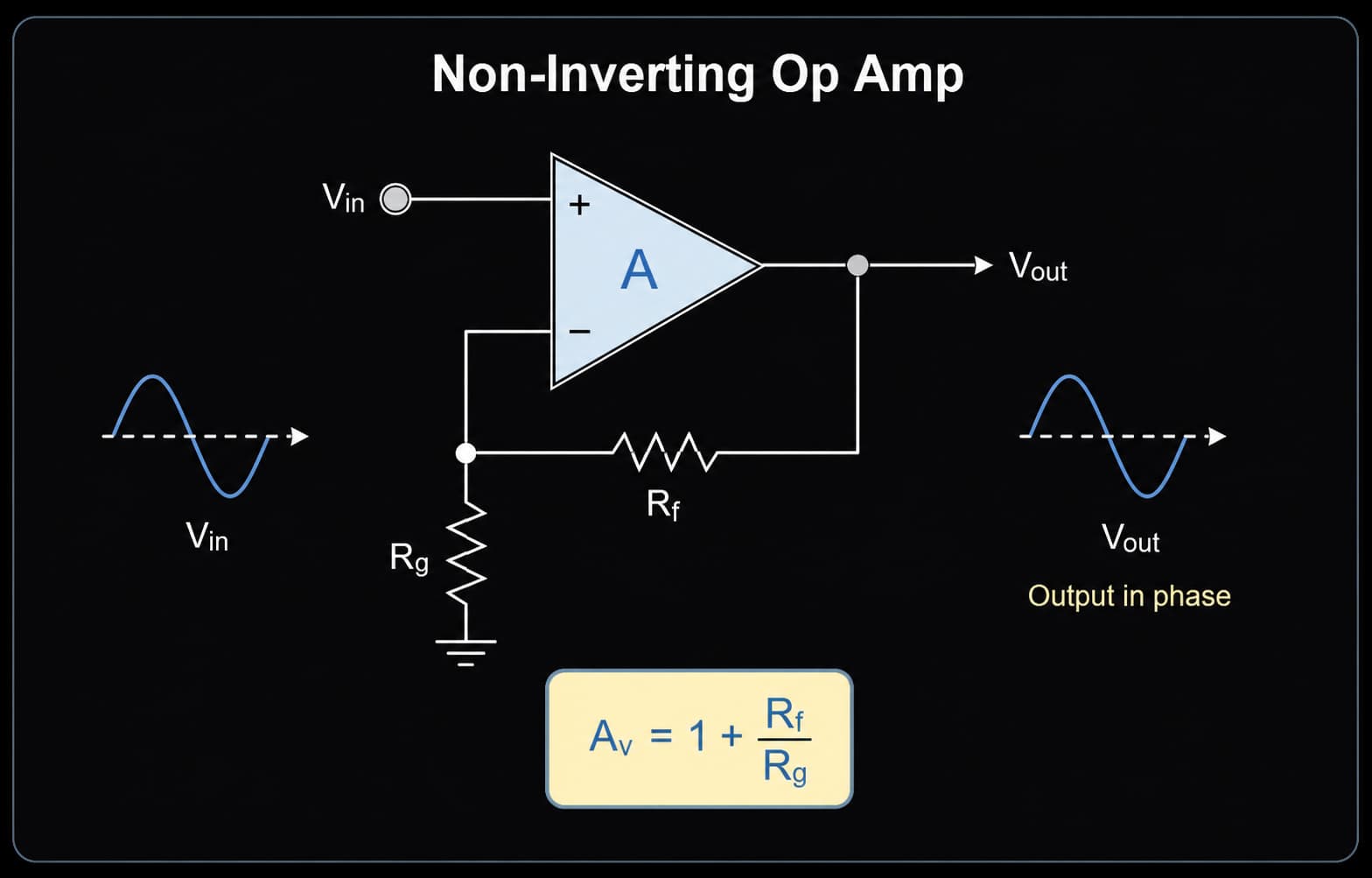
Non-Inverting Operational Amplifier: Working Principle and Gain Formula
A non-inverting operational amplifier is an op amp circuit where the input signal is applied to the non-inverting input, so the output keeps the same polarity as the input. The