

EPROM vs EEPROM: Key Differences, Selection Factors, and Sourcing Checks
Compare EPROM and EEPROM by erase method, in-system reprogramming, package, lifecycle, and sourcing risk before selecting non-volatile memory.
Compare EPROM and EEPROM by erase method, in-system reprogramming, package, lifecycle, and sourcing risk before selecting non-volatile memory.
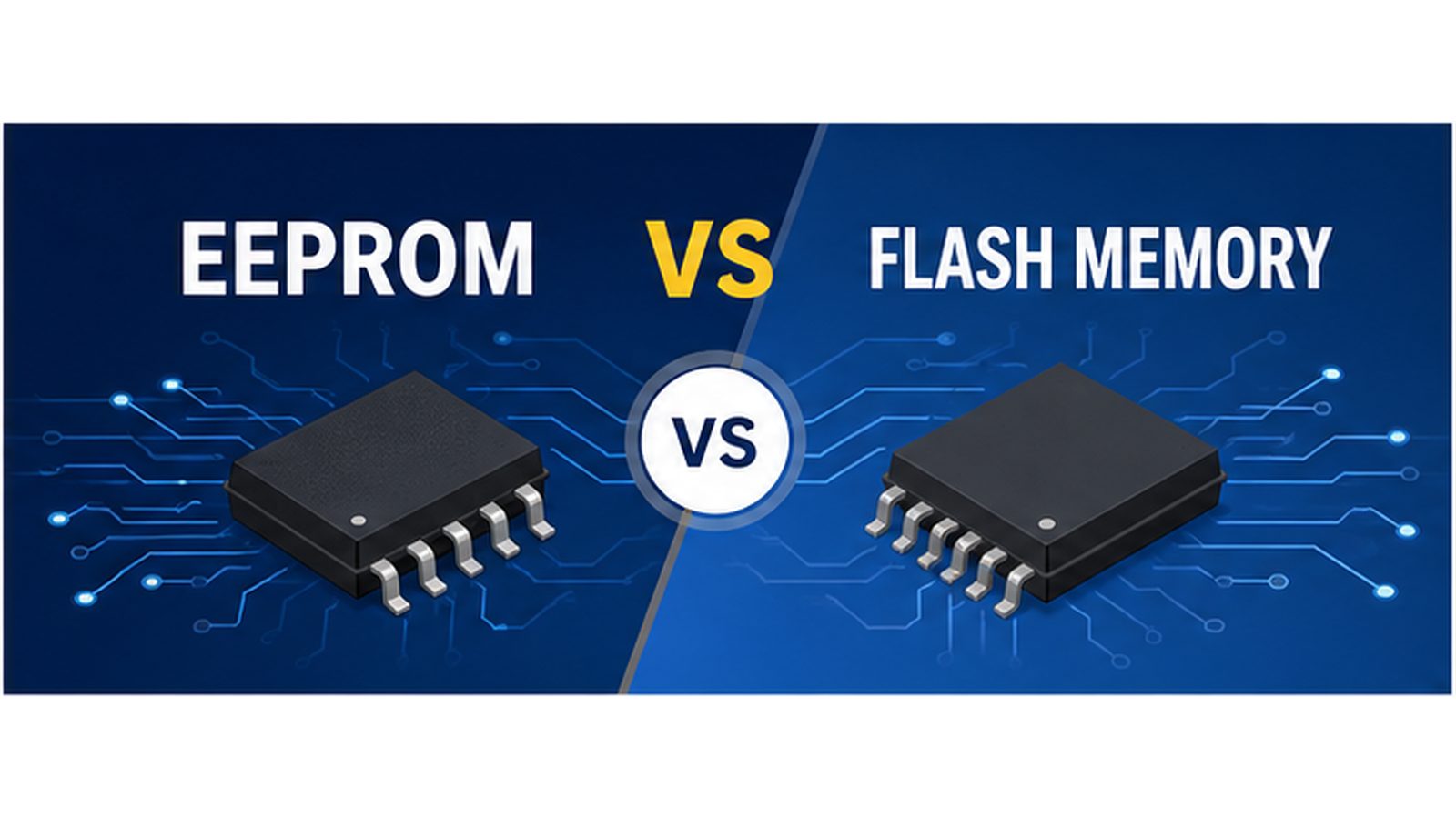
Compare EEPROM and Flash memory by erase behavior, endurance, capacity, speed, and application needs to choose the right non-volatile memory.

Compare I2C EEPROM and SPI EEPROM by MCU pin use, bus speed, addressing, density, package, and sourcing risk to choose the right EEPROM chip.
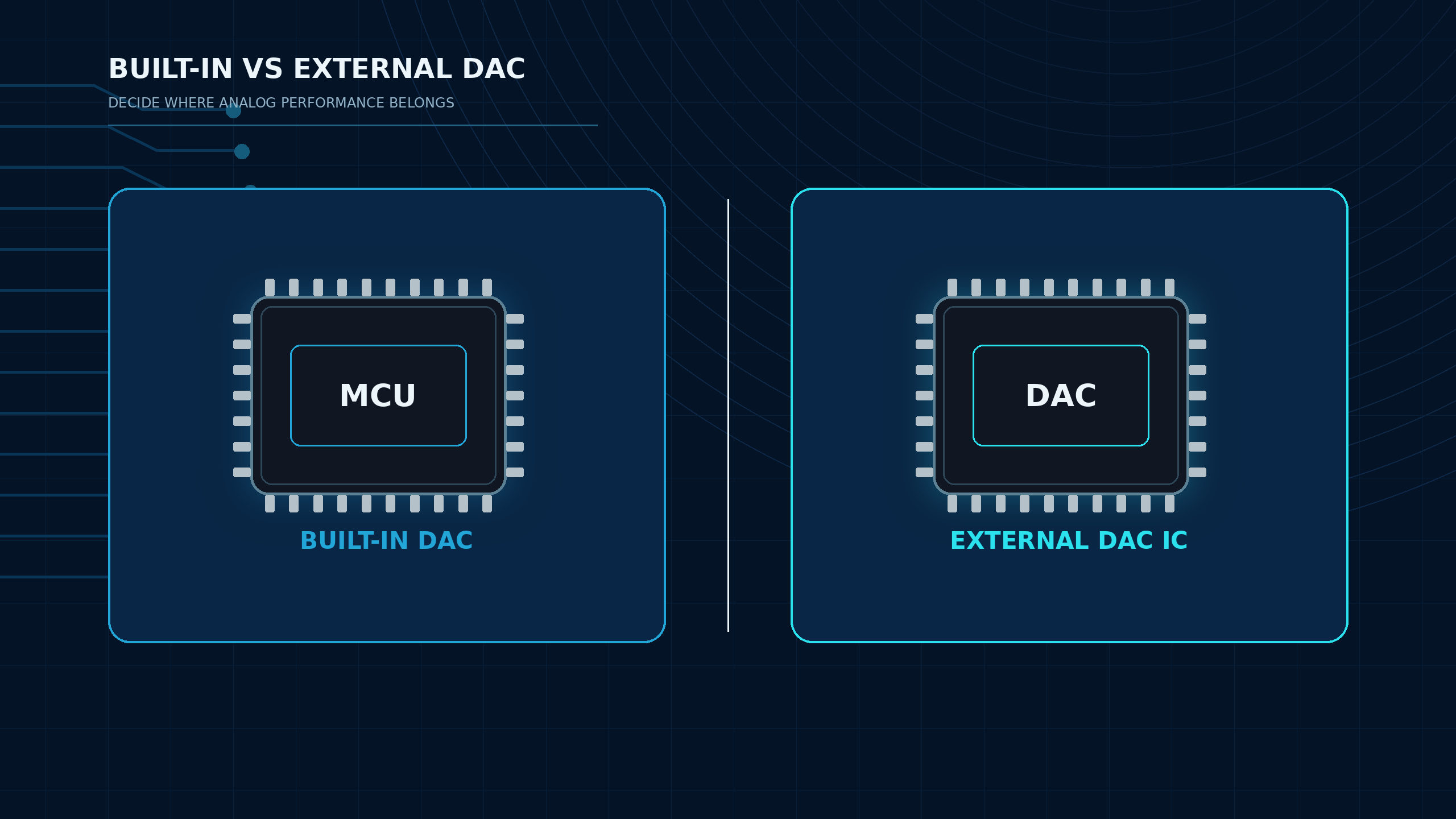
Not all devices have a built-in DAC, and even when an MCU, SoC, or mixed-signal controller includes one, that internal block is not always the right analog-output solution for a
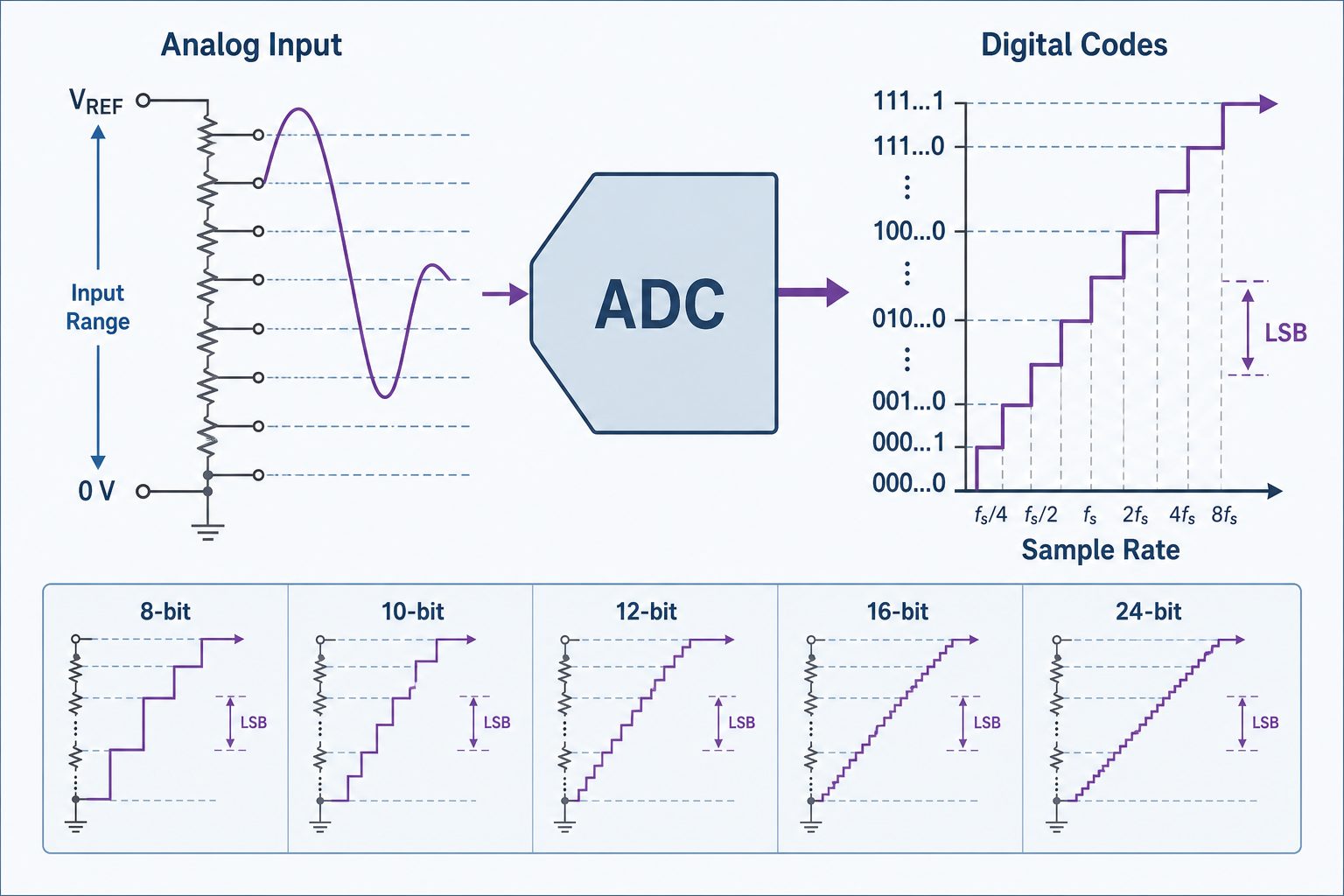
24bit ADC Selection Guide: Resolution, LSB, and Sampling Rate Choosing an analog-to-digital converter is not simply a matter of selecting the highest bit count. A 24-bit ADC provides 16,777,216 digital
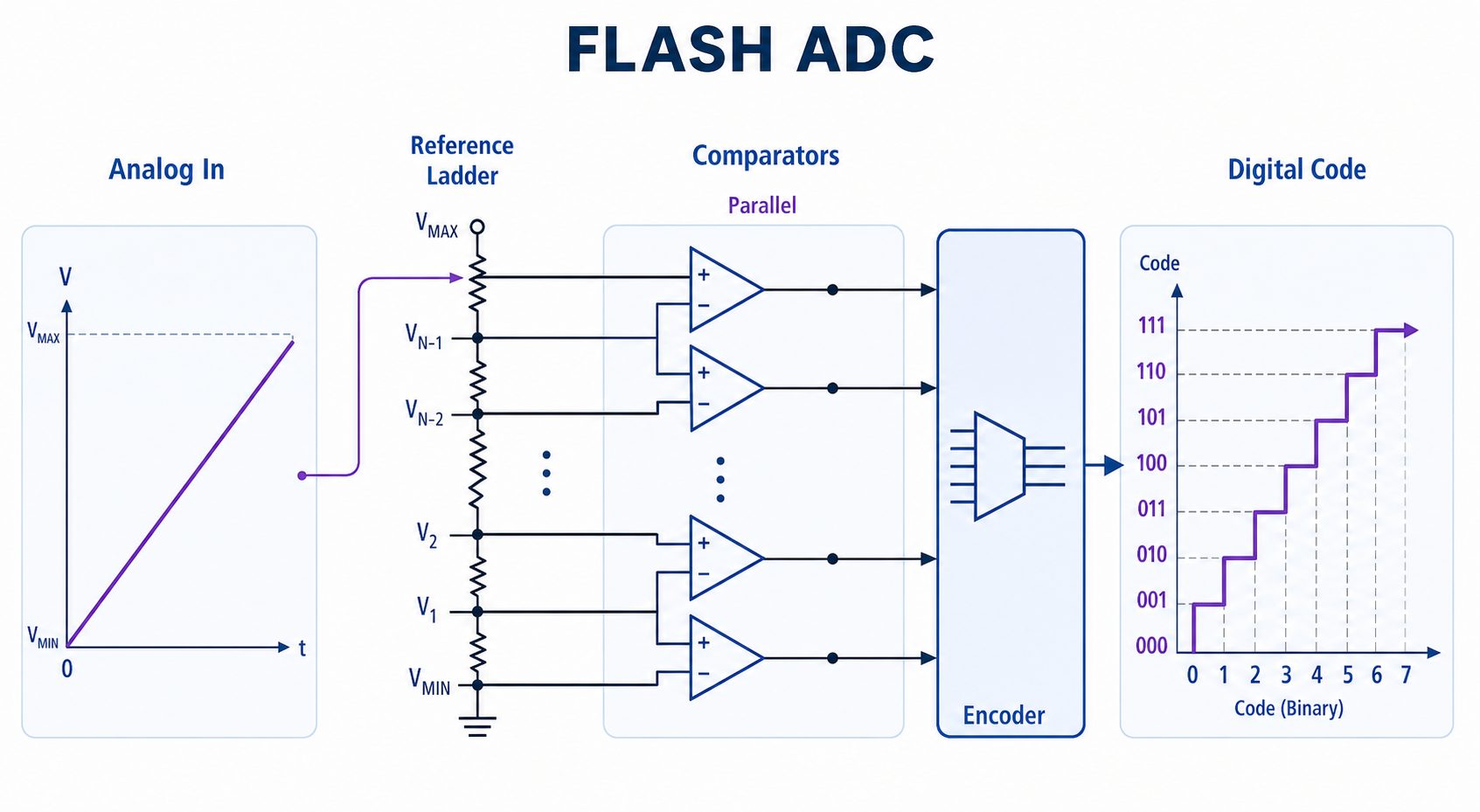
A flash ADC, also called a parallel ADC, is an analog-to-digital converter architecture built for very high conversion speed and low decision latency. Instead of testing one bit at a
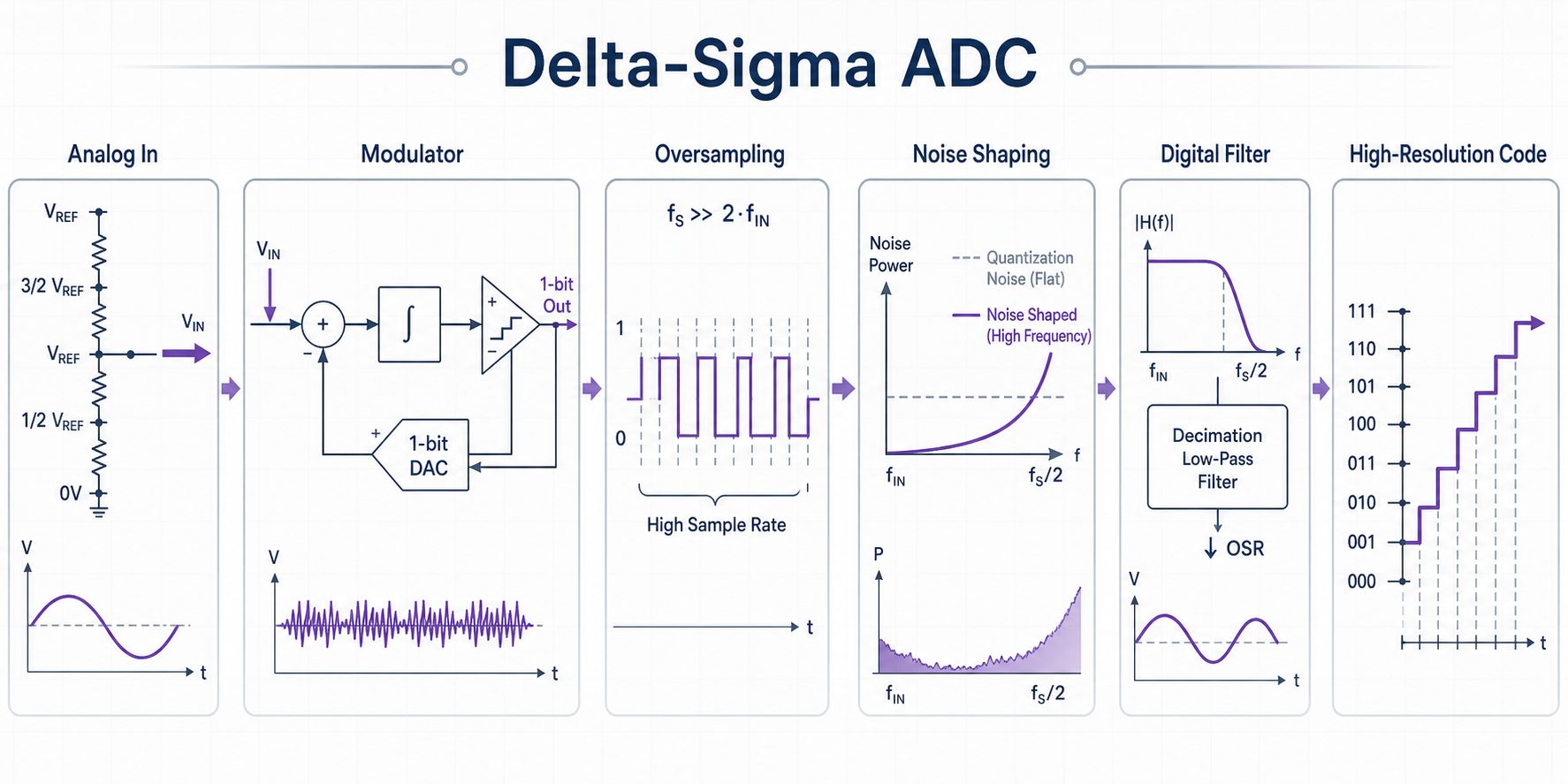
A delta-sigma ADC, also called a sigma-delta ADC, is an analog-to-digital converter architecture designed to achieve high resolution and strong noise performance over a limited signal bandwidth. Instead of making
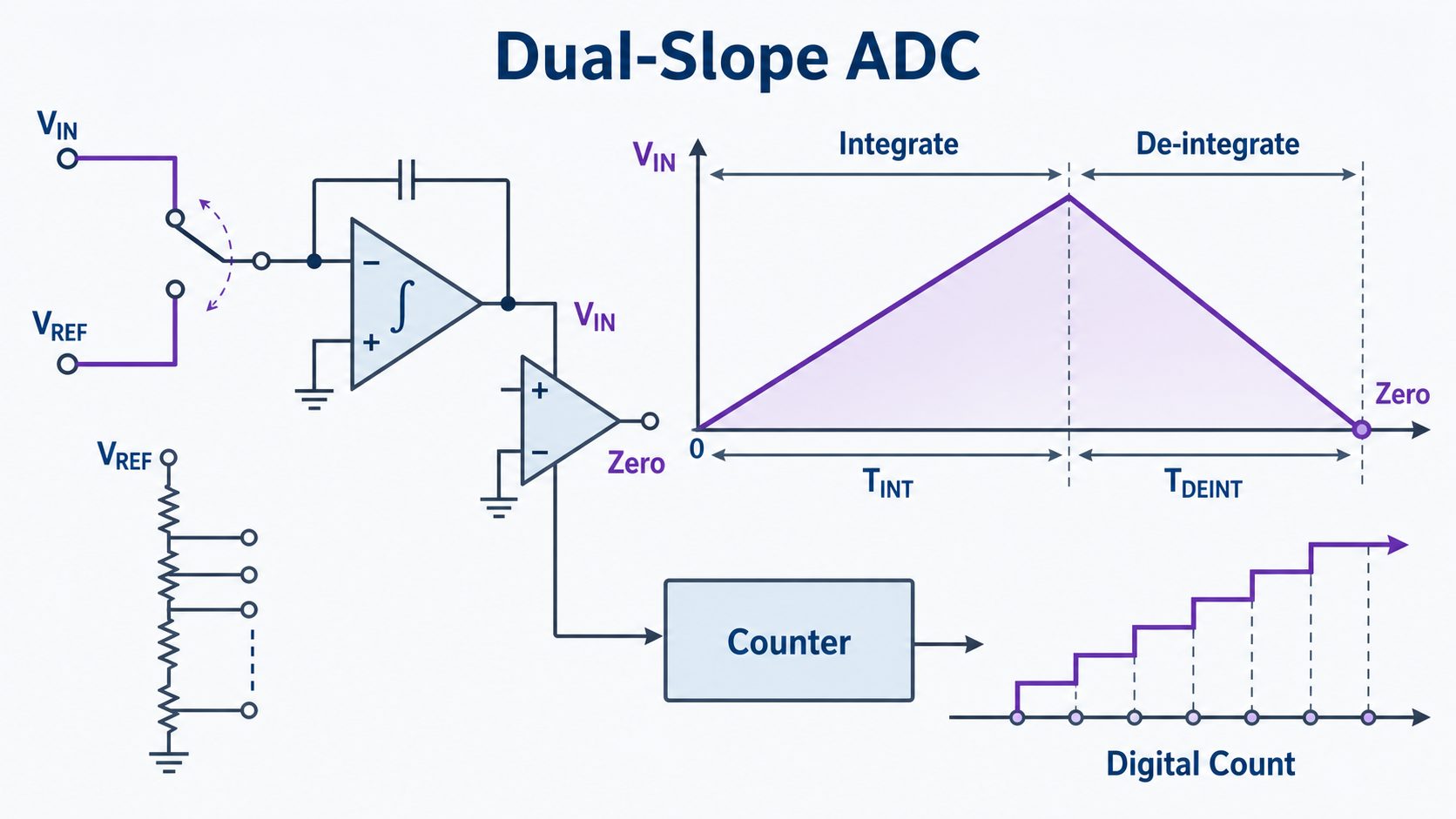
A dual-slope ADC is an integrating analog-to-digital converter designed for accurate, low-speed measurement. Instead of making an instantaneous comparison or running a binary search, it measures the average input over
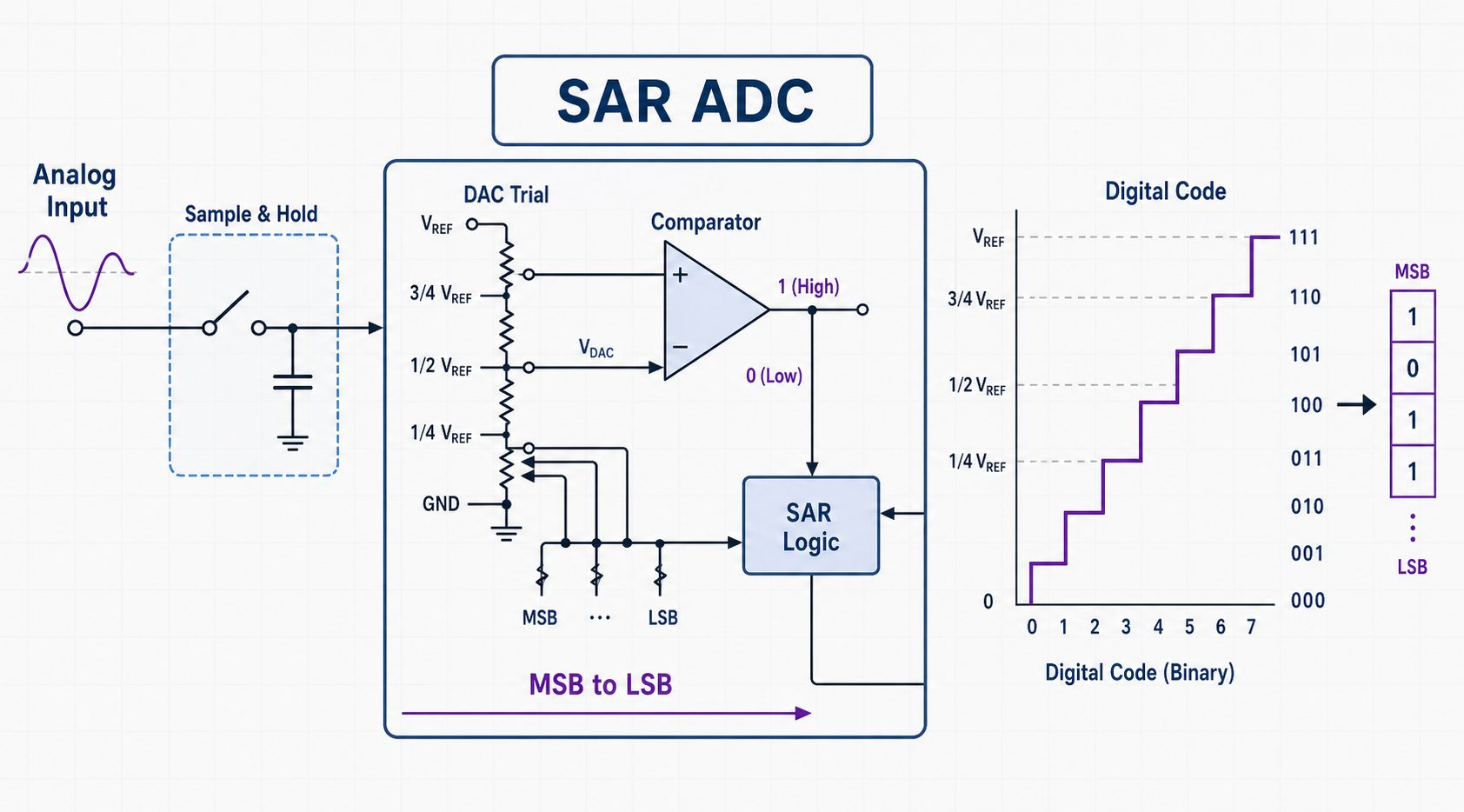
A SAR ADC, or successive approximation register analog-to-digital converter, converts an analog input into a digital code by making a sequence of bit decisions. Instead of checking every possible output
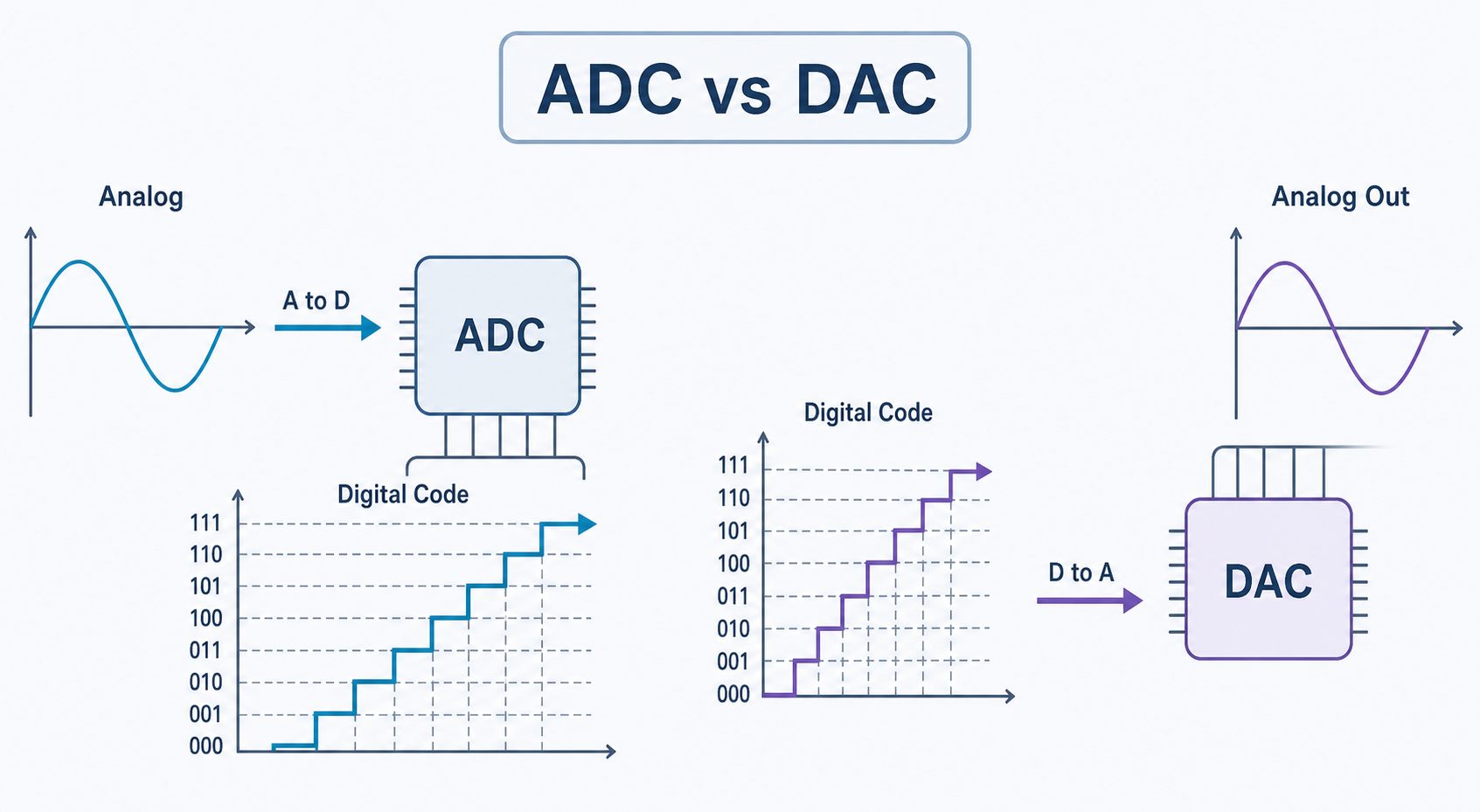
The main difference between an ADC and a DAC is the direction of conversion. An analog-to-digital converter (ADC) converts an analog input into digital data. A digital-to-analog converter (DAC) converts