
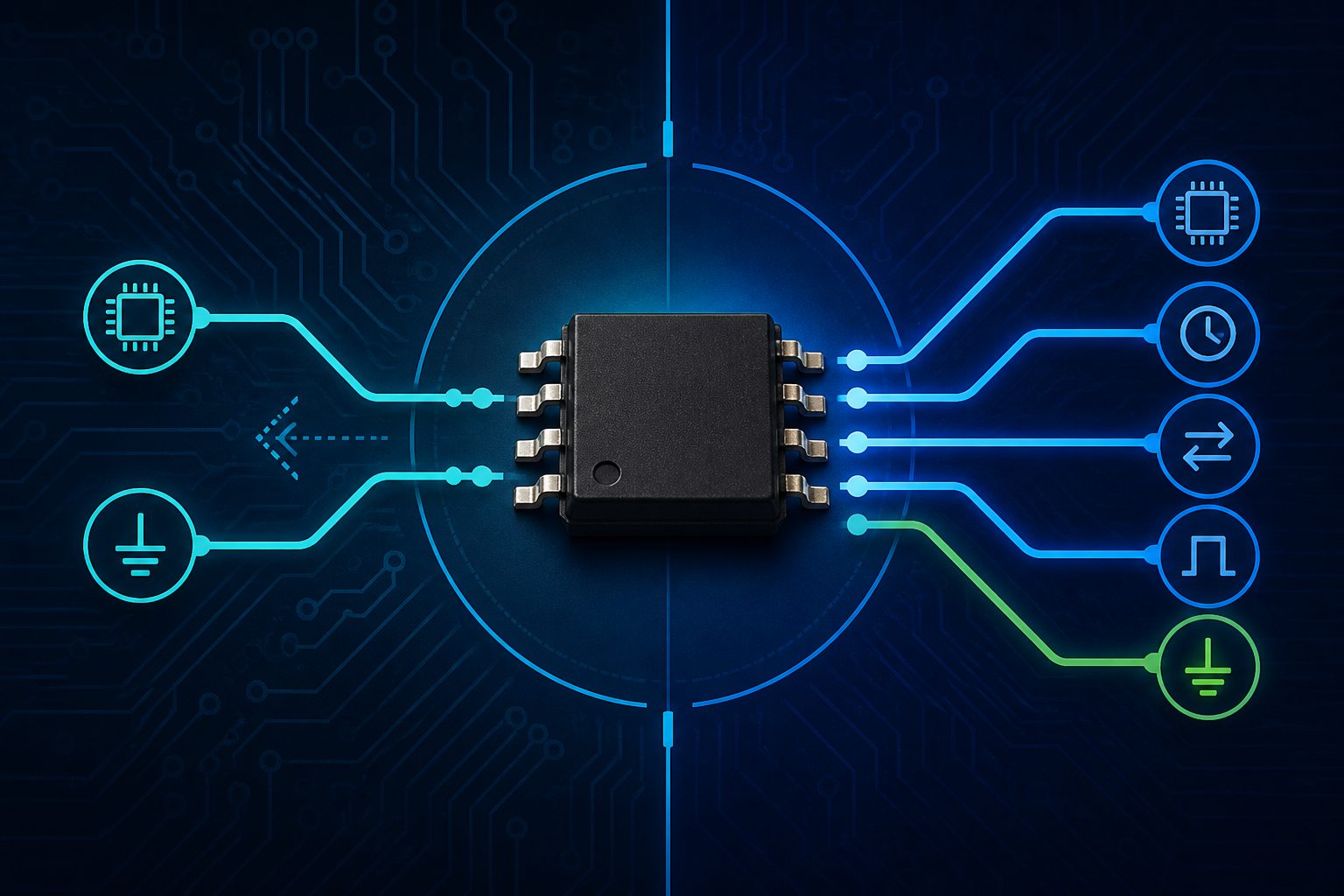
I2C EEPROM vs SPI EEPROM: How to Choose the Right Serial Memory IC
Compare I2C EEPROM and SPI EEPROM by MCU pin use, bus speed, addressing, density, package, and sourcing risk to choose the right EEPROM chip.
Compare I2C EEPROM and SPI EEPROM by MCU pin use, bus speed, addressing, density, package, and sourcing risk to choose the right EEPROM chip.
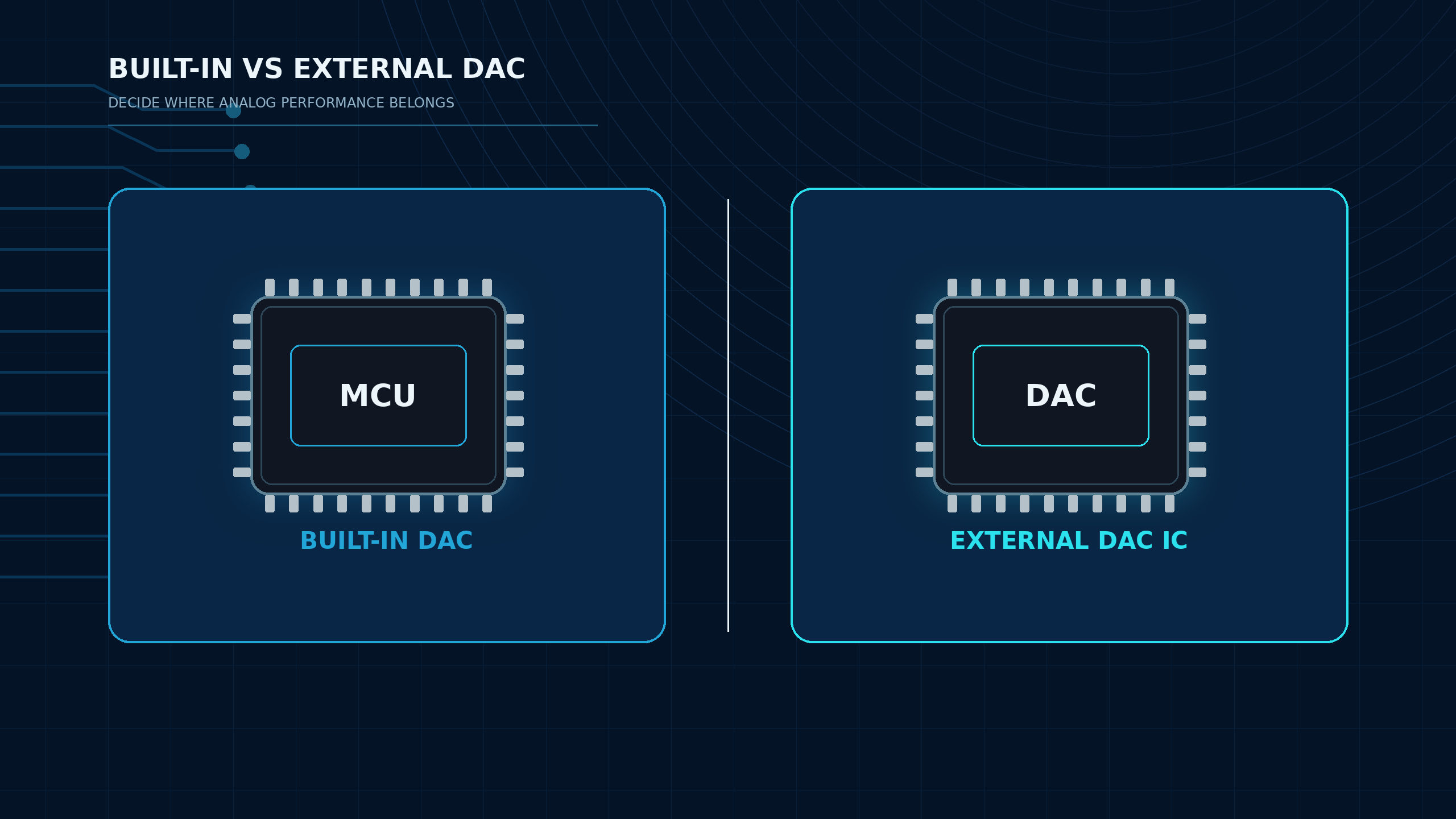
Not all devices have a built-in DAC, and even when an MCU, SoC, or mixed-signal controller includes one, that internal block is not always the right analog-output solution for a

Electronics Industry Weekly Digest: August 22–29, 2026 Coverage: August 22–29, 2026 | Published: August 29, 2026 AI infrastructure remains the dominant pull on the electronics supply chain. This
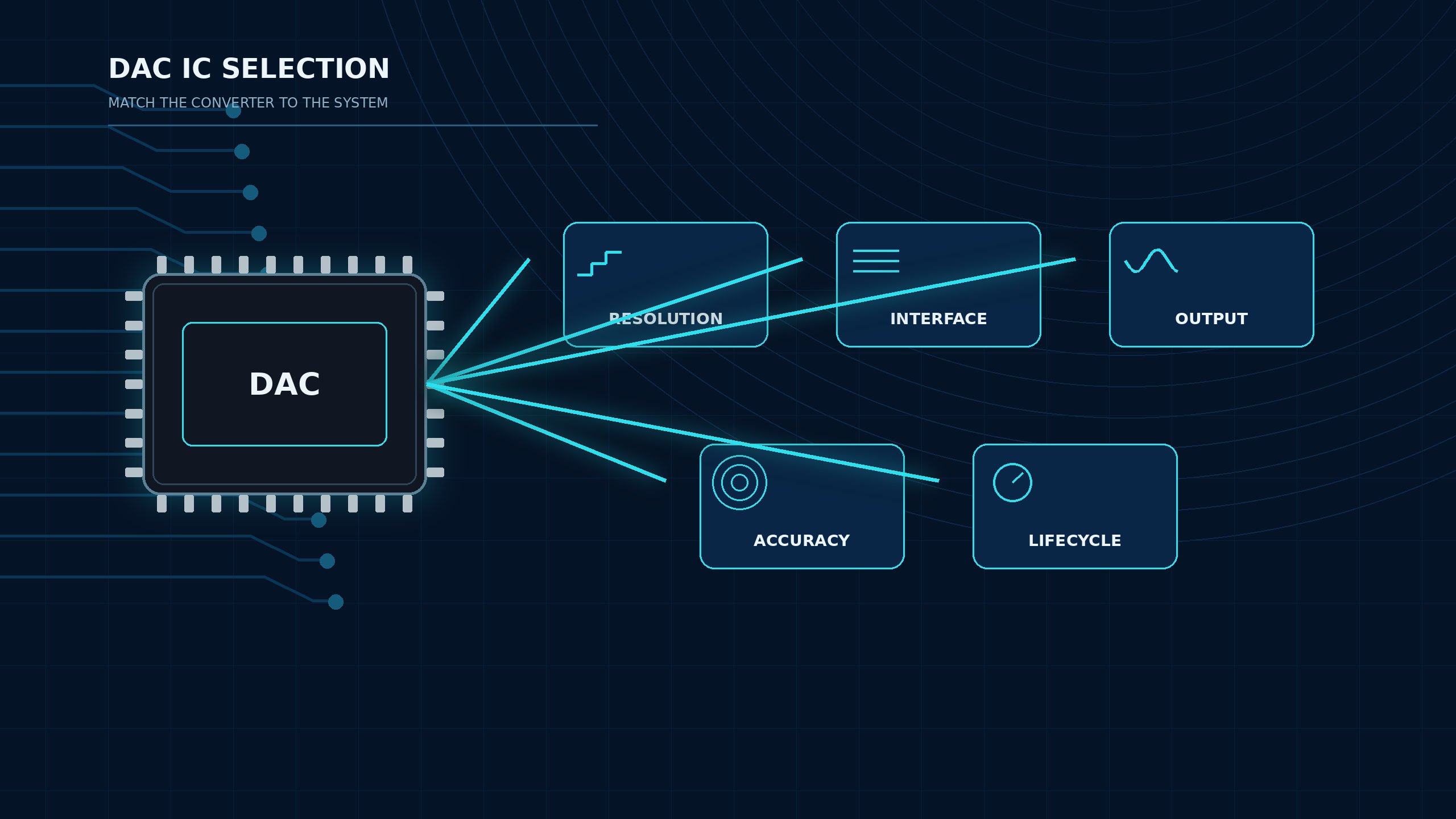
A good DAC IC is not the part with the highest bit count on the first search result. It is the digital-to-analog converter that matches the required output range, control

A DAC is used to turn digital commands into controlled analog voltage or current outputs. In practical electronics, that means a processor, microcontroller, FPGA, or digital controller can set a
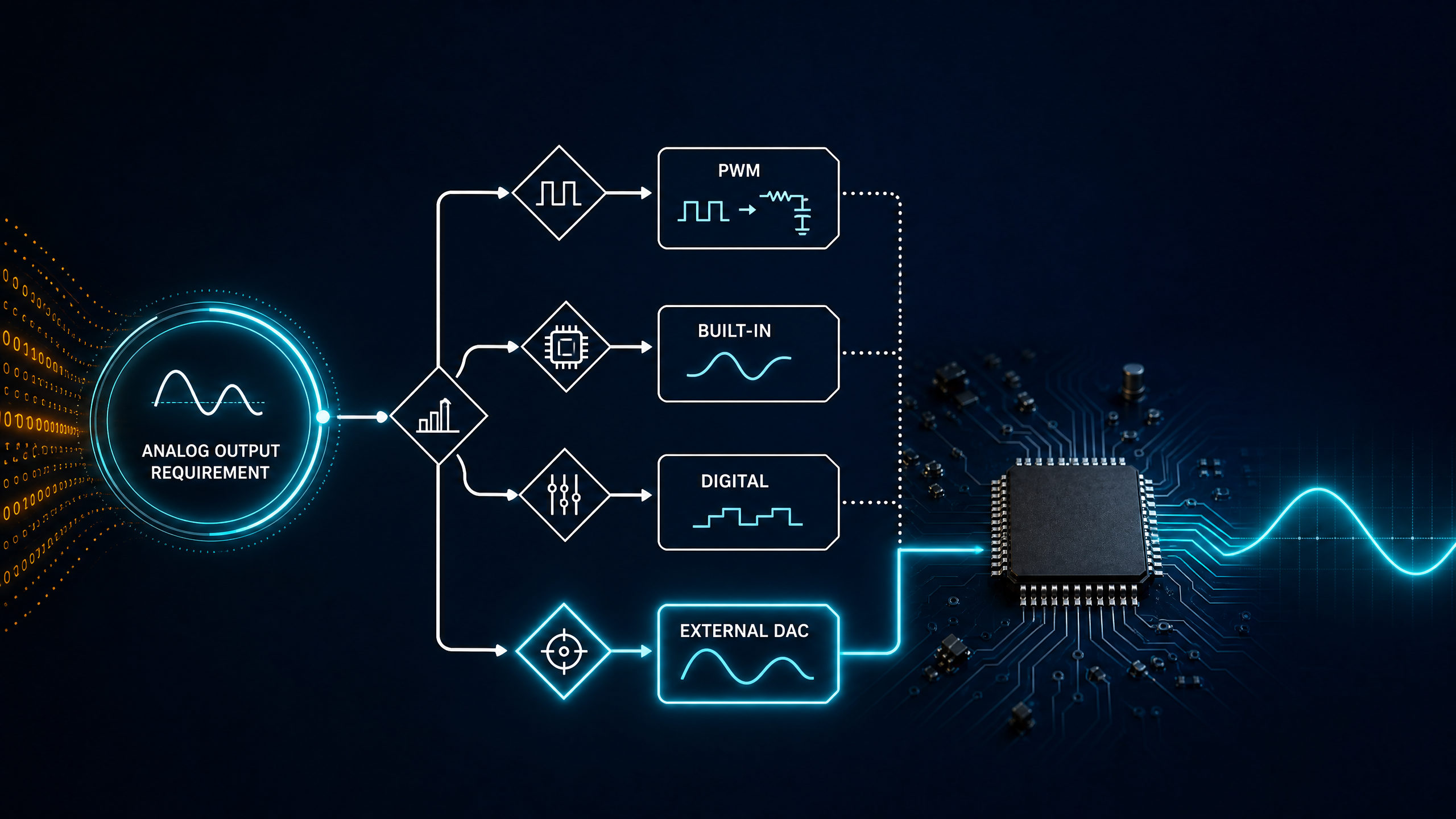
You need a DAC IC when your circuit must create a controlled analog voltage or current from digital code, and when a filtered PWM signal, a built-in microcontroller DAC, or

A digital to analog converter, usually shortened to DAC, is an electronic device that changes digital code into an analog voltage or current. In a control board, test instrument, MCU
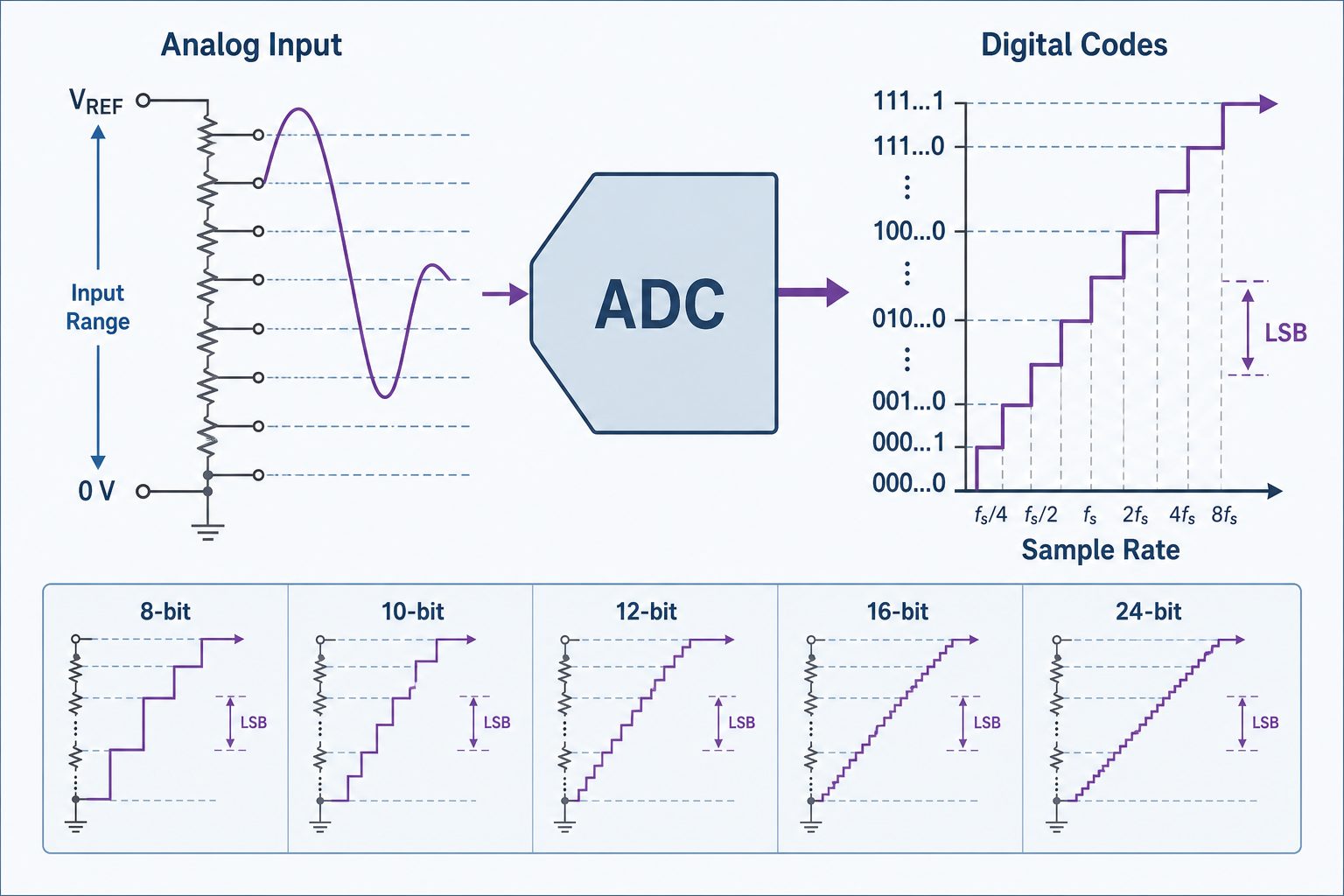
24bit ADC Selection Guide: Resolution, LSB, and Sampling Rate Choosing an analog-to-digital converter is not simply a matter of selecting the highest bit count. A 24-bit ADC provides 16,777,216 digital
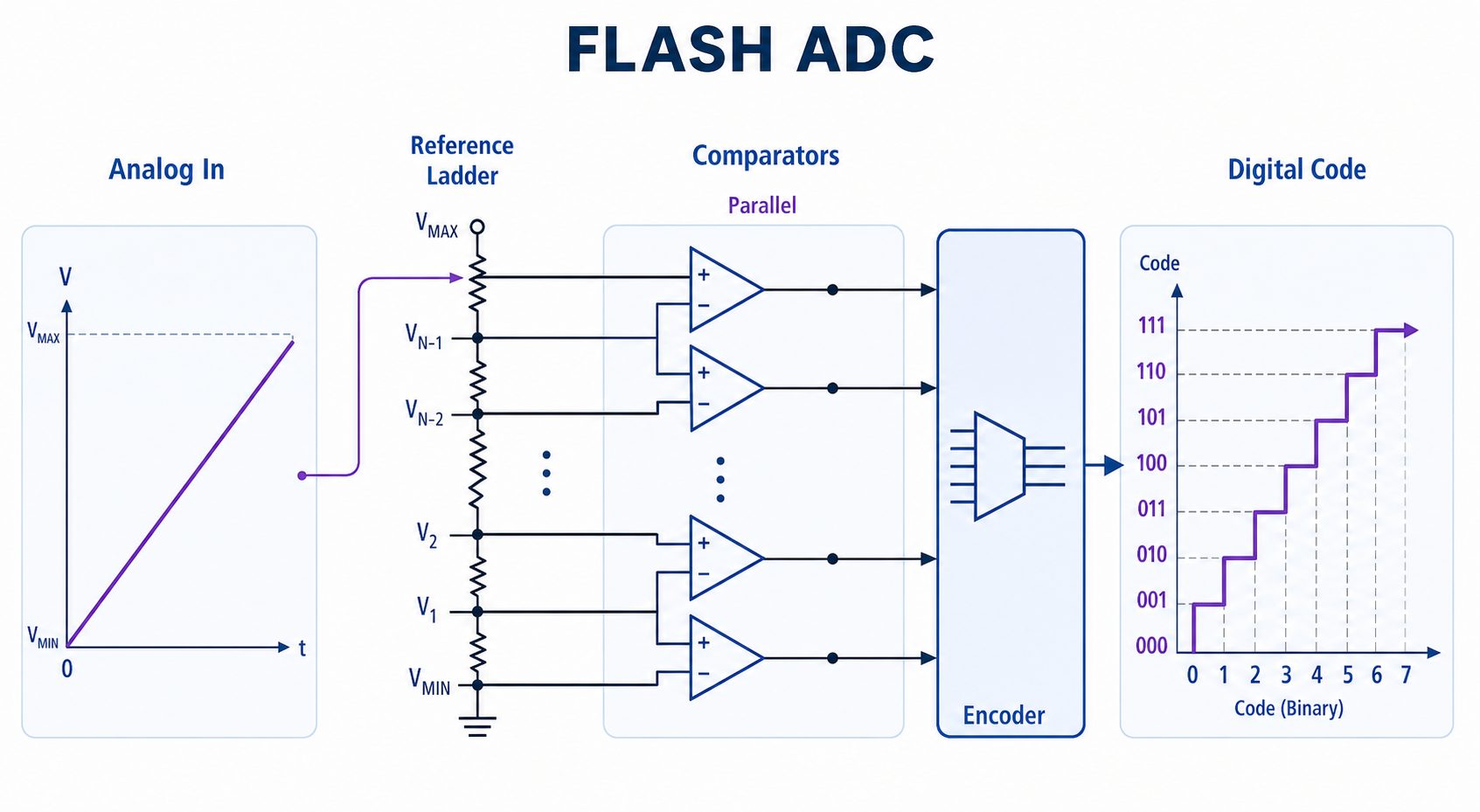
A flash ADC, also called a parallel ADC, is an analog-to-digital converter architecture built for very high conversion speed and low decision latency. Instead of testing one bit at a
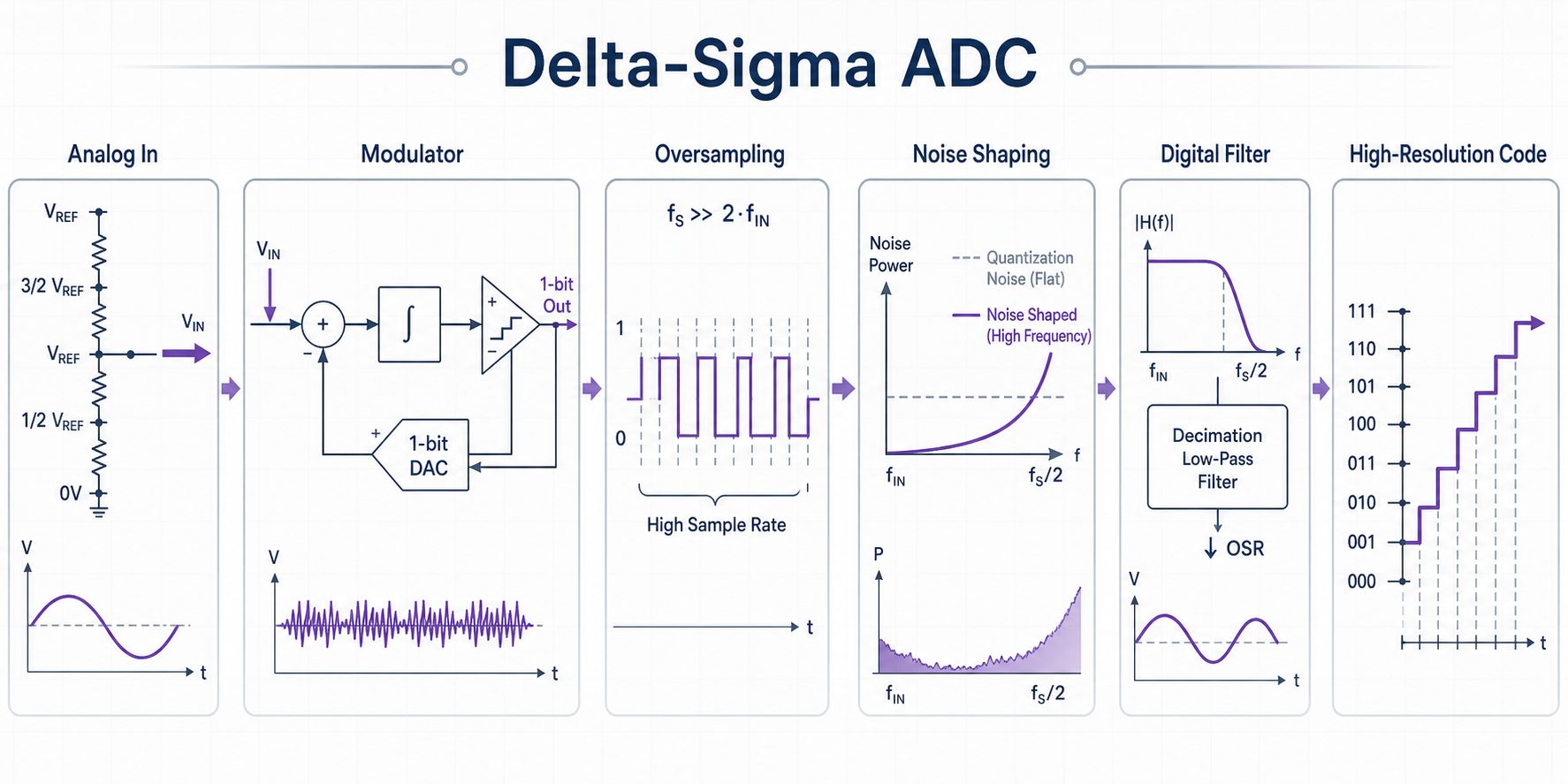
A delta-sigma ADC, also called a sigma-delta ADC, is an analog-to-digital converter architecture designed to achieve high resolution and strong noise performance over a limited signal bandwidth. Instead of making