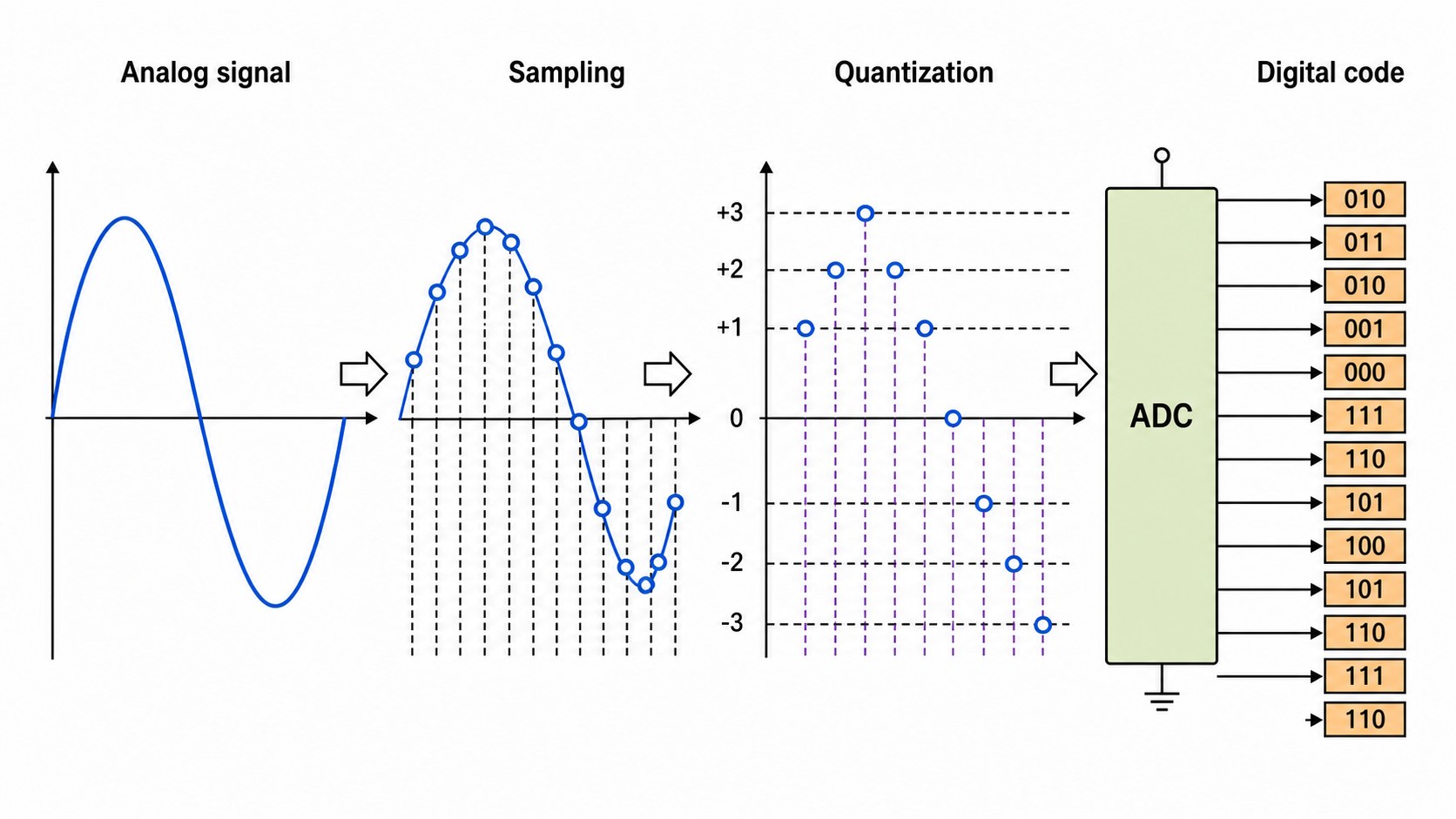
An analog-to-digital converter, usually called an ADC or A/D converter, changes an analog electrical signal into digital data that a microcontroller, processor, DSP, FPGA, or computer can use. Sensors, microphones,
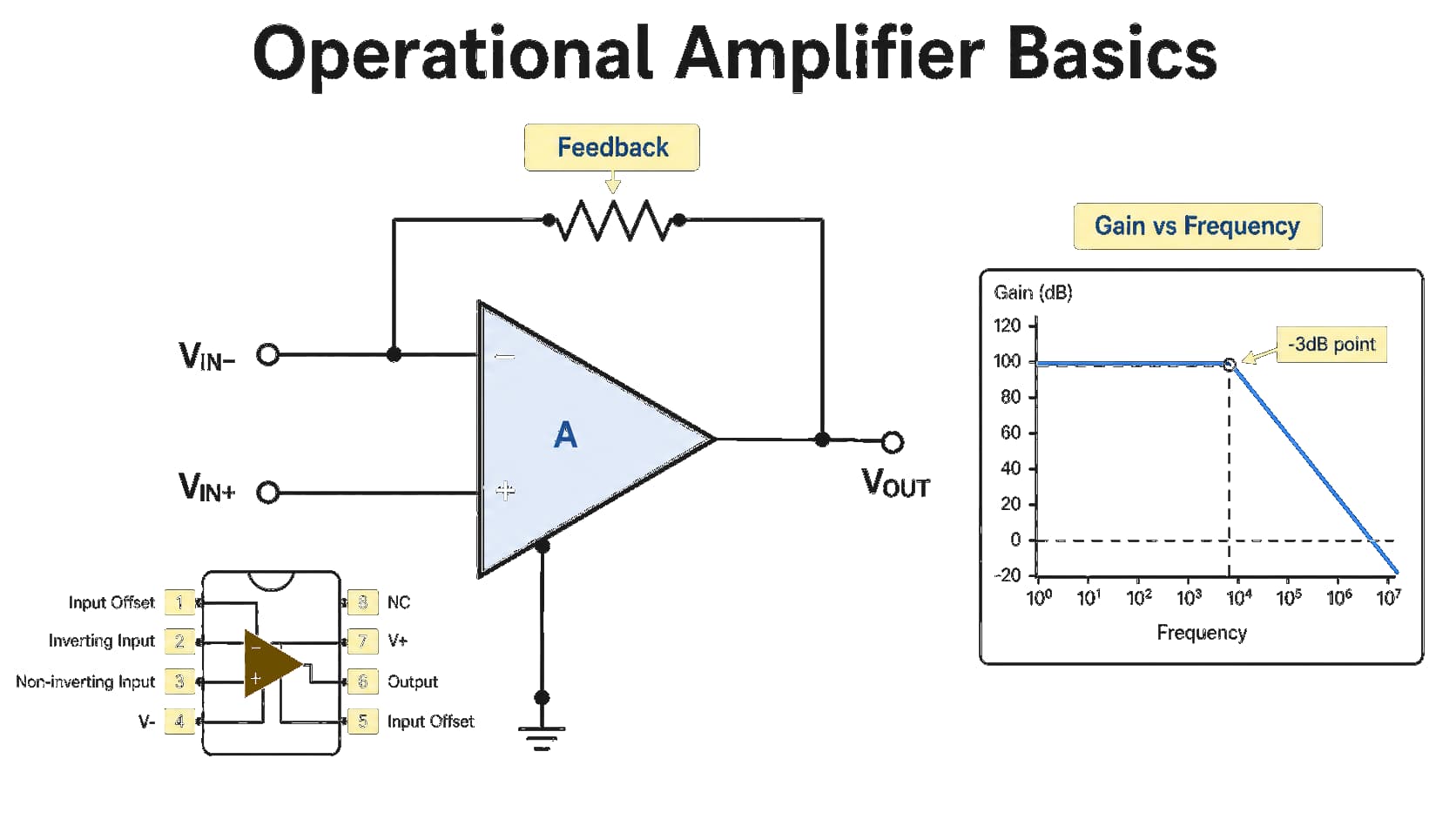
What Is an Operational Amplifier? How Op Amps Work
An operational amplifier, usually called an op amp, is an analog integrated circuit that amplifies the voltage difference between two input terminals and drives one output. The two inputs are
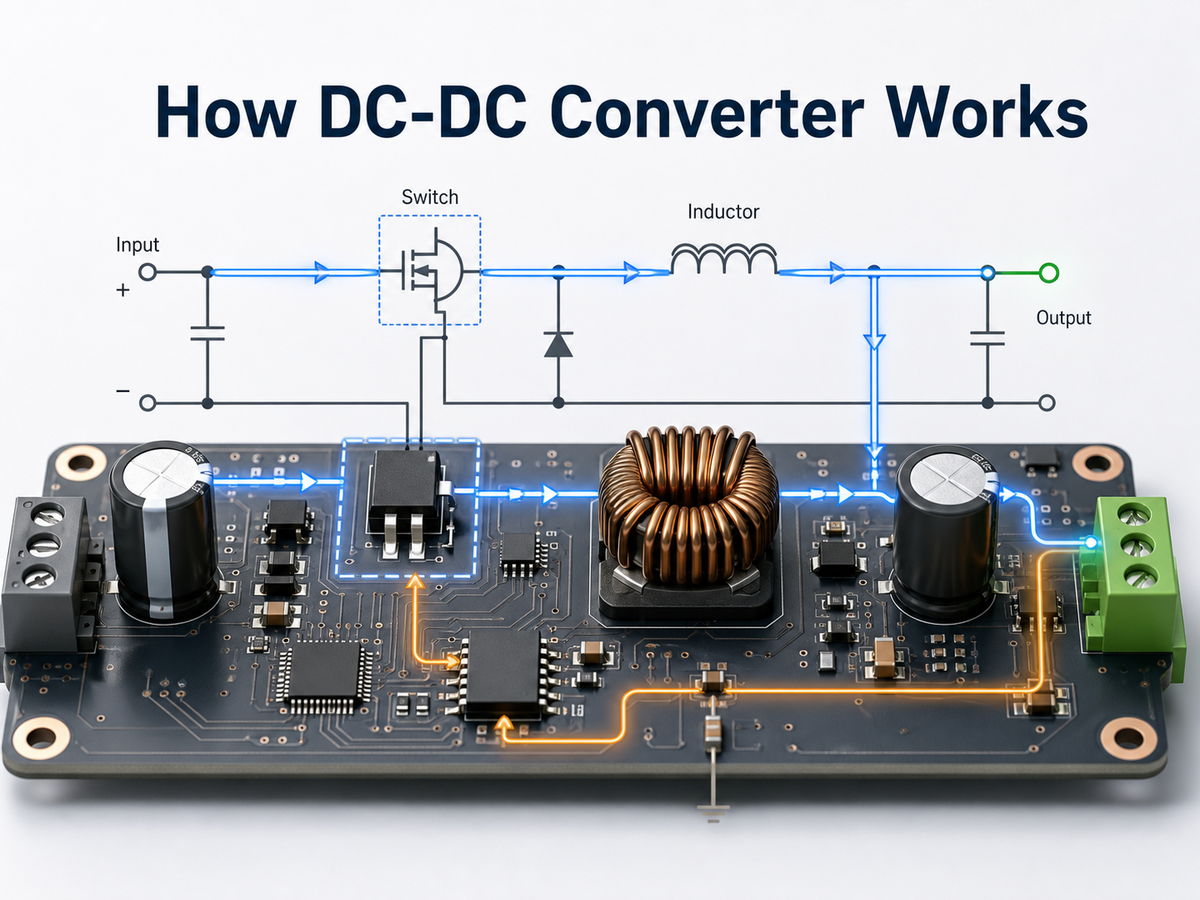
How a DC-DC Converter Works: Switching, Energy and Feedback
A DC-DC converter is a power circuit that converts one DC voltage level into another DC voltage level. It may step voltage down, step voltage up, or do both depending
LDO Regulator Selection Checklist: Noise, Stability and Heat
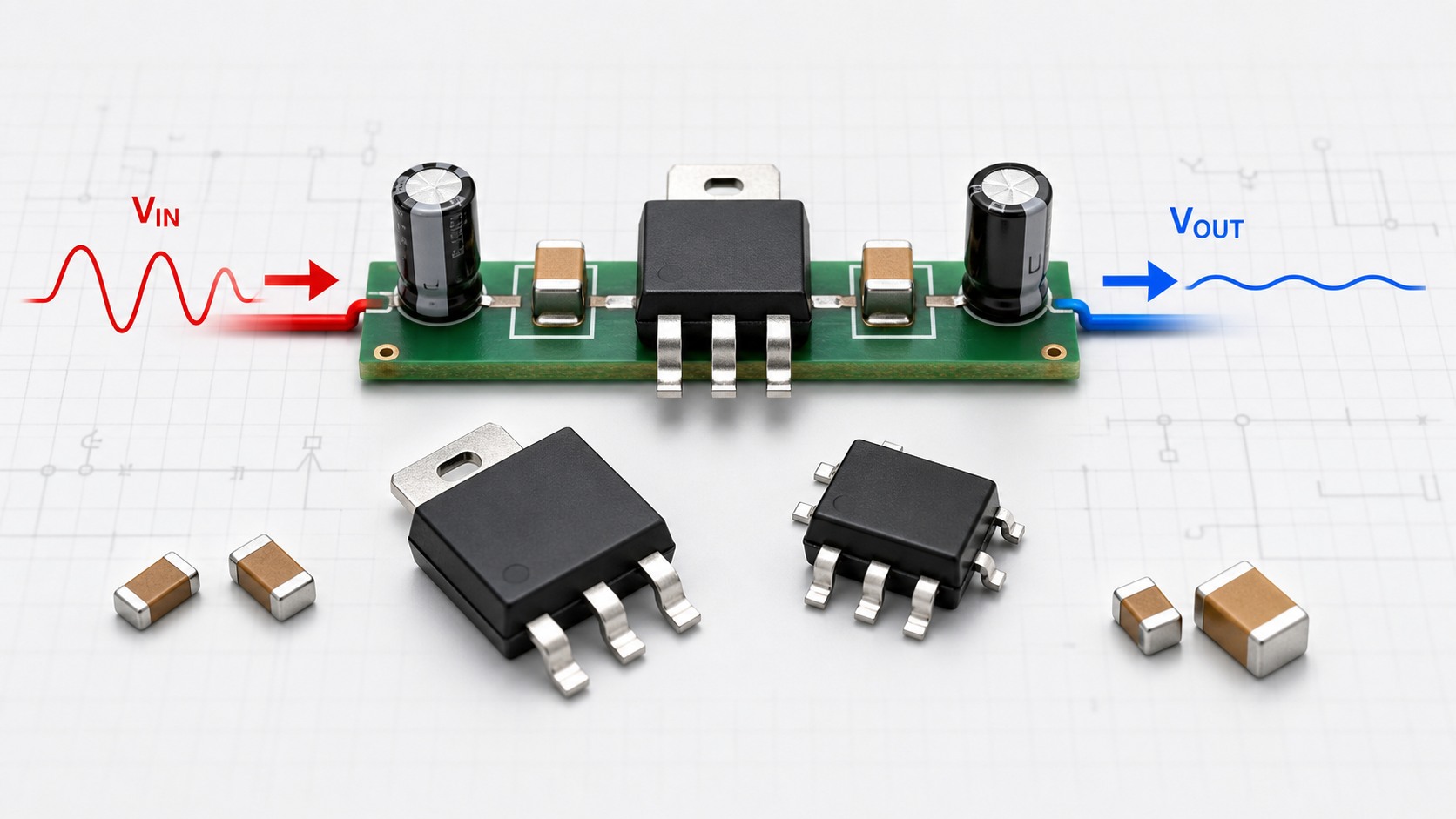
Use this LDO regulator selection checklist after defining the required power rail. It covers the checks that distinguish one real IC from another: input headroom, output tolerance, load profile, noise,
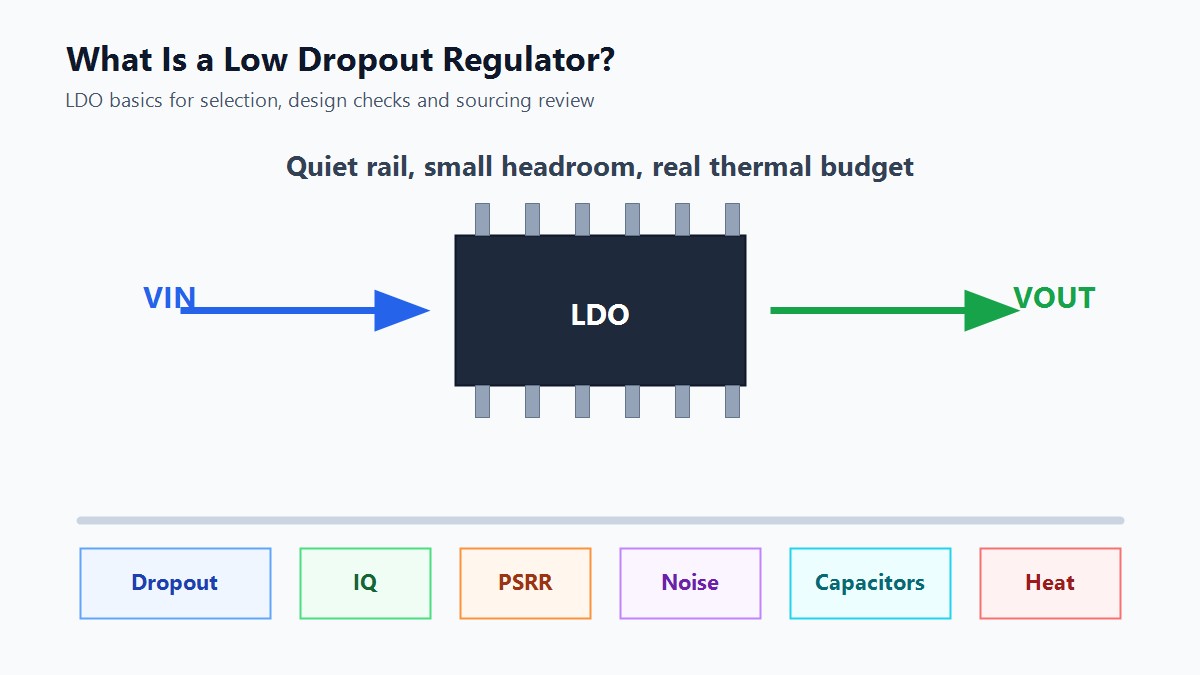
What Is a Low Dropout Regulator? How an LDO Works
A low dropout regulator, or LDO, is a linear voltage regulator that keeps a stable output voltage when the input voltage is only slightly higher than the output voltage. That
78xx Voltage Regulator Selection Guide: 7805, 7812, 7815, 7824 & LM317 Comparison
You need a 5V rail for a microcontroller. Your motor driver wants 12V. The op-amp circuit runs best at ±15V. Three different voltages, three different regulator part numbers — and
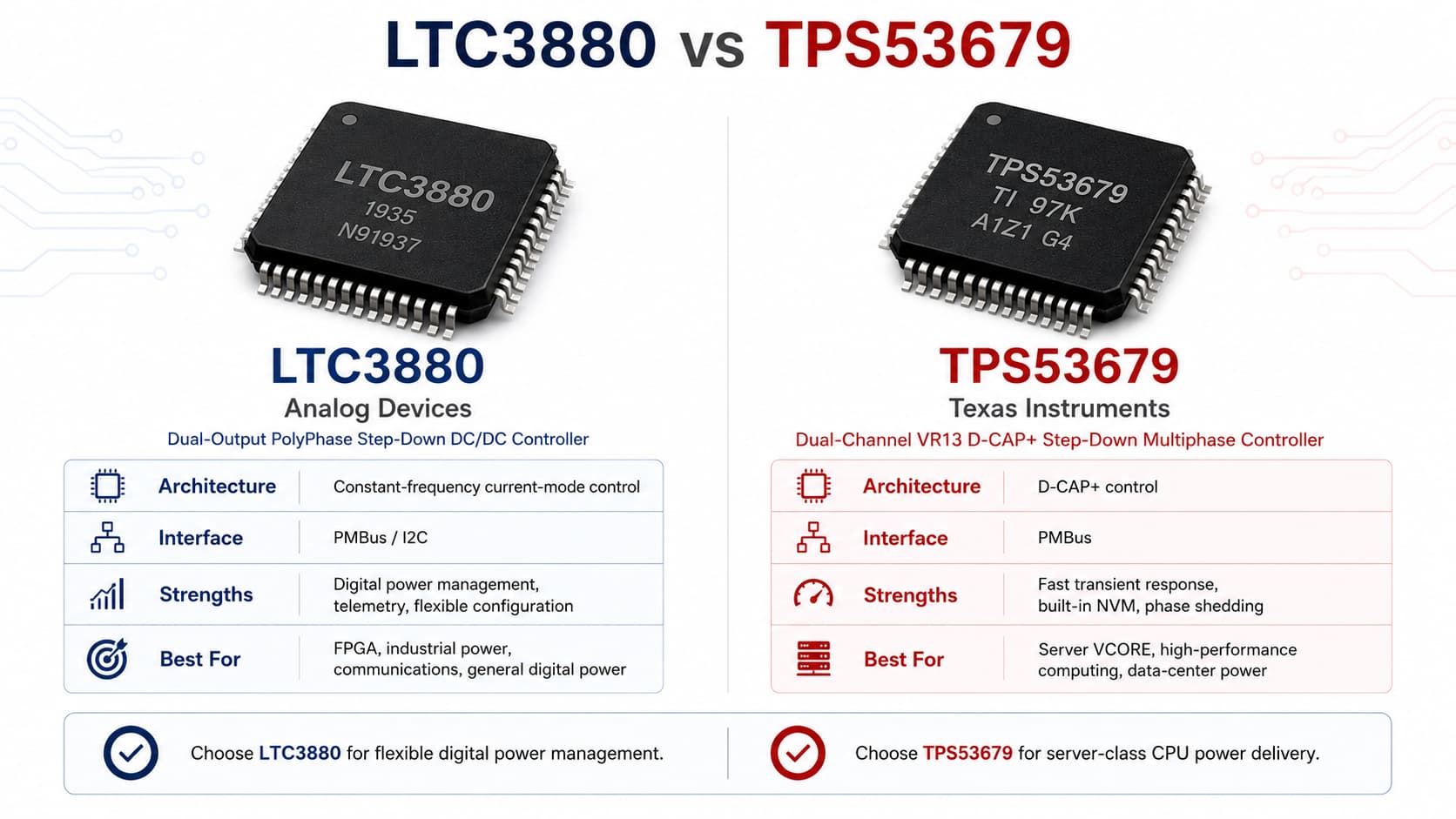
ADI vs. TI Dual-Phase Buck Controllers for AI Server Power: LTC3880, LTC3882, and TPS536xx Compared
Summary — AI server racks are pushing past 200 kW toward the megawatt scale, and the power delivery architecture that feeds GPU and CPU core rails is under more pressure
Embedded MCU Selection Guide (2026 Edition)
Abstract This guide systematically catalogs mainstream MCU series across the embedded landscape, drawing on official product information from STMicroelectronics, NXP Semiconductors, Espressif Systems, Raspberry Pi, Microchip Technology, and Texas Instruments.
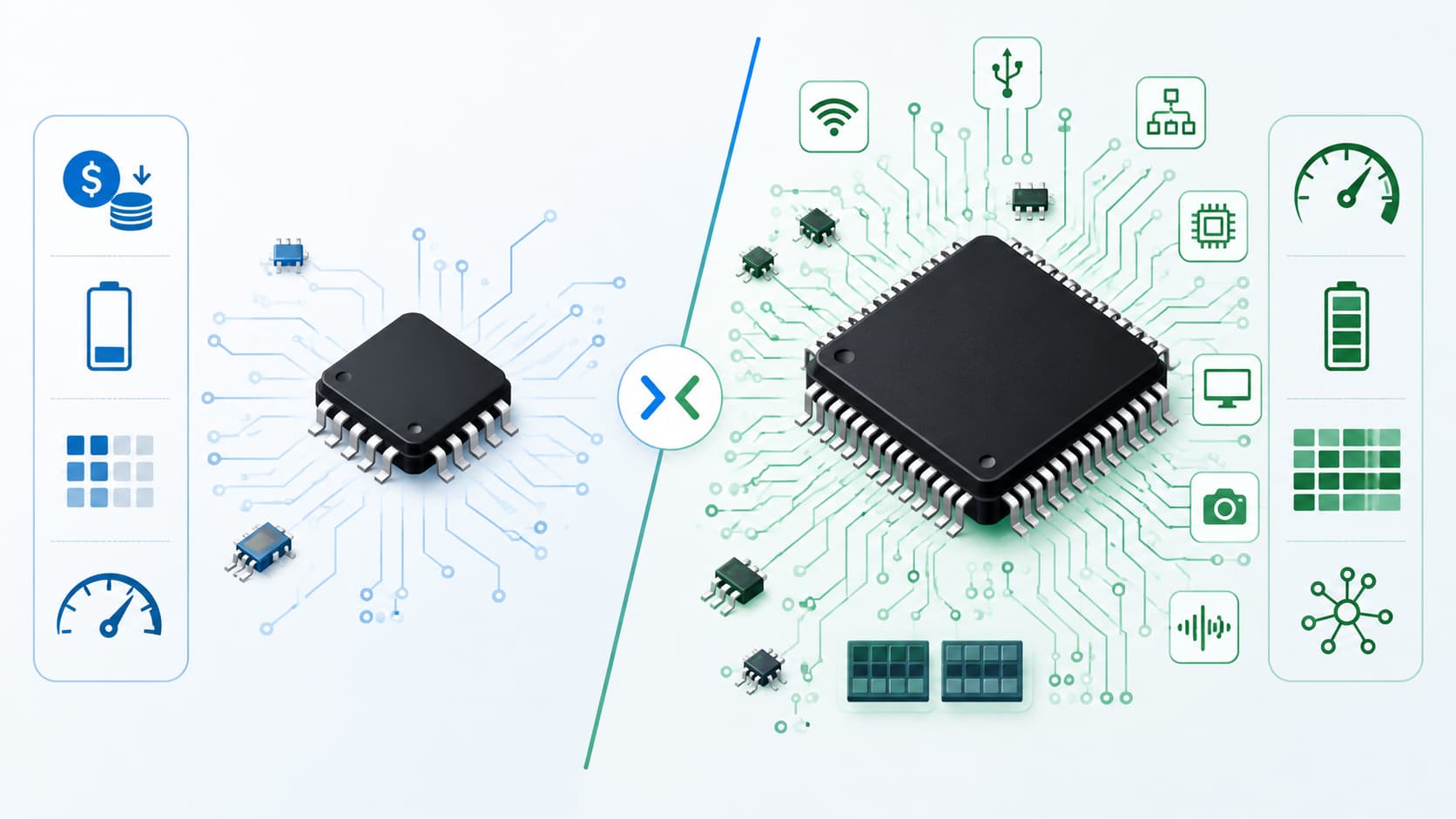
8-bit vs 32-bit MCU: How to Choose the Right Microcontroller for Your Design
Introduction Choosing between an 8-bit MCU and a 32-bit MCU is not only a technical decision. It also affects component cost, firmware development, sourcing stability, alternative part options, inventory planning,
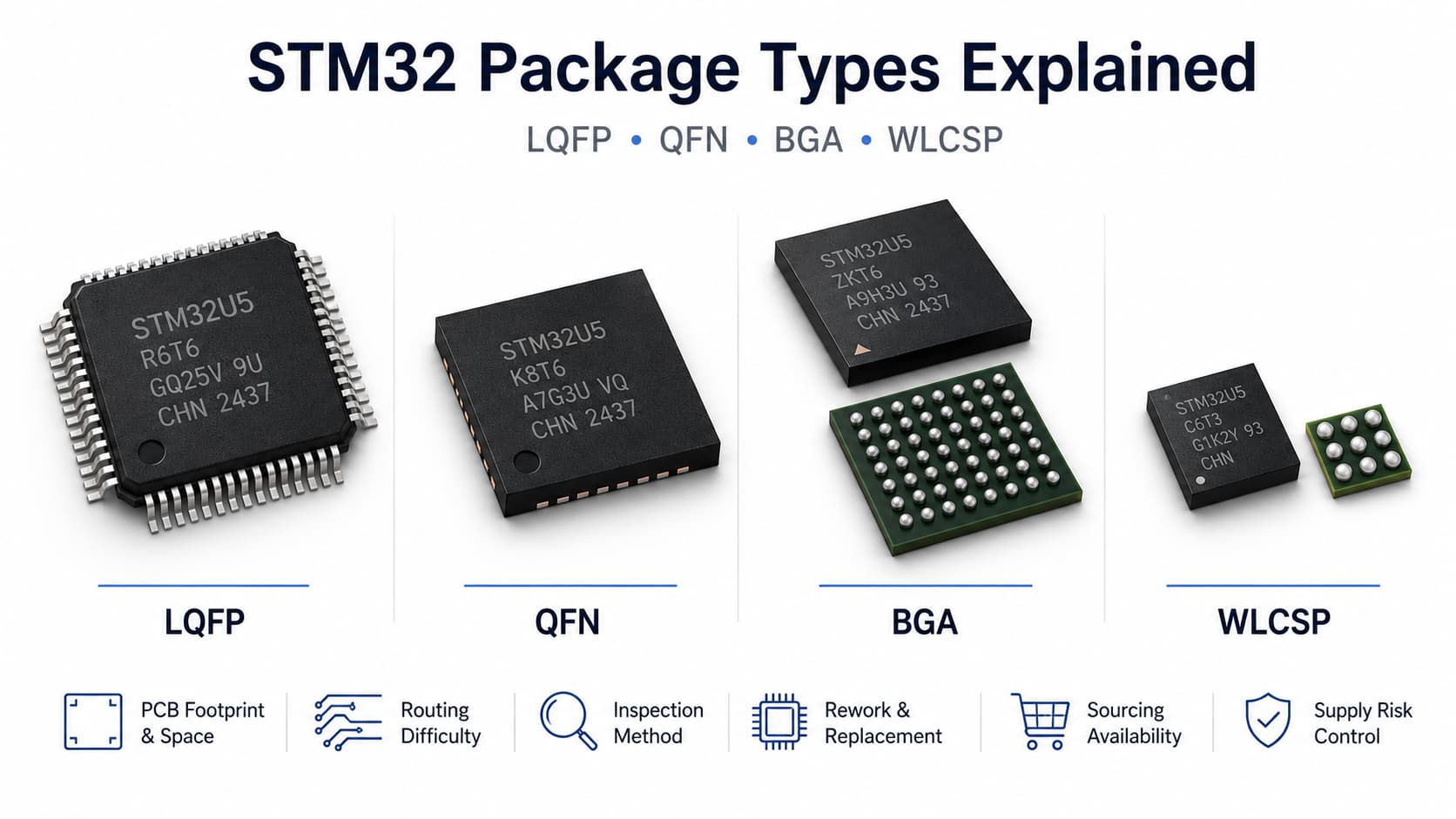
STM32 Package Types Explained: LQFP, QFN, BGA, and WLCSP
Introduction When selecting an STM32 microcontroller, engineers often focus first on the core, Flash memory, SRAM, clock speed, and peripherals. These are important, but the package is just as critical.