
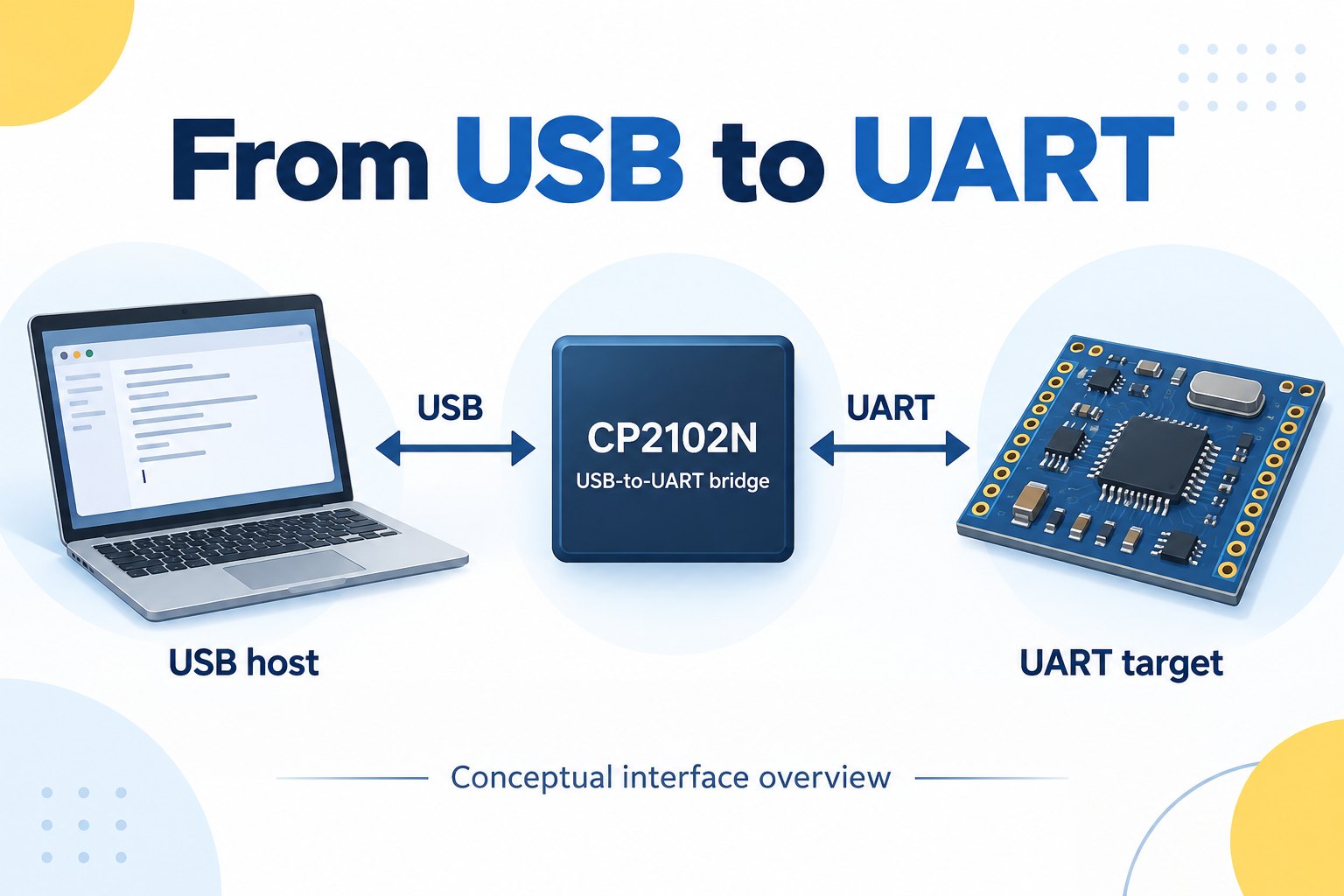
CP2102N-A02-GQFN28 is a Silicon Labs USB-to-UART bridge in a 5 × 5 mm QFN28 package. It connects a USB host to an embedded serial interface, with seven configurable digital I/O pins on this package variant. Start with the manufacturer's QFN28 product page when checking the device identity.
For a design release or purchase approval, the complete ordering code matters. A working evaluation board does not establish that a different package, revision or preprogrammed device is acceptable for your BOM. This guide focuses on the checks that should accompany the datasheet: power domains, host software, revision-specific behavior and purchasing requirements.
CP2102N-A02-GQFN28 datasheet and key specifications
Use the official CP2102N datasheet. The file reviewed for this article is revision 1.5; it covers several packages, so use the QFN28 ordering and pin-definition sections.
| Item | QFN28 reference |
|---|---|
| Exact ordering code | CP2102N-A02-GQFN28 |
| USB interface | USB 2.0 full-speed, 12 Mbps |
| UART rate | 300 baud to 3 Mbaud |
| Operating VDD | 3.0–3.6 V |
| Operating VREGIN | 3.0–5.25 V; regulator conditions apply |
| Separate VIO pin | No; this version uses VIO = VDD |
| Ambient operating range | −40°C to +85°C |
The USB link rate and UART baud rate describe different interfaces. Neither figure is an application-level transfer guarantee. Define the payload, serial framing, host operating system and traffic pattern before selecting a throughput target.
Ordering-code and spelling checks
The datasheet's ordering diagram identifies A as the hardware revision and 02 as the firmware revision; G is the temperature grade. An optional final R identifies tape-and-reel ordering. Keep that packaging suffix in the purchasing record when required.
The space-separated search cp2102n a02 gqfn28 points to the same intended part. cp2102n a02 ggfn28 datasheet appears to be a typing error: GGFN28 is not present in the reviewed manufacturer ordering table. Use the verified GQFN28 code in the BOM and RFQ.
QFN28 pinout: check the symbol against the footprint
The datasheet's QFN28 drawing is a top view. Selected pins for a schematic cross-check are D+/D− on 4/5, VDD/VREGIN/VBUS on 6/7/8, RXD/TXD on 25/26, and GND on pin 3 plus the exposed center pad. Use the full manufacturer table for every remaining signal and package connection.
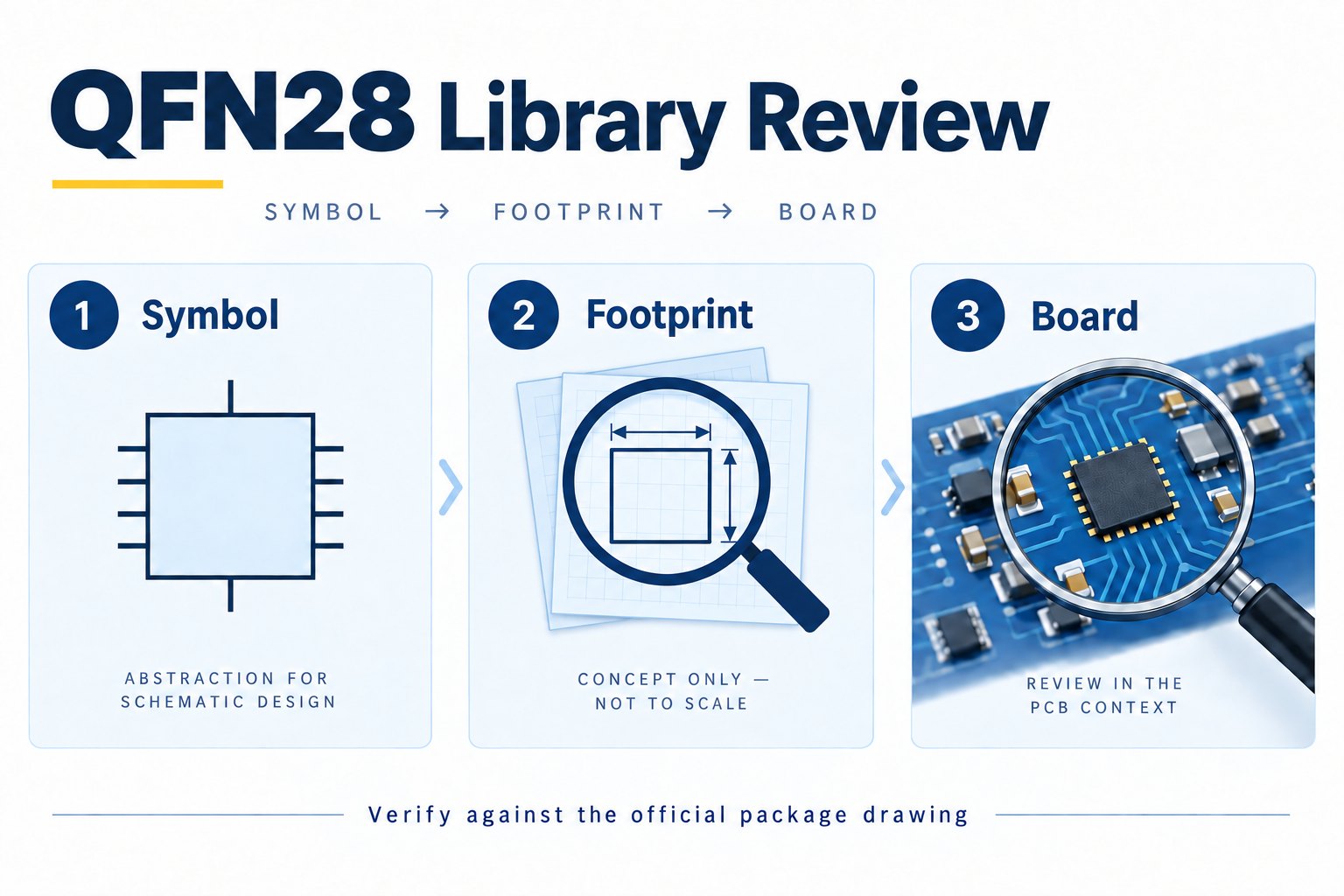
Before approving a library part, perform three separate reviews:
- Symbol review: match every pin number, signal direction and alternate function to the controlled document.
- Footprint review: compare pad numbering, package orientation and exposed-pad construction with the recommended land pattern.
- Board review: inspect actual routing and assembly constraints. A symbol that passes electrical-rule checking can still use the wrong footprint.
Record the source revision in the CAD library. This gives the next engineer a reproducible reference instead of an unidentified screenshot.
Power and VBUS: the mistakes to catch before layout
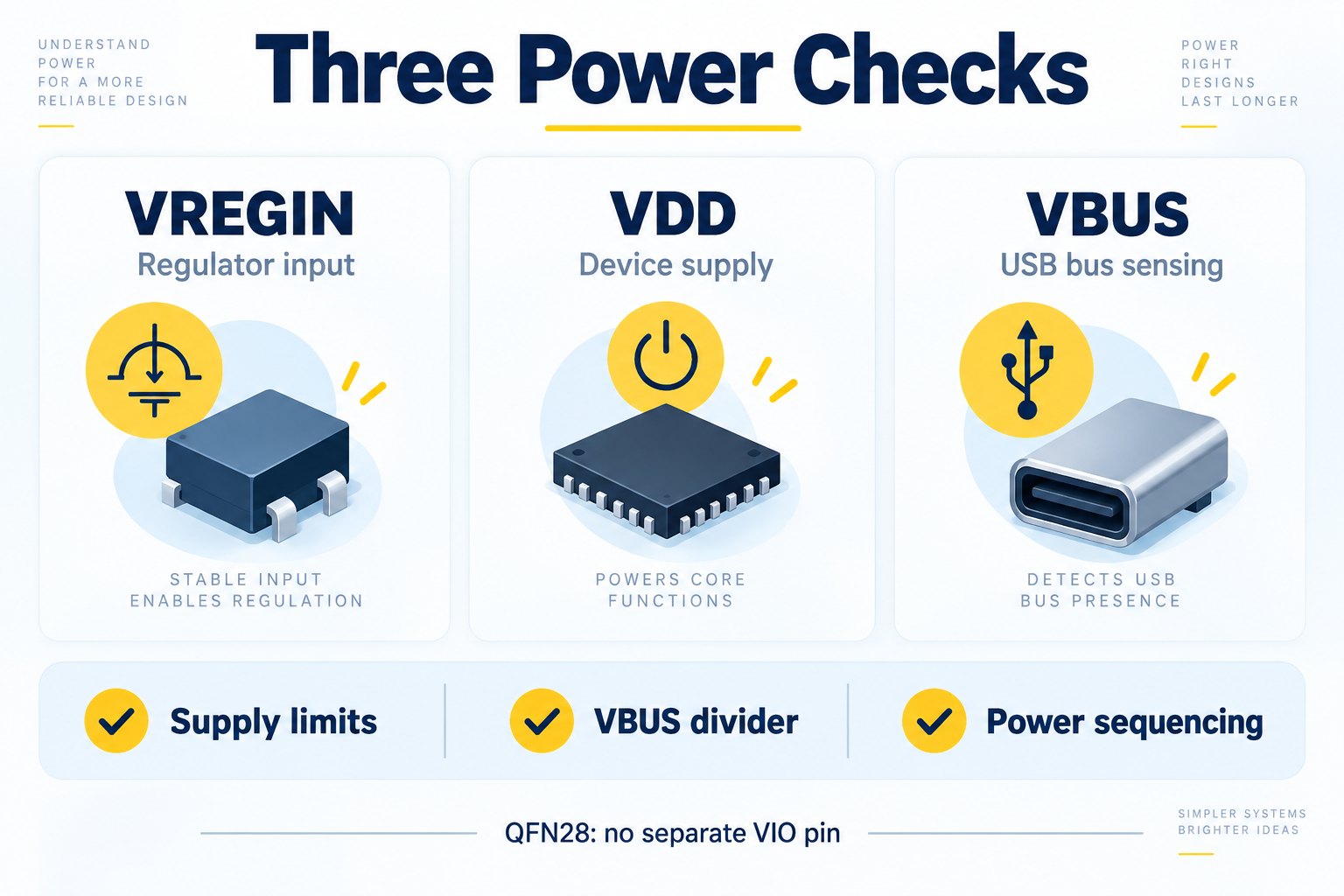
Do not apply the VREGIN input range to VDD. The regulator-input specification is not permission to place 5 V on the device supply output. Likewise, the QFN28 variant cannot be given a separate low-voltage VIO rail. Evaluate level translation when the target UART uses another voltage domain; absolute-maximum ratings are not normal operating targets.
VBUS needs its own review. Silicon Labs' AN976 porting guide requires a VBUS divider or equivalent circuit and shows bus-powered and self-powered arrangements. Follow the arrangement that matches your board. The datasheet revision 1.5 bulletin specifically records restoration of a VBUS divider omitted from the preceding self-powered drawing; an old copied schematic can therefore be misleading.
Review both power-up and power-down states. Ask what happens when USB is present while the target is off, when the target remains powered after unplugging USB, and when supplies rise at different times. Keep the answers with the schematic review, including any isolation or protection decisions.
Drivers and device configuration are part of the BOM decision
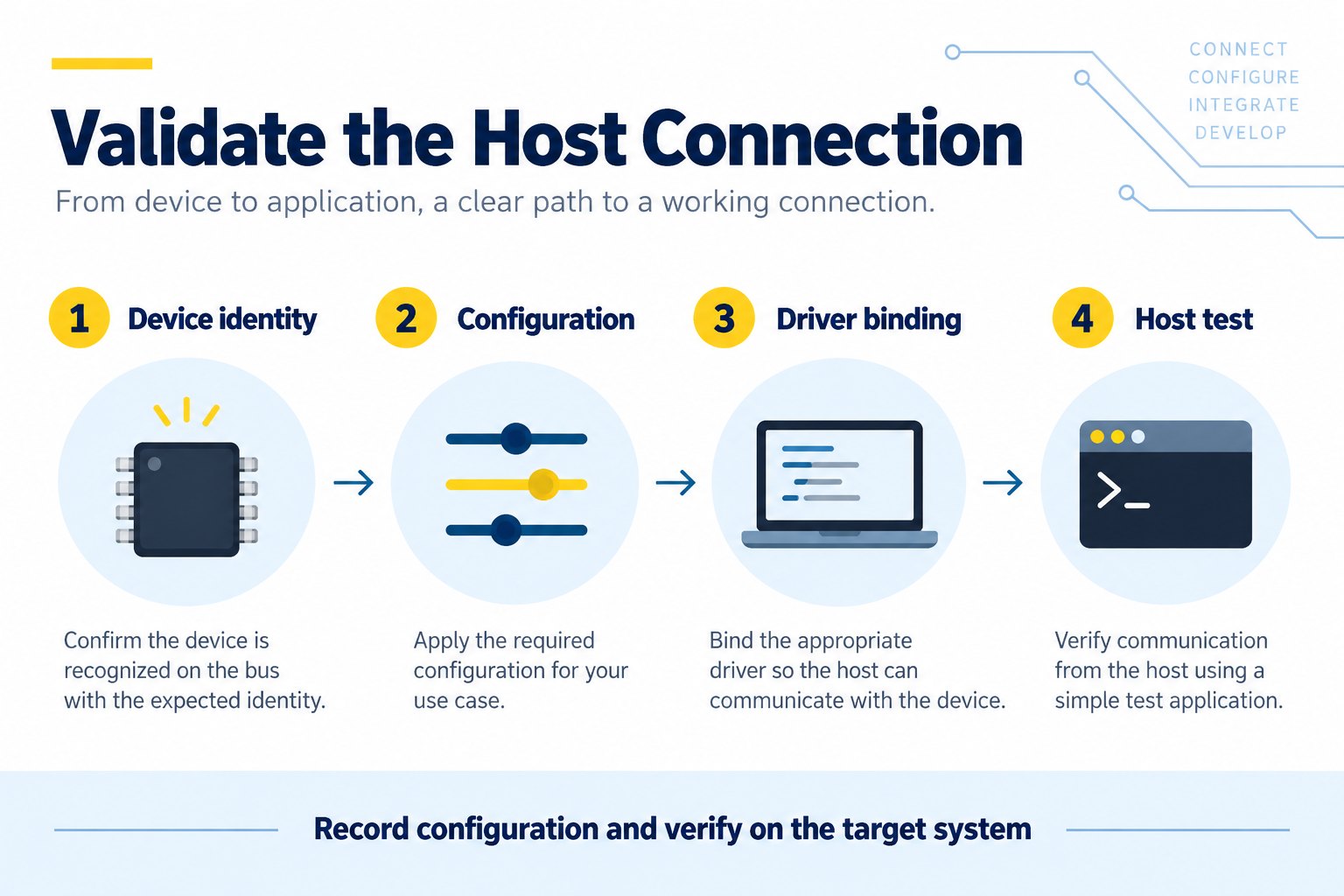
For virtual-COM-port operation, use Silicon Labs' CP210x VCP driver resources. Select the package appropriate to the deployed operating system and architecture, and review its release notes. A successful connection on one engineering laptop is insufficient evidence for every customer machine. Direct-access software is a different integration path and needs its own application validation.
AN721 documents USBXpress configuration, programming and verification. Device identity and port settings can affect how production units behave. In particular, changing VID/PID without the corresponding host-driver association can make a programmed device appear unavailable to the expected software.
For production, maintain a configuration file under revision control, an approved serial-number policy and a readback test. Record the driver package used in validation. If procurement requests preprogrammed material, specify those settings explicitly; the base component number alone is not a complete description of the finished USB product.
What A02 changes—and the erratum still worth checking
The A02 product-revision notice documents corrections to several A01 behaviors, including RTS/DTR handling, RS-485 driver-enable timing and enumeration. It also introduces BREAK signaling and a receiver-timeout command. When older migration notes conflict with A02 behavior, reconcile them against the revision-specific notice and current datasheet rather than treating every CP2102N document as interchangeable.
The reviewed errata revision 0.4 still lists CP2102N_E110, concerning D+/D− behavior around power-on reset, as affecting A02. Its impact depends on the host's startup expectations; the document provides an external-circuit workaround. Include cold start, reconnect and host-compatibility tests in validation. Do not describe A02 as having no known errata.
Applications and replacement boundaries
A USB service connector, a serial console and a production-test connection are reasonable use cases to evaluate. Start by defining what the PC application must do, then verify signal levels and deployment requirements on a representative prototype.
The UART interface is not an RS-232 or RS-485 cable driver. Those applications require the appropriate external line-interface circuitry. The device's RS-485 control function does not itself provide the differential bus connection.
AN976 identifies QFN28 migration paths from CP2101 and CP2102/9, while calling out hardware and software differences. It does not provide a pin-compatible CP2103 replacement, and the CP2104 migration uses a QFN24 variant. Use those relationships to open an engineering review, not to approve a substitution automatically.
For any proposed alternate, compare the board footprint, supplies, USB identification, configuration, driver binding, serial-control behavior and test coverage. Document whether the result is merely a candidate or an approved replacement.
Sourcing checklist for an exact-MPN RFQ
The product-family page includes a longevity statement for the preferred revision. That is not a stock report or a guarantee for every ordering suffix. Confirm the current revision, manufacturer notices and supply evidence for the actual material offered.
| Include in the request | What the buyer should confirm |
|---|---|
| Complete MPN and packaging suffix | Exact item quoted and allowed substitutions |
| Quantity and required delivery date | Quote validity and confirmed supply schedule |
| Packaging and assembly needs | Delivery format acceptable to the manufacturing process |
| Date-code and traceability requirements | Documents required for receiving inspection |
| Configuration or serialization requirements | Whether material is standard or customized |
| Target host and application constraints | Evidence needed to qualify an alternate |
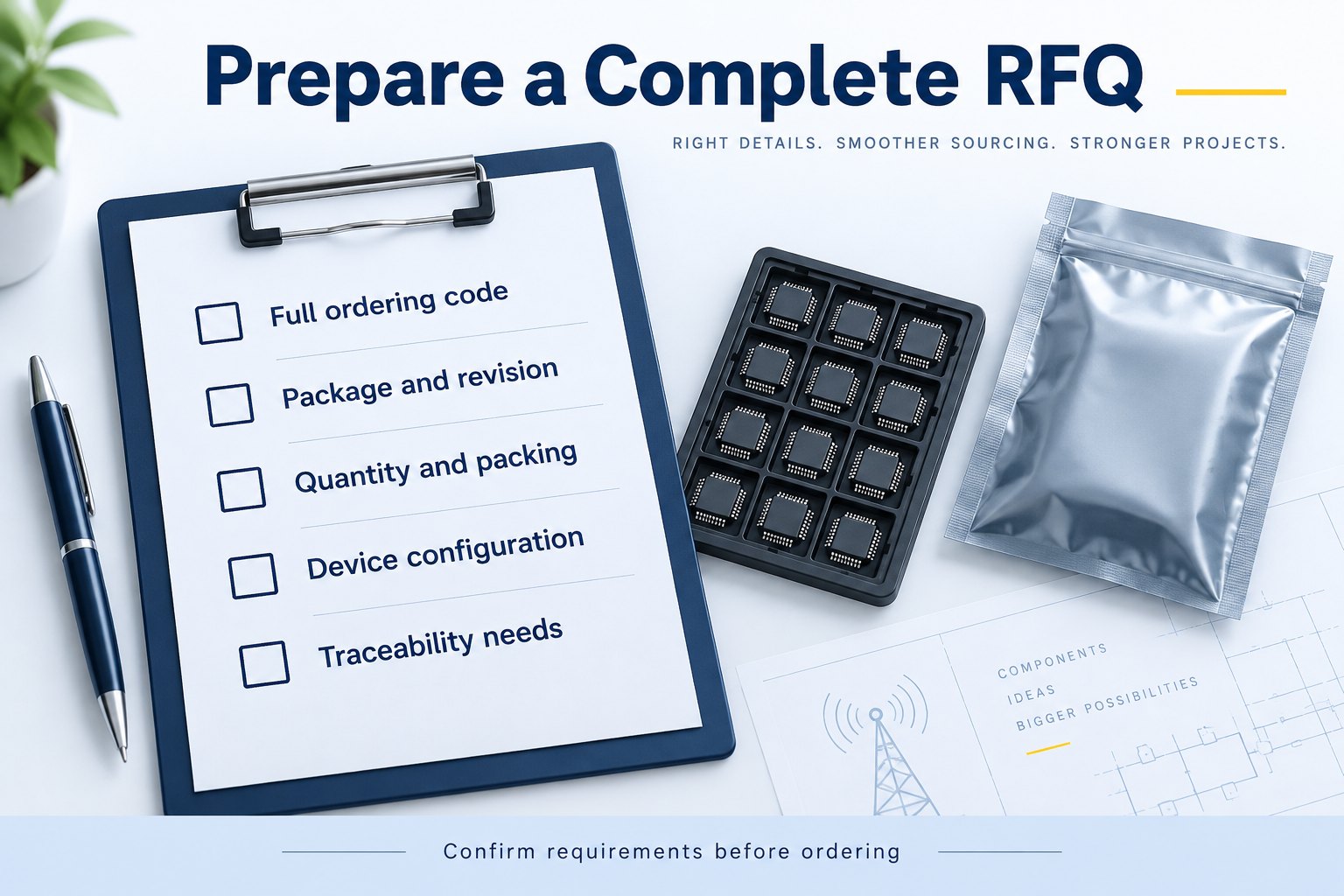
For an exact-part review, submit the full MPN and the checklist above through the ApexComponent inquiry form. Current availability, pricing, lead time, provenance and any alternative proposal require a specific quotation and verification.
Frequently asked questions
Where is the CP2102N-A02-GQFN28 datasheet?
Use the manufacturer PDF linked in the specifications section. Check its ordering table and QFN28 sections rather than relying on a reseller's abbreviated specification list.
Is “CP2102N A02 GGFN28” another package?
It is not an ordering code found in the reviewed official table. Treat it as a likely misspelling and confirm CP2102N-A02-GQFN28 with the requester before purchasing.
Can I use a CP2102N-A02-GQFN24 circuit unchanged?
No. Package-specific pin assignments and the separate-VIO distinction require a schematic and footprint review. Similar family names do not establish board compatibility.
Does A02 remove the need to read the errata?
No. A02 fixes several older issues, but E110 remains listed in the reviewed errata. Validate startup behavior with the intended host and power sequence.
Can I order another CP210x part as a direct substitute?
Use the official porting guide to identify candidates, then approve the actual hardware and software changes. A distributor cross-reference or matching package size alone is insufficient.
Technical sources reviewed on September 29, 2026. Illustrations are explanatory concepts, not manufacturer product photographs or implementation schematics.